
Please turn your device to portrait.
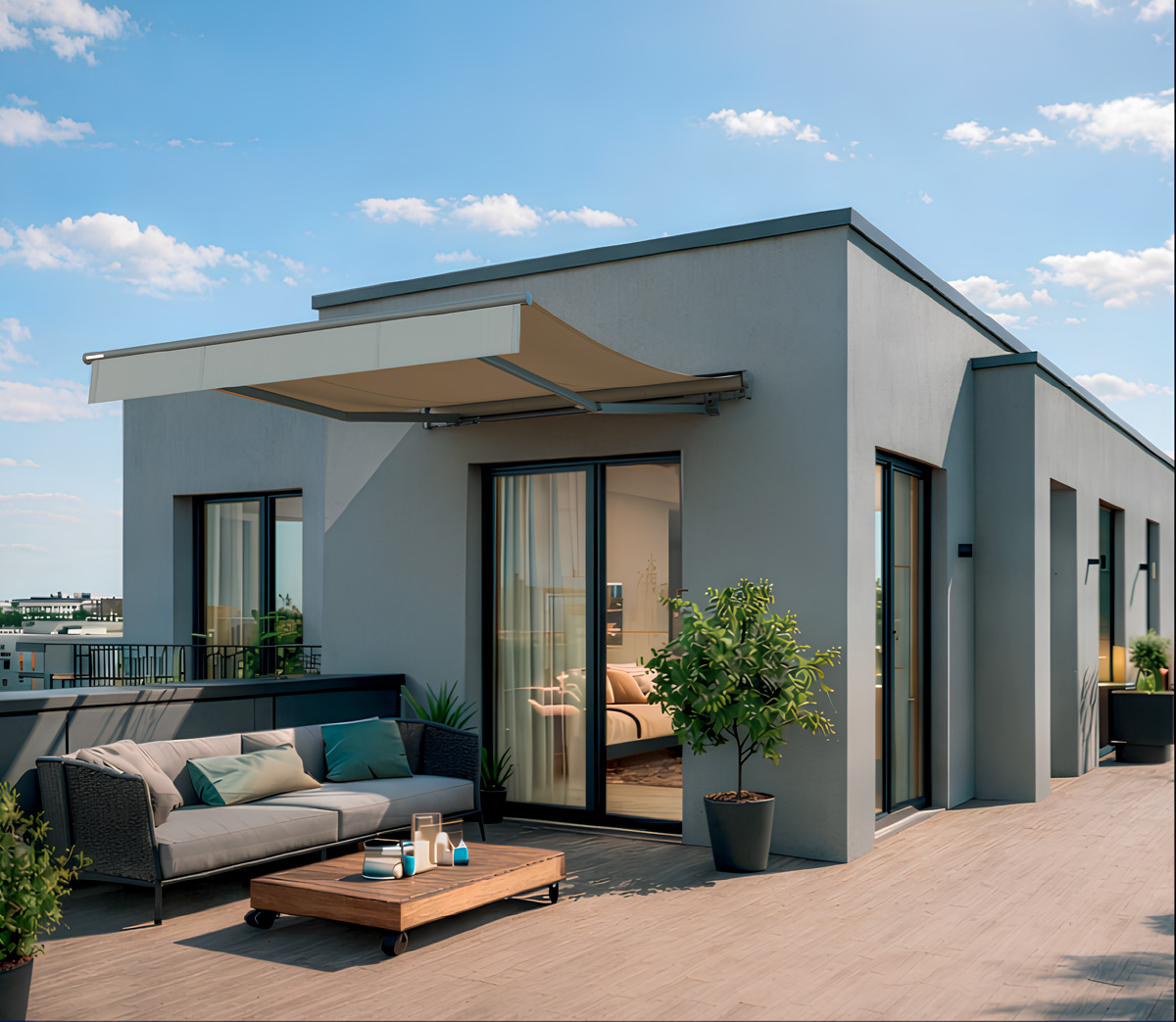
Weinor Australia’s Topas II MiniMax gets up to 400 cm of projection from a 253 cm-wide system, and Dalekit’s Joe Pajeska sets out which wind, fire and energy figures he is prepared to put in front of a customer.
A customer standing on the deck asks two questions about an awning: what wind will it take, and will the wall hold it. Whatever the answer, it ends up in the quote, with the installer’s name on it.
Two suppliers speak to that job here. Weinor Australia presents the Topas II MiniMax, a folding arm awning built for sites where the available width is less than the projection the customer wants. Joe Pajeska, Managing Director of Dalekit, covers wind ratings, fire and cyclone certification, wall fixings, motorisation and sensors, the energy research behind external shading, and what he thinks a quote should cover.
WEINOR AUSTRALIA GETS 400 CM OF PROJECTION FROM A NARROW AWNING
As Australian homes make more of compact outdoor spaces, Weinor says awning systems are increasingly being specified where the available width is limited but substantial projection is still required. The newly released Weinor Topas II MiniMax is designed for those applications.
“The limitation with a traditional folding arm awning is that the width generally needs to be greater than the projection,” says Simon Meyer, Managing Director of Weinor Australia. “That becomes a problem in a narrow courtyard where the customer still wants significant coverage.”
The Topas II MiniMax addresses that geometry constraint through its arm configuration. Rather than the folding arms sitting alongside one another when retracted, the arms are positioned one above the other, with the right-hand arm sitting lower. This enables a projection of up to 400 cm from a system width of just 253 cm.
“That’s the real advantage of the MiniMax,” Meyer says. “You can achieve a substantial projection from a relatively narrow awning, opening up applications that can be difficult to solve with a conventional folding arm awning.”
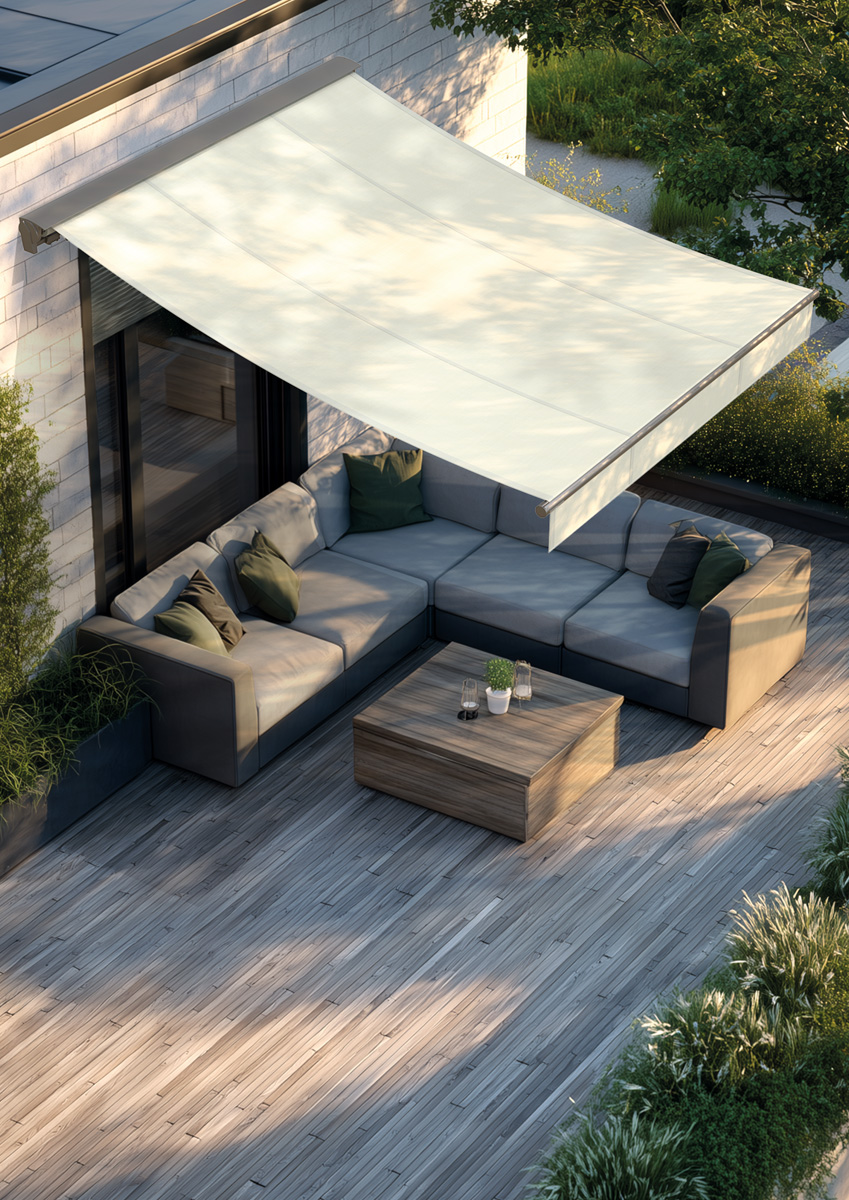
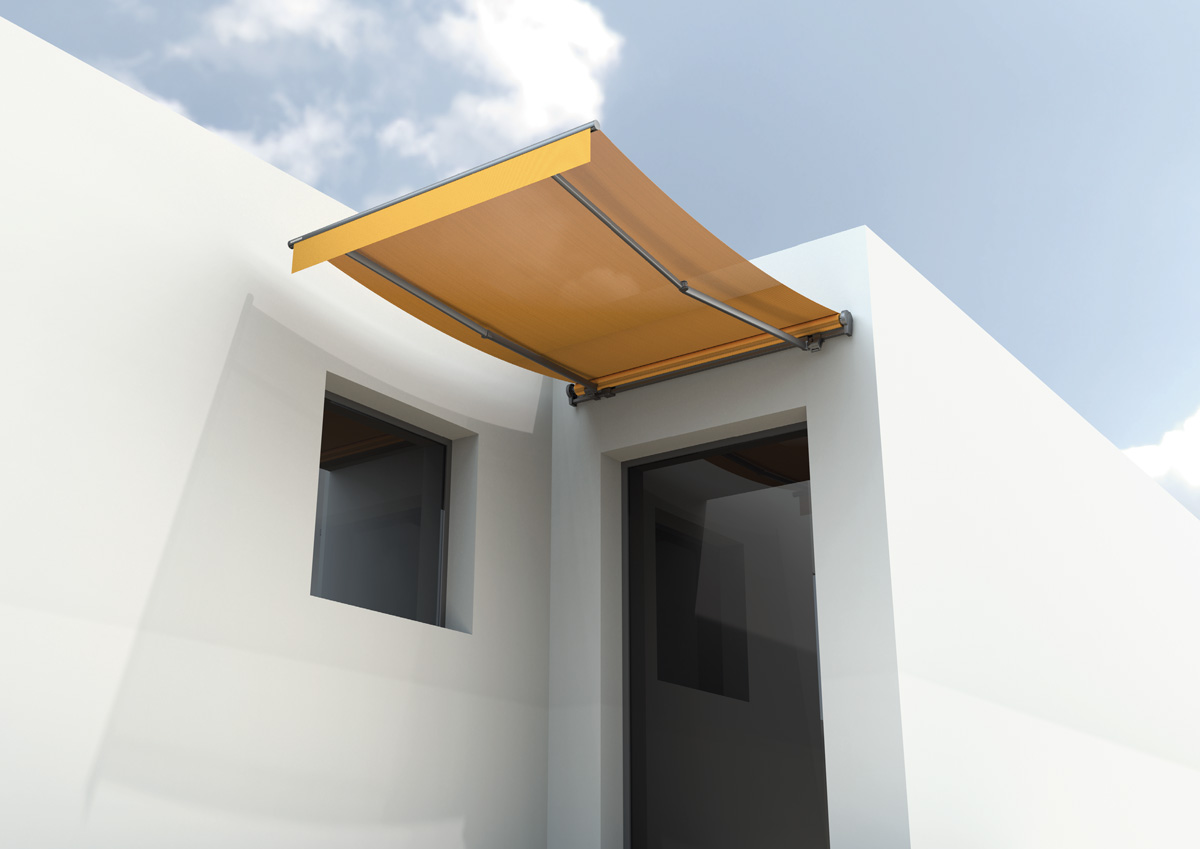
The system is particularly suited to narrow courtyards, terraces and townhouse applications, as well as projects where facade width, window axes or other installation constraints limit the available mounting area.
The MiniMax is built on Weinor’s Topas II Open awning platform, retaining the stability, durability and technology of the standard system. For retailers and installers already familiar with Topas II, the company says this means no additional complexity during planning, installation or commissioning.
Standard specification includes a 25 cm fabric valance. The system can be configured with or without a protective roof, and motorised operation alongside Weinor’s low-noise LongLife arm are standard.
For Meyer, the key selling point is maximum projection from minimum width. “If you’re dealing with a narrow site where a standard folding arm awning can’t provide the projection required, the MiniMax gives you the perfect solution,” Meyer says. “It allows the retailer to solve a difficult application without moving away from a proven awning platform.”
The Weinor Topas II MiniMax is available now through Weinor’s exclusive distributor, Meyer Blinds. Price on application.
DALEKIT ON WIND RATINGS, FIRE TESTING, FIXINGS AND THE QUOTE
Pajeska opens with an installation from years back:
“Years ago I quoted, then installed, a set of awnings for a client whose house had no eaves and a run of west-facing bedroom windows upstairs. By the time I got there, the family had stopped using the upstairs altogether: there were mattresses on the lounge room floor downstairs, because it was too hot to sleep in the bedrooms above.”
“I remember standing at the window mid-pitch, in full summer, sun already low in the sky. One side of my body was being cooked by direct radiant heat through the glass; the other side, in the air-conditioned room, was freezing.” Once the awnings went in, he says, “that family moved their whole lives back upstairs.”
Pajeska covers the category’s history briefly. Awnings were always about the sun; air conditioning pushed shading down the priority list for decades; rising power bills changed the calculus back. COVID accelerated it. “The idea of the backyard as the good room, the one you actually live in, took off in a way I hadn’t seen before, and it hasn’t really let up since.” New homes now build alfresco space into the footprint from the start. As Pajeska puts it: “An alfresco area is only really worth building if you can use it for more than four months of the year, and that’s exactly the gap a Zipscreen closes.”
Wind rating
Wind rating is the specification Pajeska says gets misunderstood most. “There’s no single national test every awning in this country gets measured against, so when you hear ‘wind rated,’ it doesn’t always mean the same thing twice. I’d rather say that plainly than have a retailer get caught out by it in front of a customer.”
What he can stand behind is specific, he says, because Rollease Acmeda ran the test. “They put real money into wind-tunnel testing our Zipscreen at Monash University, and a 2.4m × 2.4m unit held up through the full minute at 140km/h, the fastest wind that facility could produce. We didn’t run that test ourselves, but we use their data because it’s good data, and it’s the number I quote.”
He is equally clear about what that figure means day to day. “It’s a survival figure though, not a day-to-day one. I still tell people to raise the screen once it’s blowing over 50km/h, because staying up through a storm and behaving sensibly on a normal windy afternoon are two different things.” Dalekit’s Solidux folding arm system is rated to Beaufort 5, which he says is “closer to the load an arm actually carries day to day than a one-off gust nobody will ever see.” On how to handle the conversation with a customer, his advice is direct: “Say plainly there’s no industry-wide standard behind the number, then give them what you can actually back up: a tested figure, a sensible operating limit, and the difference between the two. Every time I’ve done that, people have trusted it more than a rating with nothing behind it.”
Motorisation and sensors
Motorisation is climbing, Pajeska says, and for a simple reason. “The orders coming through our system tell the story clearly enough: motorisation has climbed significantly over the last few years, and it’s not really about smart homes. It’s about ease.” Because a motorised system plugs into timers and platforms such as Google Home, customers end up with some automation “almost by accident”, he says.
Sensors are a product-by-product call. “Most awning systems don’t really need a wind sensor at all. Where I’d insist on one is folding arm awnings: each arm should carry its own sensor, because a folding arm has real leverage and wind can catch it badly if it’s left out unattended. Pivot arm systems carry less risk; one sensor covering the whole house is usually enough.” Zipscreens sit at the other end of the scale: “they’re about as bulletproof as this category gets, and in most installs I wouldn’t say a wind sensor is necessary at all.”
Cyclonic and bushfire-prone regions
Cyclonic and bushfire-prone areas need more than a standard spec sheet, Pajeska says. On the fire side, Dalekit offers fabric options with fire-retardant certification. “Zipscreen has been fire tested to ISO 13785-1 at Ignis Labs, in a balcony configuration, testing Rollease Acmeda paid for and put on the record, which supports the Performance Solutions fire engineers have to prepare before combustible shading fabrics can go on Class 2–9 buildings under the National Construction Code.”
For projects needing more than fabric can give, Pajeska says he has access to fire-rated roller shutters from Ozroll, though he is plain about the limits. “A genuine firezone or flame-zone rated shutter needs to be built in stainless steel, and that’s not something we offer.” WSAA membership provides access to the association’s fire compliance certificate where a project requires it.
On the wind side, Dalekit had its Zerro Uniq opening-roof system independently tested for the Australian market. “Bringing our Zerro Uniq opening-roof system to market in Australia meant getting it independently tested and certified in its own right: up to 205km/h retracted, verified by Magryn & Associates against the full suite of relevant Australian structural standards,” Pajeska says. “That’s not something that makes us special; every roof system supplier selling into this country has to clear that same bar before their product can legally go up. What I’d say to an installer working in a cyclonic or bushfire region is this: treat ‘certified for this zone’ and ‘rated for wind’ as two separate questions. General wind-rating claims on their own won’t cut it, and they shouldn’t.”
Fixings
On installation call-backs, Pajeska is consistent: “Ask any installer where their call-backs come from and the answer is almost always fixings, not fabric. I’ve had this conversation more times than I can count. Folding arm systems carry real weight and leverage, and on both modern lightweight cladding and older masonry, that load can pull fixings straight out of the wall if it isn’t spread properly.”
His response has been to design specifically for the problem. “That’s why I’ve designed plates and brackets specifically to distribute that load across a wider area rather than concentrating it on a handful of points. It’s the difference between a system that stays put for fifteen years and one that generates a service call in the first eighteen months. In my view, it’s a design problem more than an installation-technique problem.” He would rather solve it on the drawing board than leave it for someone to discover on site, he says.
Energy
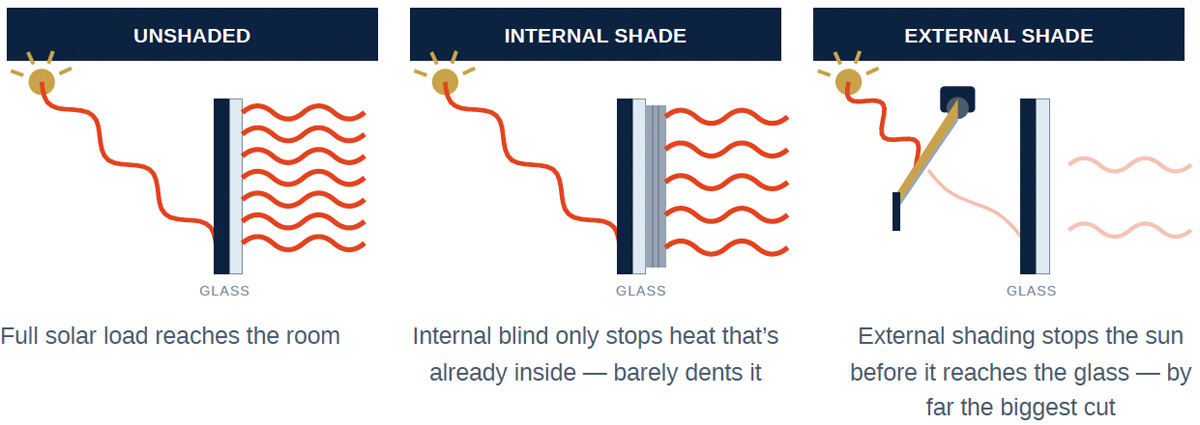
The energy conversation is where Pajeska sees both the clearest opportunity and the most obvious gap in industry data. “For every square metre of glass hit by direct sun, something in the order of 1000 watts of heat energy can be pouring straight into the room behind it.” He has quoted the figure for years, he says, as the simplest way to explain solar heat gain to someone standing in their own living room.
Harder numbers come from institutions. “Sustainability Victoria’s own guidance backs the same story with harder numbers: up to 40% of a home’s heating energy can be lost, and up to 87% of unwanted heat gained, through windows.” He also points to a 2017 Lawrence Berkeley National Laboratory study by Kohler, Shukla and Rawal that, he says, “found a simple awning cuts a window’s effective solar heat gain by 43–58%, depending on climate and season. That’s not us guessing. That’s independently tested, credible research.” He also points to WSAA’s WincovER simulator, now modelling heating and cooling savings for Australian homes, which shows that “a well-chosen external shade changes a building’s energy performance, not just its appearance.”
Pajeska is upfront about what Dalekit has not done. “We haven’t run our own independent study on any of this. Nobody at Dalekit has put a product in a thermal lab and measured the heat it stops.” If getting local, laboratory-grade thermal data in front of the people who need it takes a manufacturer willing to volunteer product, time or funding, he says, “count me in.”
The quote
Warranty fine print, Pajeska says, deserves proper attention. “PVC components typically carry a three-year warranty, while Ricky Richards Outlook fabric carries fifteen: that gap is worth explaining up front, because it’s the difference between a product your customer is still thinking about in three years and one they largely aren’t.” Care and maintenance, he adds, “deserves the same honesty. A shading product that’s looked after, fabric cleaned properly, the mechanism checked occasionally, nothing left jammed or under load it wasn’t designed for, will outlast one that’s never touched again after installation day.”
His view on where a quote should start is plain: “I don’t think a good quote is really about any of those details first. It’s about helping the person in front of you work out exactly what they need and why they’re buying it: what the space is actually for, how they’ll use it, what problem they’re trying to solve.”
On lead times, Pajeska says he holds to 1–2 weeks year-round, including through peak season, and has built the business to maintain that. On spare parts: “Spare parts are something I think every manufacturer in this category owes its customers as a baseline: when a part’s needed for a repair, I push it to the front of the queue, and I hold components for both current and legacy systems, because I don’t think an older installation should be left stranded just because the model’s moved on.”