Please turn your device to portrait.
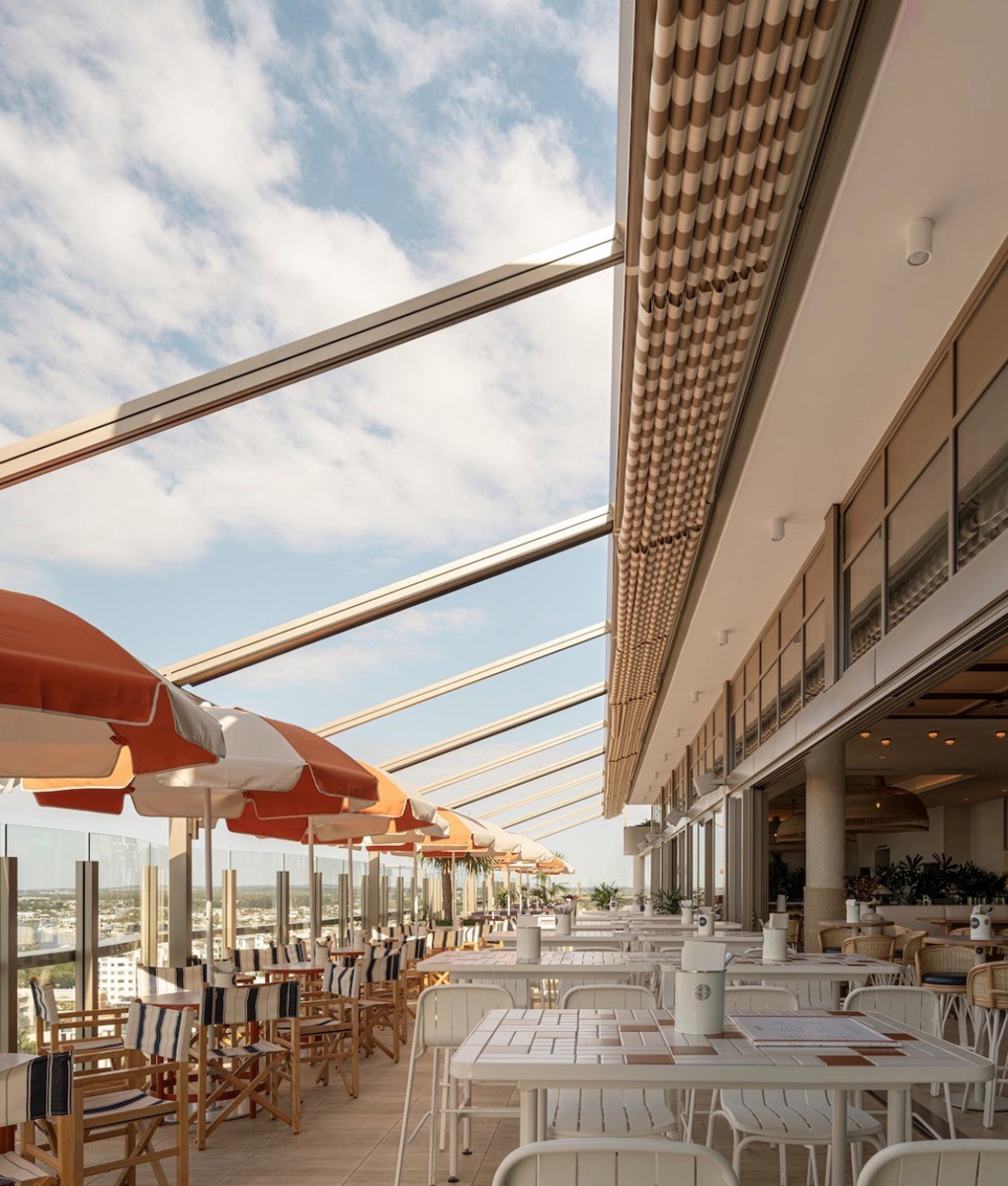
Goodearl + Bailey says its Dickson Orchestra cloths kept their water column and spray ratings on non-PFAS finishes, and that oil repellency is no longer in the specification. The Shann Group and Weinor Australia set out the finishes, fire ratings, recycled content and 2027 colours of their own ranges.
Awning cloth is sold on what it keeps out: rain, dirt and, above a cafe or outdoor kitchen, grease. A finish does that work, and the finish is where the PFAS question sits. PFOS, PFOA and PFHxS have been prohibited for industrial use under the national IChEMS Register since 1 July 2025. That is not a general ban on PFAS, so when a customer asks whether a cloth is PFAS-free, the answer depends on which chemicals the supplier means and what documents sit behind the claim.
For installers and retailers, the questions are practical. If a PFAS finish comes out of a cloth, do the water column and spray ratings change? Does oil repellency? What does the cloth then need in cleaning and re-proofing, and who tells the customer? And what is the supplier’s evidence for a PFAS-free claim: a written declaration, a test report, a mill certificate?
Goodearl + Bailey: Dickson Orchestra and non-PFAS finishes
Clare Corban of Goodearl + Bailey opens with the numbers. “All 77 fabrics in our Australian Dickson Orchestra collection are manufactured with non-PFAS finishes. Dickson Infinity and Dickson MAX are also included in Dickson’s transition to non-PFAS finishes,” Corban says.
“Dickson-Constant began investing in alternative textile finishes in 2015, with the transition commencing in June 2023 and completed for the Orchestra collection by the beginning of 2025,” Corban adds.
On evidence, Goodearl + Bailey points to manufacturer documentation and an oeko-tex certificate for the Orchestra range. “The transition is supported by manufacturer documentation and Dickson’s annually renewed oeko-tex standard 100 certification. The current certificate, CQ 638/8, is valid until 31 March 2027,” says Corban.
Goodearl + Bailey also supplies Dickson Spark FR and Sunbrella Exceed FR. On request, Corban says, the company can confirm the PFAS status of both and provide supporting manufacturer declarations, along with relevant documentation and certifications.
On ratings, Corban says: “The transition to non-PFAS finishes has not changed the water column or spray ratings of Dickson Orchestra fabrics.”
Oil repellency is a different matter. “The main difference is oil repellency, which has been affected by the removal of certain PFAS chemicals traditionally used in textile finishing. This is an industry-wide change rather than something specific to Dickson,” Corban explains, adding that oil repellency is no longer included in Dickson’s current Orchestra specifications.
Cleaning advice follows from that. “We recommend cleaning awning fabrics at least annually, or more frequently where conditions require it,” Corban says, adding that loose dirt should be removed before it becomes embedded and stains attended to promptly, using the manufacturer’s recommended cleaning methods.
“For applications above cafés and outdoor kitchens, more frequent maintenance may be necessary due to the increased exposure to grease and airborne contaminants,” Corban notes.
On re-proofing, Corban says: “Re-proofing may be required over time, particularly following more intensive cleaning, and should be carried out using a suitable treatment recommended for the fabric.”
Goodearl + Bailey also encourages installers to give customers a digital copy of the manufacturer’s care and maintenance instructions when supplying or installing an awning, which Corban says gives the end user clear guidance on how to look after the fabric and maintain its performance.
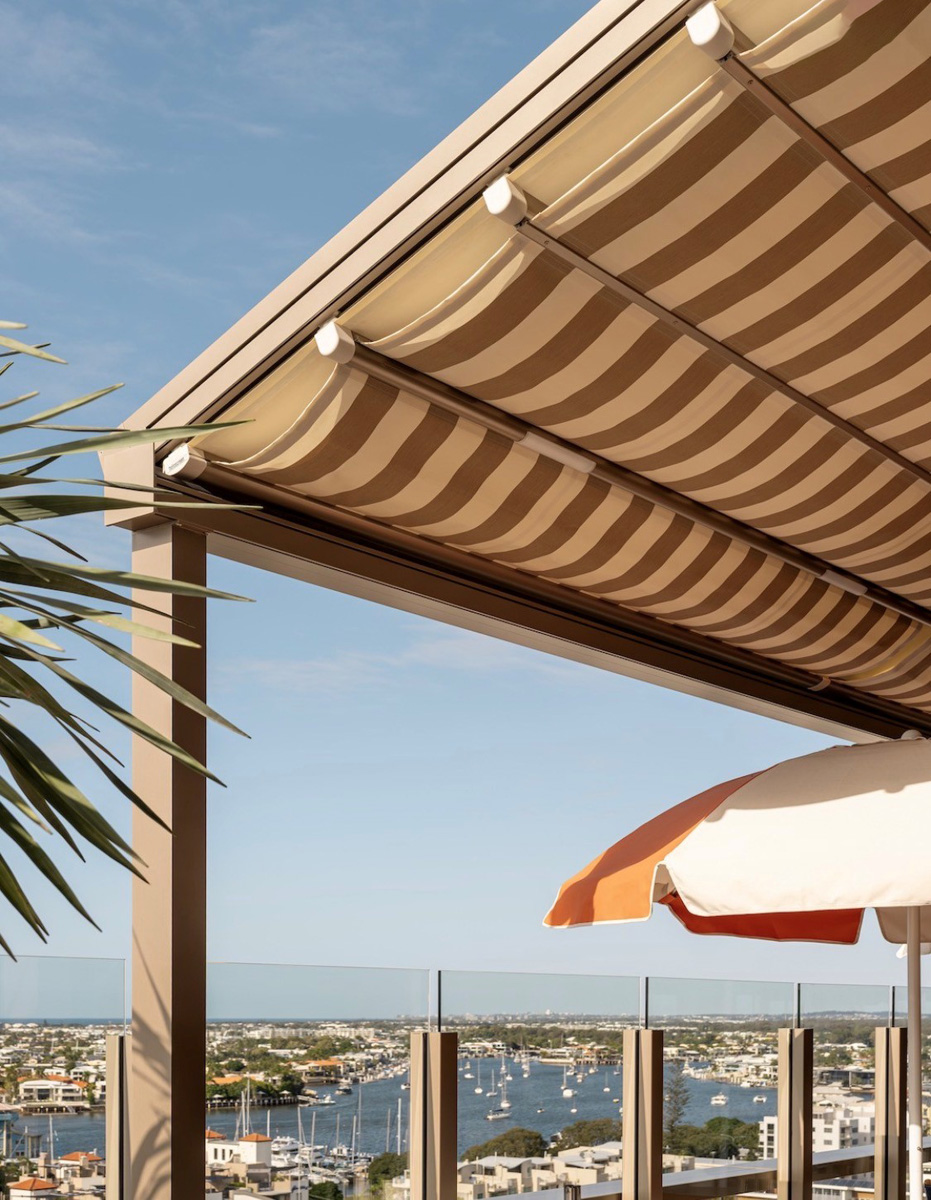
On warranties, Corban says: “Dickson Orchestra carries a 10-year warranty, supported by its solution-dyed Sunacryl acrylic fibre. Colour pigments are incorporated throughout the fibre during manufacture rather than simply applied to the surface, providing excellent colour fastness and resistance to fading, particularly important under Australia’s strong UV conditions.”
Corban says Dickson Spark FR is made from solution-dyed polyester and Sunbrella Exceed FR from modacrylic fibre. “Both fabrics have fire-retardant properties inherent in their fibres, rather than relying on surface-applied treatments,” Corban notes. Both carry five-year warranties.
On width, Corban makes the case for Dickson Infinity. “Dickson Infinity, at 320 cm wide, offers significant advantages for larger awning applications by allowing fabricators to work with a single piece of fabric rather than joining multiple narrower widths,” Corban says. “Infinity is designed for railroad fabrication, with reinforced weft construction to provide dimensional stability and even elongation across the fabric.”
“Eliminating joins also removes the additional thickness created by seams, providing a smoother, more uniform finish. This can simplify fabrication, reduce sewing or welding requirements and improve the overall appearance of larger awnings,” Corban continues.
On freight, Corban says: “Shipping from Europe continues to present challenges, particularly with vessels being diverted around the Cape of Good Hope, resulting in longer transit times and fluctuating freight costs.”
“At Goodearl + Bailey, we stock our core Dickson collections in Australia, with additional colours and specialist fabrics available to source directly from France, subject to mill availability. For products sourced ex-France, air freight generally offers a turnaround of approximately two to three weeks, while sea freight requires considerably longer lead times,” Corban adds.
The Shann Group: Tempotest 2027 season and Starlight
The Shann Group says the latest release from Para, which has been spinning and refining textiles in Italy for more than a century, is anchored by the core Tempotest range and Tempotest Starlight. The 2027 season adds 12 new colours, from soft neutrals to bold statement shades, and the collection includes curated patterns.
Shann says Starlight is built for large-scale structures. Instead of standard acrylic, it uses a modified 100 per cent solution-dyed PET fibre, which the company credits with elastic recovery and tensile strength. Combined with a maximum UPF 50+ rating that blocks 98 per cent of UV radiation, Starlight protects the people below the structure and gives the installation a longer structural lifespan, according to Shann.
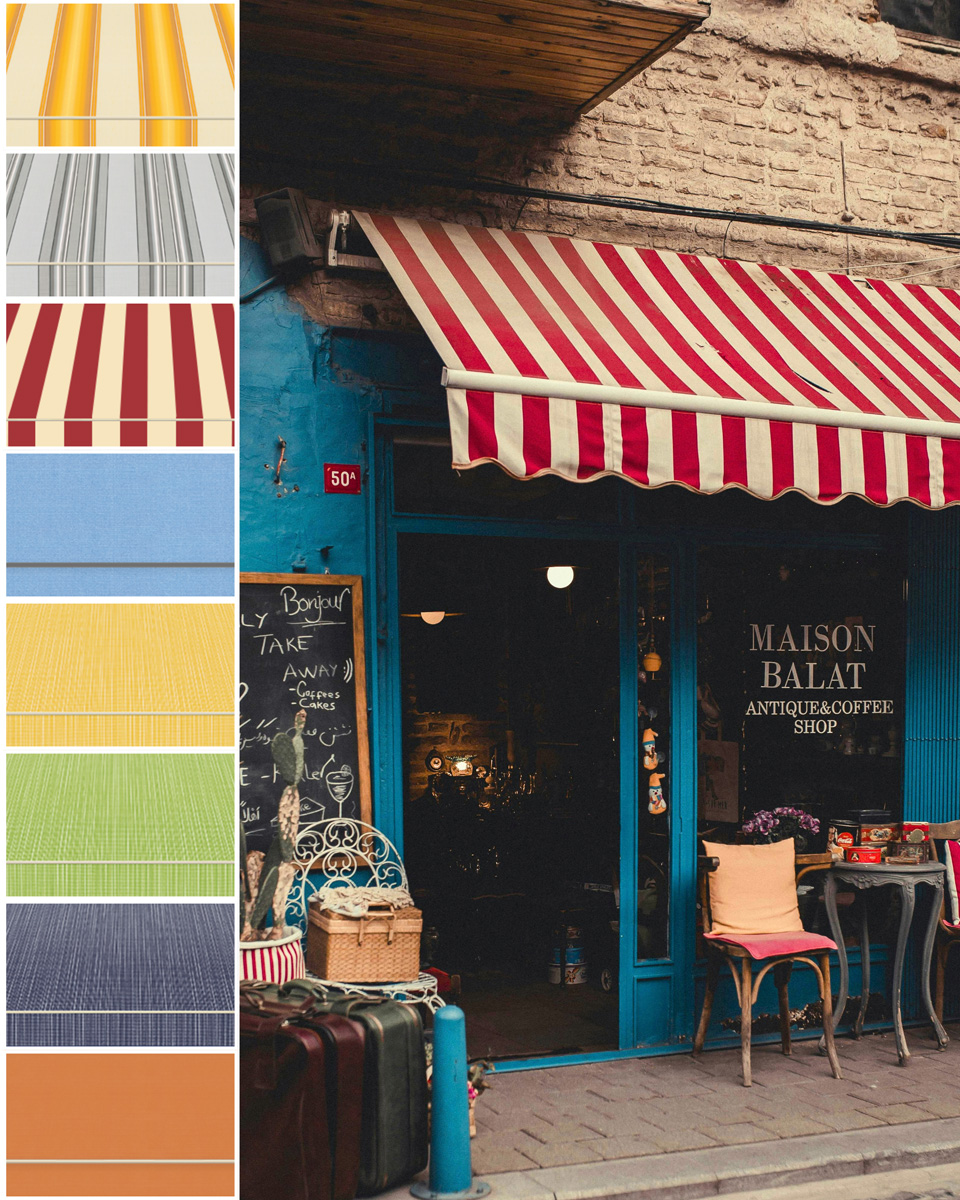
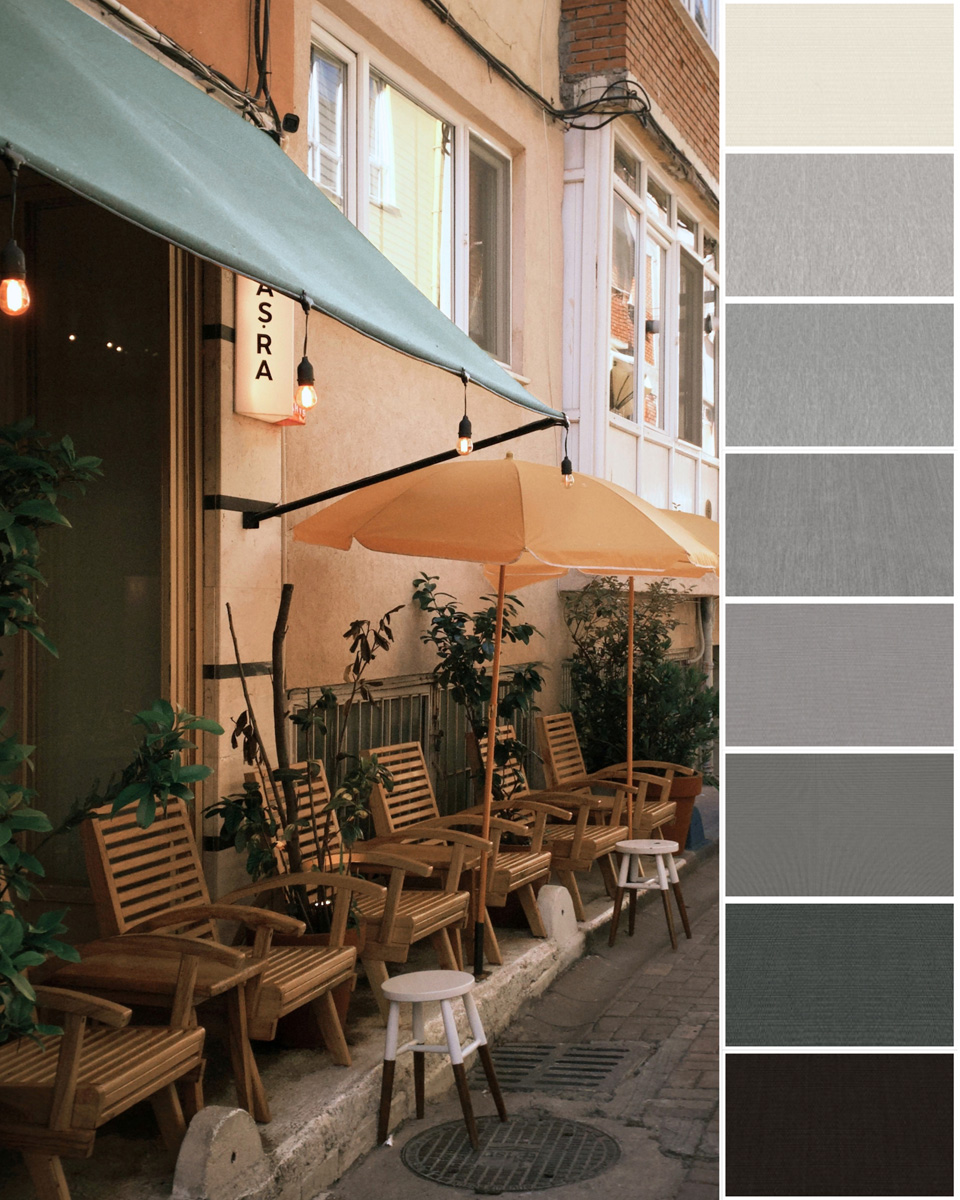
All Tempotest fabrics are made with solution-dyed yarns, so the colour penetrates the core of the fibre rather than sitting on the surface. Shann says this keeps the colour strong after years of sun exposure.
The entire Tempotest line is finished with a Hi-Clean PFAS-free treatment that makes the fabric water-repellent and stain-resistant, and easy to clean when exposed to oils, grease or dirt, according to The Shann Group. The weave remains breathable, the company adds, letting air flow through the canopy rather than trapping heat beneath it.
Shann says every fabric in the collection carries oeko-tex certification, and that the new collection is available exclusively from The Shann Group. The collection book is available through Shann sales representatives or customer service.
Weinor Australia: My Collections 2
Lumera All Weather and Firemaster are the most recent additions to Weinor’s My Collections 2 fabric range, the company says. They sit alongside Modern Basics Blue, Weinor’s collection of recycled polyester fabrics.
“Fabric selection is becoming increasingly technical, particularly for commercial applications where fire performance, weather resistance and durability can be just as important as colour and texture,” says Simon Meyer, Managing Director of Weinor Australia.
According to Weinor, Firemaster combines flame retardancy and waterproof performance in a woven acrylic construction, meeting B1 fire protection requirements under DIN 4102 with a 1000 mm water column rating. The company positions it for hospitality venues, commercial façades and other applications needing enhanced fire and weather performance, and says its lightfast, dirt-resistant and water-repellent properties support long-term appearance and reduced maintenance.
Weinor says Lumera All Weather offers comparable rain protection through a PVC-free construction, with a 1000 mm water column rating approximately three times that of standard acrylic awning fabrics. Designed for pergola and all-weather awning applications, Lumera combines enhanced water resistance with colour stability, lightfastness and easy-care properties, the company says, as an alternative where conventional acrylic fabrics may not meet project requirements.
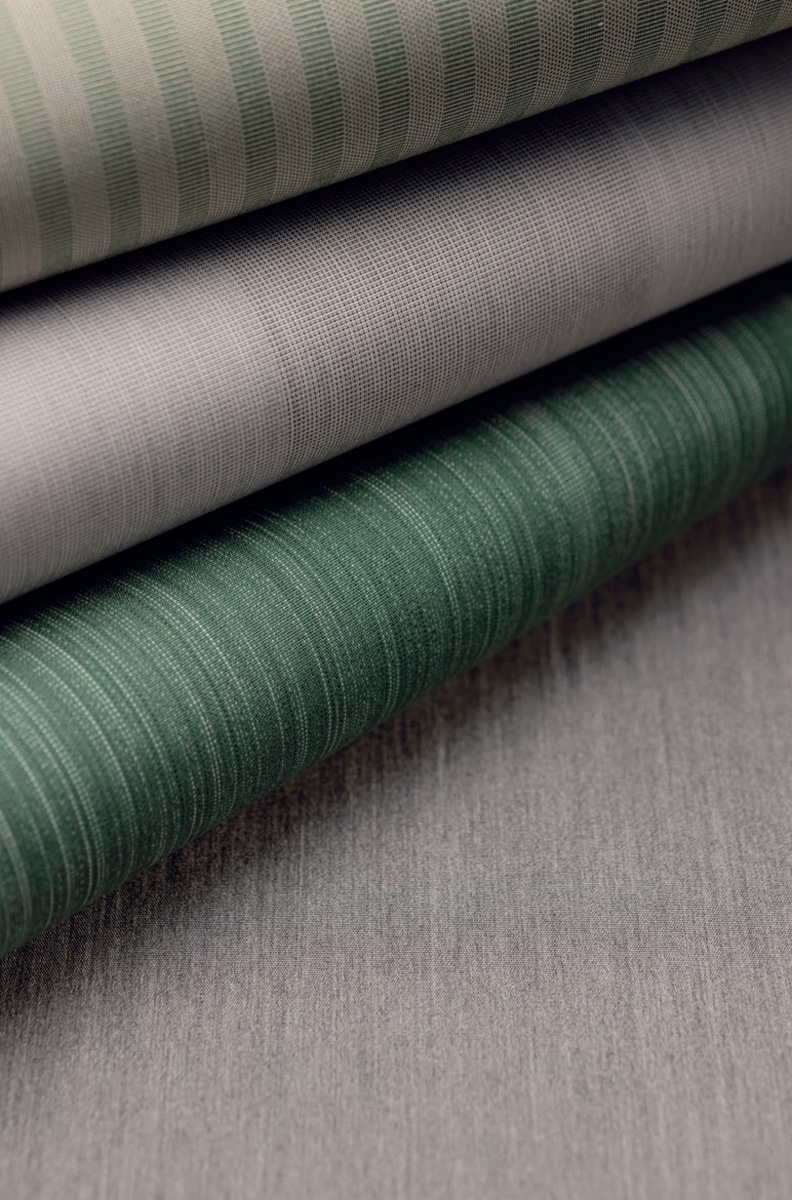
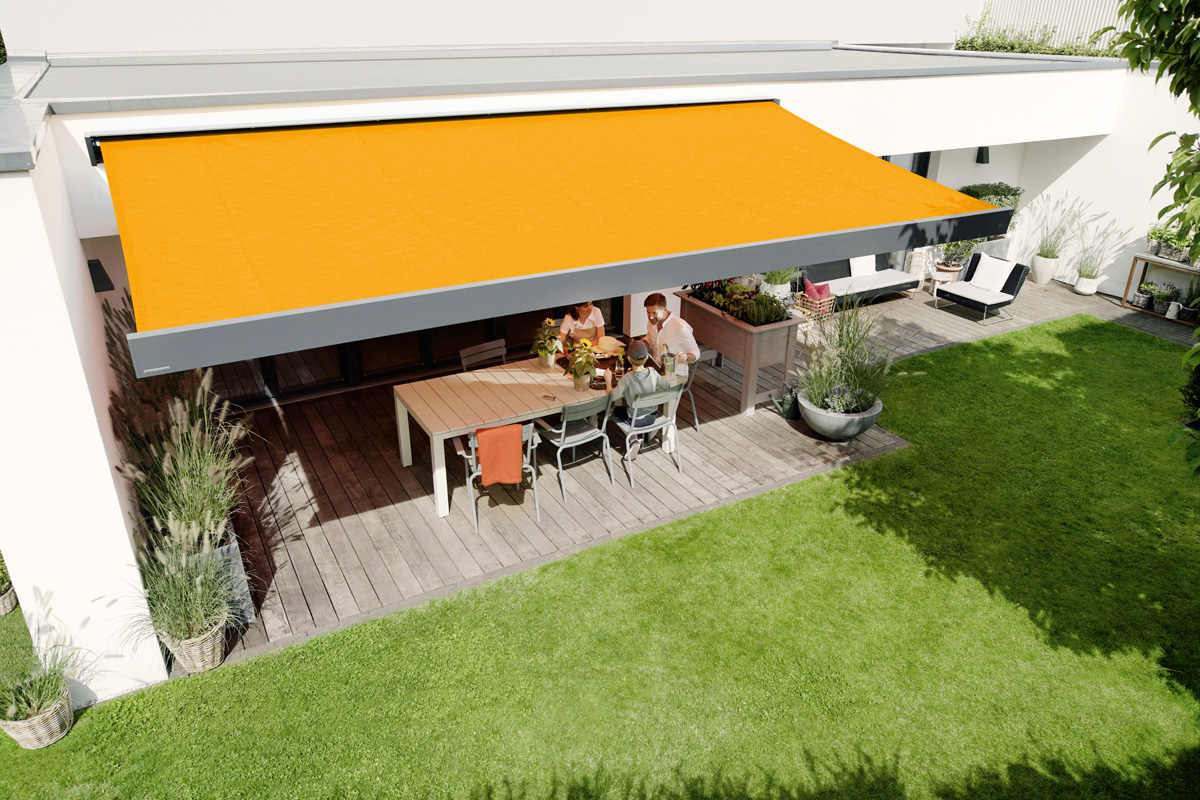
Sustainability is also a key focus for Weinor, with its Modern Basics Blue is manufactured using 85 per cent recycled PET bottles and delivers approximately 60 per cent energy savings, 45 per cent lower CO2 emissions and up to 90 per cent reduced water consumption compared with conventional production processes. Weinor lists UPF 50+ protection, a dirt-repellent treatment and long-term colour stability across the 26 patterns, which include contemporary neutrals, linen-inspired textures and natural tones.
Simon Meyer believes the three collections give retailers and specifiers distinct options across fire performance, weather protection and recycled material content, and that understanding the differences gives specialist retailers the opportunity to recommend higher-performance fabrics on measurable characteristics rather than aesthetics or price alone.
“There’s no single fabric that meets every requirement,” Meyer explains. “Firemaster addresses projects where flame retardancy is a priority, Lumera All Weather provides enhanced rain protection without PVC, and Modern Basics Blue offers a strong recycled-content option. It’s about matching the fabric’s technical properties to the application.”