
Please turn your device to portrait.
From TikTok to connected TV, short-form video is shaping the future of window furnishings marketing, writes James Boston.
Digital marketing has become one of the most powerful tools for connecting with today’s consumers, and in the window furnishings industry, video is proving a game-changer. Companies are investing heavily in online video as part of their wider campaigns.
From bite-sized TikTok and Instagram clips designed to capture attention within seconds, to connected TV and video on demand campaigns that target audiences on their own terms, window furnishings companies are using video to inspire homeowners and drive awareness of products. The result is a strategy that not only engages end-users but also empowers the trade with a growing library of product, training, and technical content.
Somfy – Swiping in on scrolling culture
Mary Ladu, Marketing Manager Oceania at Somfy, tells WFA that as a global industry leader, Somfy has consistently aimed to position itself at the forefront of innovation, driving advancements in the digital realm, enhancing the customer experience and empowering knowledge.
“With digitalisation as a strategic focus, Somfy continues to make substantial investments in digital marketing and lead generation, focusing on raising awareness of motorisation, home automation and product innovation,” Ladu notes.
Central to this is the drive to generate business for its Somfy Retail Expert Partners, predominantly through Somfy’s digital marketing campaigns.
“A key element of Somfy’s ongoing “Smart Shading” campaign is online video marketing, featuring videos designed to inspire viewers to transition to motorised, automated and connected solutions.”
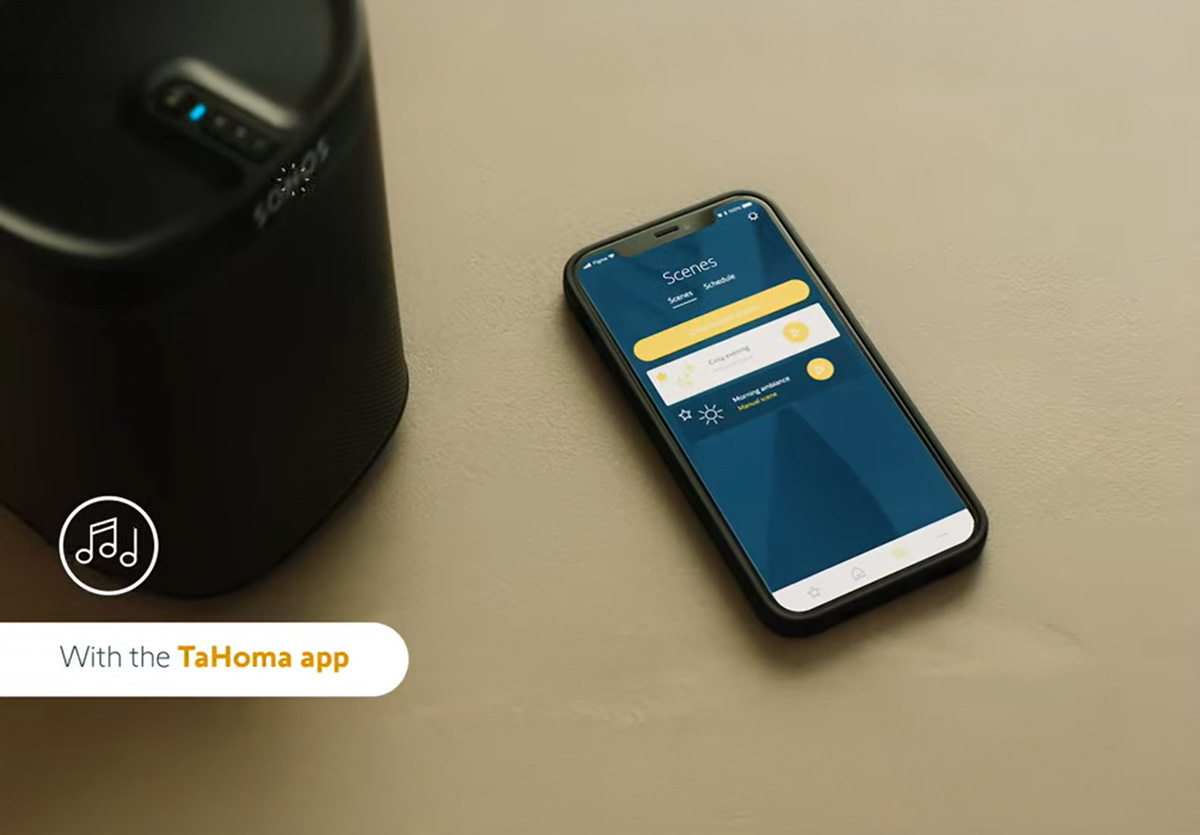
The videos, which focus on the end-user experience, introduce the Zigbee comfort-driven ecosystem and explore the benefits of Somfy’s connected solution, the TaHoma switch.
“In 2025, online video represents 82% of all web traffic, thanks to the easy-to-consume short-form videos available on TikTok, Instagram and YouTube,” says Ladu.
“We’ve developed a scrolling culture where consumers are thriving on bite-sized, high-stimulation content and as a brand, we need to adapt to meet this challenge.”
“Short-form videos haven’t destroyed attention spans; it has reshaped them. Our opportunity as marketers lies in hooking them in within those first 2-3 seconds, using bold statements to build awareness and then direct them to longer-form content where we can build consideration and drive conversion.”
“They serve their purpose at the top of the marketing funnel and should be incorporated into marketing strategies as part of an integrated campaign.”
Over recent years, Somfy has found success in online video marketing through connected TV (CTV) and video on demand(VOD) advertising.
“We returned to advertising during the Tour de France again in July 2025 through SBS On Demand and were impressed by the results, achieving over 1100 watch hours on our 30 second ad.”
“Currently, our ad is also live on 9Now, running alongside The Block.”
“People no longer structure their schedules around TV, and VOD platforms allow audiences to watch content on their own time. This allows us to deliver ads that target specific demographics, behaviours, areas, and interests based on the content they are watching.”
Somfy is also continuously updating its online video library, focusing on growing technical support and product information for manufacturers, retailers, and installers. Its latest library of Smart Shading video assets for products on Zigbee 3.0 highlights its unwavering commitment to the customer experience.
“Online video is not just for advertising; it’s a powerful resource for us to provide our customers, to make the commissioning process as simple as possible.”
Scan the QR code to explore Somfy’s library of technical training videos.

Norman – video is no longer optional
Giorgia English, Marketing Manager – Norman Australia, tells WFA that good marketing is the ability to craft a compelling story that communicates the value a business provides and turns an audience into future customers.
“Fuelled by the explosive growth of platforms like TikTok, video has reshaped the marketing landscape in the 2020s, changing how these stories are told.”
“Spend five minutes on one of these platforms and it’s clear why they’re so powerful, the real challenge is not losing the next half hour. For businesses, the question is how to harness this engaging medium to tell a story that captures attention and drives results.”
“The best place to start is by asking why. Why am I making this video? Defining the purpose upfront ensures you’re not just producing content for the sake of it but creating something that delivers real value. Value is what grabs attention and holds it, turning a quick view into the start of a customer journey.”
English says that for some businesses, that purpose might be awareness, introducing the brand to new audiences in a way that sparks curiosity.
“For others, it may be education, showing how a product works, solving a common problem, or demonstrating quality and craftsmanship.”
“Or it may be conversion, moving a viewer from interest to action with a clear call to buy, book an appointment, or enquire. By identifying the goal first, you can shape the message, tone, and format of the video to fit, ensuring that every second of content works toward a meaningful outcome.”
“Once you’re clear on the purpose, the next step is to think about where the video will be used. Different platforms demand different strategies, and organic content plays a different role to paid ads.”
English points out that organic videos should create interest and build trust, stopping the scroll with relevance and relatability.

“Ads, by contrast, give you control over targeting and messaging, so they should focus on driving specific actions like clicks, sign-ups, or enquiries.”
She adds that TikTok and Instagram both prioritise short-form video but serve different audiences.
“TikTok thrives on authentic, unpolished clips that feel natural to the platform, making it effective for younger audiences who value relatability and quick inspiration.”
“Instagram, by contrast, leans toward polished, aspirational content that resonates with millennials and design-conscious buyers. The key is strategy; figure out who your audience is and start with the platform where they already are. You don’t need to be everywhere, focus on one channel that fits, then expand as you grow.”
“No matter the platform, the most effective approach is the one guided by data. Different audiences will respond in different ways, so the key is to experiment across formats and messaging. By setting up a clear feedback loop, tracking views, watch time, clicks, and conversions, you can see what resonates and refine your strategy. The more you test and measure, the better equipped you’ll be to invest in the content and platforms that actually deliver results.”
English says that for the window furnishings industry, video is one of the most effective tools to educate customers on new or innovative products, making it easy to visualise how they look and perform.
“It also allows you to demonstrate quality and craftsmanship in a way that words alone can’t, showing the smooth operation and innovative functions that define the everyday experience.”
“And when you’re working with a supplier like Norman, known for strong quality and craftsmanship, showcasing these strengths through video not only brings the products to life but also helps you stand out in the market and build trust with consumers.”
BBPM – online product training and customer engagement
In a market where product knowledge and customer experience are key to sales success, Blinds by Peter Meyer has developed an interactive Virtual Showroom that combines online education with an immersive product presentation platform. This innovation reflects a broader industry shift towards digital tools that support both trade professionals and end customers.
“The Virtual Showroom allows users to explore the full Blinds by Peter Meyer product portfolio from any device,” Managing Director of Blinds by Peter Meyer, Simon Meyer, tells WFA.
“Navigating through the digital space, visitors can view products in realistic settings, click on interactive hotspots for short demonstration videos, and access detailed technical specifications. The result is a learning environment where product features, applications, and benefits are easy to understand and present.”
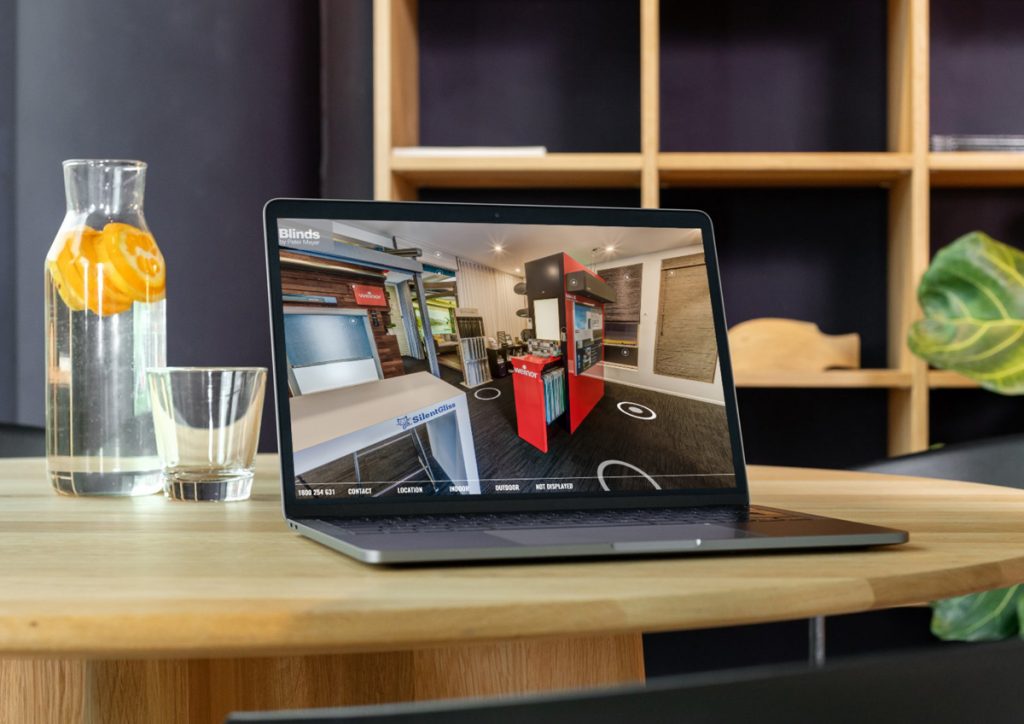
“While the Virtual Showroom is a valuable resource for customers, its greatest strength lies in its use by industry professionals. Retailers, designers, and specifiers can use the platform as an extension of their own showroom, walking clients through solutions in real time, whether in-person on a tablet, during a video consultation, or as part of a follow-up email. The integration of video-led product demonstrations ensures consistent messaging, reducing the risk of misinformation and improving decision-making.”
Meyer says the platform can be linked directly from a retailer’s own website, creating a smooth pathway for customers to explore products without losing the connection to their primary point of contact.
“This alignment between trade and supplier reinforces trust and maintains a cohesive sales journey.”
“The rise of digital showrooms is not just a convenience – it’s a response to changing customer expectations.”
“In an era where clients expect to research, compare, and visualise products before committing to a purchase, a resource like the Blinds by Peter Meyer Virtual Showroom enables the trade to meet that demand without the limitations of location or opening hours.”
“By pairing industry expertise with interactive technology, the Virtual Showroom enhances both product education and sales efficiency. It reflects an ongoing commitment to supporting the trade with tools that adapt to modern buying behaviours, while maintaining the personalised service and technical guidance that remain at the heart of the window furnishings sector.”