
Please turn your device to portrait.

The customer journey no longer starts at the showroom door. For window furnishing retailers, it begins with a late-night Google search, a manufacturer’s product visualiser, or a video demonstration viewed from the couch. The question isn’t whether consumers will research online before visiting a dealer – it’s how manufacturers can make that digital discovery work for the trade channel, not against it.
Four companies are approaching this differently, but with a shared principle: online marketing should build category awareness and equip retailers to close sales, not bypass them.
AI insights
Somfy shares key observations on how AI is transforming the online window fashions industry.
The window fashions industry has always been built on personal interaction – touching fabrics, flicking through catalogues, standing in a showroom while comparing textures. However, over the past year, the digital environment has shifted dramatically and that shift is accelerating.
“I’ve seen a major change in the digital landscape in the last 12 months,” says Mandy Francis, Digital Marketing Specialist for Somfy Oceania. “The rapid rise of AI and its integration into platforms such as Google had a direct impact on campaign performance, particularly in the second half of 2025, as the roll-out progressed.”
That impact is being felt throughout the entire customer journey – not just by consumers, but by the retailers, manufacturers and installers who support them.
As more customers turn to online channels to explore smart shading solutions, AI has quickly become the invisible engine behind how brands engage, educate and convert leads. What once required a face-to-face conversation, can now begin digitally with surprising accuracy and for the B2B side of the industry, this shift isn’t a threat it’s a great opportunity.
One of the most significant changes is the way AI is helping customers visualise products before they ever step foot in a showroom. The inability to picture a fabric or shading system in a space has always been a barrier for consumers. Now, machine-learning systems and visualisation tools are filling that gap. AI can interpret a customer’s browsing behaviour, preferred styles, budget and even the type of room they’re decorating to recommend the most suitable solutions – acting almost like a 24/7 digital sales consultant. Paired with AI-powered visualisers that can generate realistic mock-ups within their own home, customers are arriving to retailers with far more clarity and confidence. For B2B partners that means warmer leads, fewer abandoned quotes and a faster path from enquiry to installation.
But the transformation doesn’t stop at the customer interface. Behind the scenes, AI is reshaping how brands manage their digital visibility, particularly as search behaviour rapidly evolves. “We’ve seen a major change in the way SEO functions in 2025/2026. Customers are using AI agents, voice assistants and social media platforms to find home automation solutions,” Francis explains. Traditional search engines are no longer the single gateway to discovery. People are searching through TikTok tutorials, asking ChatGPT for product recommendations and using smart home speakers to troubleshoot or compare solutions.
In such a competitive digital landscape, staying visible has become more complex and more strategic. AI helps brands decode this complexity by analysing huge volumes of search and behavioural data to identify high-intent terms, emerging local patterns and seasonal spikes in product demand. It can refine metadata, highlight content that needs refreshing and recommend structured markups to ensure product pages surface accurately across platforms. According to Francis, the “brands that actively monitor and optimise their campaigns in this new environment are the ones maintaining strong digital performance and remaining front of mind”.
What’s particularly important for B2B organisations, manufacturers, distributors and installers is that this shift is not purely consumer-focused. AI is also reinventing the operational layer of the industry. It supports smarter forecasting, reduces administrative bottlenecks, helps avoid quoting errors and ensures that customers receive consistent advice regardless of whether they connect with a brand online or in store. As smart home technology becomes more widely adopted, AI is also playing an increasing role in helping customers understand compatibility, energy-saving benefits and home automation options.
All of this adds up to a stronger, more connected customer experience – one that elevates the entire brand.
AI is no longer an experimental tool sitting at the edge of digital marketing. It is quickly becoming an essential tool that helps businesses remain competitive, visible and efficient. From elevating customer experience to optimising operations and driving more cost-efficient marketing, AI empowers businesses to innovate at every stage of the digital journey.
Clarity that creates momentum
CW Systems took a different route: brand consolidation. After operating multiple product lines under separate identities, the company brought everything under one roof with a unified digital presence.
“When we had three or four different brand websites, each with their own look and messaging, it created confusion not just for consumers, but for our dealer network,” says Jacob Crutcher, Sales Director at CW Systems. “Retailers were explaining the relationships between brands instead of selling product benefits. That’s friction we didn’t need.”
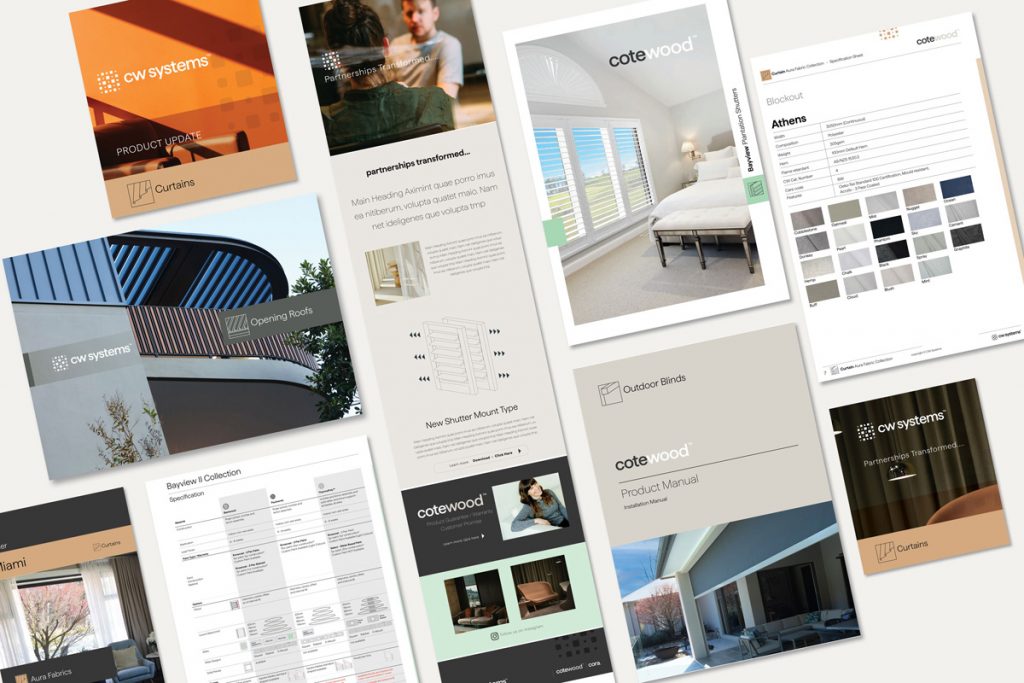

The consolidated approach extends to trade-facing tools. CW Systems host a dealer portal that streamlines ordering, provides marketing assets, and offers product training – all in one place. It’ eliminates the inefficiencies that slow sales cycles.
Crutcher sees the professional digital presence as a credibility multiplier. “we’re still building, but consolidating our portfolio allows us to establish digital credibility around a single brand, to support our customers. When someone researches our products online and finds clear information, good imagery, proper technical specs – that validates the retailer’s recommendation. It supports the sale rather than complicating it.”
The efficiency focus shows in details: downloadable product guides that retailers can share with clients, updated pricing that syncs automatically, imagery libraries that dealers can use in their own marketing. It’s infrastructure designed to reduce the administrative load on trade partners.
Consumer-Focused Marketing That Strengthens Retailers
MYT Shutters frames its online presence explicitly as retailer support. The company focuses its content on building awareness and understanding of shutters among consumers, helping potential customers arrive better informed when they speak with a retailer.
“We’re not trying to sell shutters directly to homeowners,” says Chantal Diederix, Brand Manager at MYT. “We’re creating the content that helps retailers have better conversations. If a customer has already watched our video about shutter materials or read our blog about shutters versus blinds, the retailer isn’t starting from zero.”
This approach extends to lead handling. When MYT’s website generates a customer enquiry, it goes straight to a trade partner in that area. No manufacturer middleman, no competing quotes. The digital marketing builds the pipeline; the retailer closes it.
Diederix highlights social media as another support mechanism. “When we share a completed project on Instagram, we tag the installer. When we post educational content, we direct people to find their local specialist. We’re using our platform to amplify what retailers do, not replace them.”
The company also provides retailers with a range of promotional materials, including professional installation photography, product flyers and brochures that support product presentation and local promotion. It’s recognition that not every dealer has an in-house marketing team, but they’re still competing for attention in their local market.
The showroom that never closes
Meyer Blinds’ Virtual Showroom has been running long enough to prove the concept: digital tools can extend a retailer’s reach without cannibalising their business.
The platform lives on dealer websites – as well as Meyer’s own site – and functions as a product exploration tool. Customers can browse ranges, view fabrics, watch installation videos, and see products in different settings. When they’re ready to progress, the enquiry goes to that specific dealer.
“The key is clarity about what the tool is for,” says Simon Meyer, Managing Director of Meyer Blinds. “It’s not a sales platform. It’s a way for customers to do their homework, get confident about what they want, and then have a much more focused conversation with the retailer. That benefits everyone.”
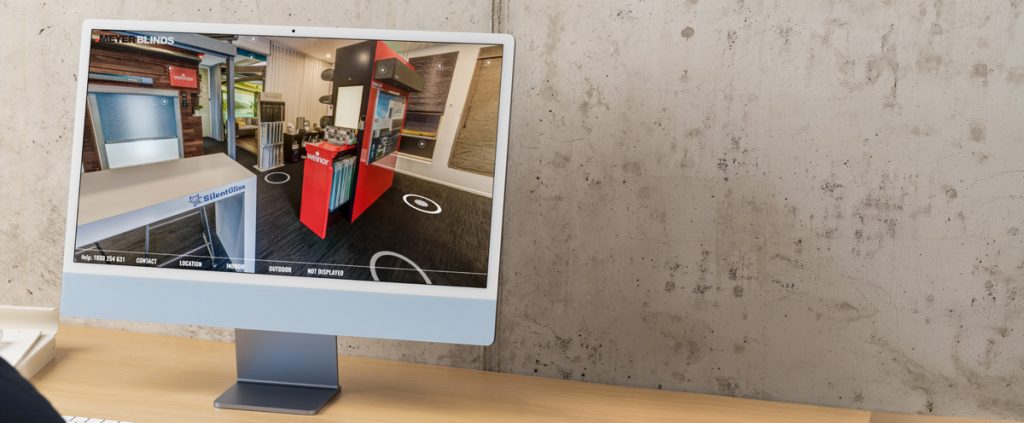
The video demonstrations matter particularly for complex products. A customer can watch how a Roman Blind operates, see the chain mechanism, understand the fabric options – all before the in-home consultation. That pre-education means fewer site visits explaining basics, more time discussing customisation.
Meyer sees consistency as critical. “When the information a customer finds online matches what the dealer tells them in person, that builds trust. When it’s contradictory or the website is outdated while the dealer is pushing something new, that creates doubt. Our job is to make sure our digital presence supports the message retailers are delivering.”
Supporting the trade channel
The common thread across these four approaches: online marketing as infrastructure, not competition. Whether it’s Somfy’s AI-driven content, CW Systems’ unified digital presence, MYT’s retailer-first lead handling, or Meyer’s dealer-integrated Virtual Showroom, the strategy is about making the trade channel more effective.
For retailers, that means customers who arrive better informed, manufacturers who provide usable marketing assets, and digital tools that extend their capabilities without requiring major investment. The showroom hasn’t disappeared, it’s gained a digital foyer that works around the clock.