Please turn your device to portrait.
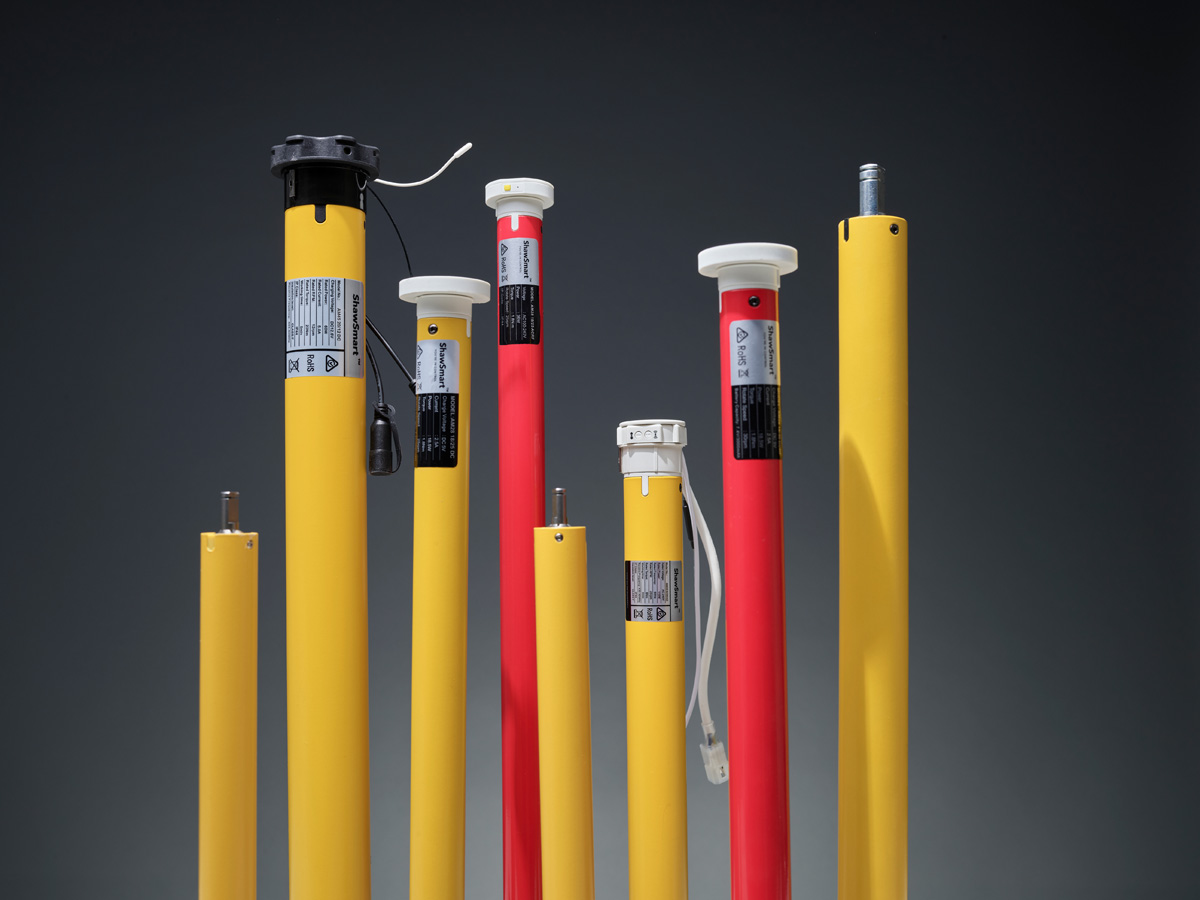
The motor range, the hub, the recessed ceiling track and the outdoor shutter: Shaw, Somfy, Meyer Blinds and MYT Shutters each cover a different part of the motorised job. WFA also sets out the power question that decides whether an electrician goes into the quote.
A single motorised job can now take in a living-room roller blind, a curtain track recessed into the ceiling and an aluminium shutter closing off the outdoor entertaining area. Each uses a different motor and a different mounting system, and each raises the same early question for the installer: who else needs to be on site.
Power usually answers it. Connecting a 240V motor to fixed wiring is electrical work under AS/NZS 3000, the Wiring Rules, and must be carried out by a licensed electrician in every state and territory. Battery-powered and rechargeable wire-free motors involve no fixed wiring and need no electrician to install, and the same applies to motors that plug into an existing power point. The boundary is the power point itself: installing a new one for a motor is electrical work.
Both Shaw and Meyer Blinds offer mains-powered as well as battery or wire-free motors, so the motor choice decides whether an electrician goes into the quote. A battery motor on a roller blind can go straight onto the work order. A hard-wired motor at the end of a recessed ceiling track cannot, unless the electrical work is already covered on the project.
The four suppliers that follow each cover a different part of that job. Shaw sets out its ShawSmart motor range, with battery and AC-powered options, Zigbee 3.0 and RF control, and the support behind it. Somfy steps back to the TaHoma switch, the hub that ties window coverings to the rest of the connected home. Meyer Blinds takes motorisation into the ceiling with its PureGlyde recessed curtain track and Somfy motors. MYT Shutters takes it outdoors, to motorised aluminium shutters at the back of the house.
SHAW BUILDS OUT THE SHAWSMART RANGE
Shaw sees the growth of its ShawSmart range as a measure of how much motorisation is now going into Australian homes. Jack Kimmins of Shaw Performance Hardware puts it plainly: “The growth of ShawSmart over the past two years tells the story of the increase in motorised blinds and awnings going into Australian homes. Since launching in 2025, customer take-up has exceeded our expectations and has given us a clear direction for where to invest and expand the range.”
Kimmins says that investment is going into hardware and support alike. “We’re continuing to develop ShawSmart around what our customers are asking for, with indoor solar panels, a new cost-effective RF hub, obstacle-detection motors for ZipGrip and SRS blinds, expanded crown and drive options, and the introduction of the ShawSmart App. We’re also investing heavily in support. Our ShawSmart Hotline, expanded YouTube tutorial library and resources for new partners are designed to make motorisation easier to specify, install and support.”
“For us, the growth of ShawSmart isn’t simply about selling more motors,” he says, “it’s about building a complete motorisation ecosystem that gives retailers the products, compatibility and support they need to confidently grow their automation business.”
Kimmins puts reliability first. “Reliability is at the heart of ShawSmart. Our motors currently deliver a 0.3% failure rate, backed by rigorous testing and quality control before products reach the market. We don’t just want to supply a motor that works,” he says, “we want retailers to have confidence putting ShawSmart into their customers’ homes.”
“That confidence is backed by extensive Australia-based support. For retailers new to ShawSmart motorisation, our team can provide guidance through programming and installation as they build their confidence with the system. For long-standing partners, the support is there when they need it,” Kimmins says, “whether that’s troubleshooting an installation, selecting the right motor or answering a technical question.”
Shaw says it also works with partners on marketing, providing product information, imagery, content and promotional resources to help retailers confidently take motorisation to their customers and grow the category.
“Our ShawSmart Hotline, training, growing library of YouTube tutorials and ongoing technical and marketing resources mean retailers aren’t left on their own once the motor leaves the warehouse. For us, reliability isn’t just a statistic,” Kimmins says, “it’s the combination of a dependable product, strong local support and a partner-focused approach that helps retailers succeed.”
Most calls to Shaw, Kimmins says, come from new ShawSmart partners becoming familiar with the programming sequence rather than from product issues, and the Australia-based ShawSmart Hotline provides immediate support while retailers are getting started. “Interestingly, the feedback we hear most often is that once they learn the sequence, they’re surprised by how simple it is,” he says, “with very few steps required to complete each operation.” The growing library of YouTube tutorials also gives retailers quick, on-demand support whenever they need a refresher.
On protocol, Shaw’s preference is Zigbee 3.0. “At ShawSmart,” Kimmins says, “we see Zigbee 3.0 as our preferred automation platform, particularly for customers looking for a genuinely connected home. Its mesh network allows devices to communicate with each other, improving reliability as a system grows, while its two-way communication provides valuable feedback such as motor status and battery levels.
“Importantly, many homeowners already have established smart-home ecosystems with other Zigbee devices. ShawSmart can be integrated into these existing ecosystems, making it easy to add motorised blinds and awnings without creating a separate, isolated system.
“We’re also introducing the ShawSmart App, bringing automation to the homeowner’s fingertips. Customers will be able to create scenes, set timers and schedules, and use weather-based automation to automatically respond to changing conditions,” he says, “turning motorised blinds and awnings into an active part of the smart home.”
The RF hub is aimed at the other end of the market. “We recognise that not every customer needs a fully connected smart-home system. That’s why we’re also introducing an RF hub, providing a more cost-effective entry into automation while keeping installation and setup simple.”
On future compatibility, Kimmins’s advice to retailers is to stay with what is proven. “For retailers, our view is that established, proven protocols are the best route. Rather than promising that a particular product will be ‘future-proof’, focusing on what is available and proven today, while selecting systems that have strong ecosystem support and an ongoing development pathway. For ShawSmart, that means offering Zigbee 3.0 for advanced automation and connectivity, alongside RF for customers looking for a simpler, more cost-effective solution.”
Kimmins also makes the child-safety case for motorisation. “Motorisation is one of the most effective ways to remove cord and chain-related hazards from internal window coverings. With ShawSmart, blinds can be operated without exposed operating cords or chains, making motorisation an increasingly attractive option for family homes and areas where child safety is a priority. We’ve also put safety into the details. ShawSmart remotes have undergone child-safety testing and passed the applicable testing requirements, giving retailers and homeowners added confidence in the complete operating solution.
“But the opportunity goes beyond safety. Motorisation allows retailers to turn a compliance conversation into a premium product conversation,” he says, “combining cordless operation with convenience, energy management and smart-home functionality.
“ShawSmart gives retailers a simple way to offer this upgrade, with reliable battery and AC-powered options, easy operation and smart automation through Zigbee 3.0. For homeowners, the message is simple: safer, smarter and easier to use.”
SOMFY: TAHOMA SWITCH AND THE CONNECTED HOME
Somfy’s flagship product, the TaHoma switch, is central to the company’s connected-home offering. “If you look back to 10 years ago, homeowners considered smart home technology an indulgence, or something that was reserved only for the tech-savvy. Now it’s an essential part of a home,” says Mary Ladu, Marketing Manager, Somfy Oceania.
“We used to analyse data on how many Australian households have at least one smart home device. Today, the number is so high, it no longer tells a story,” Ladu says.
Omdia data cited by NBN Co puts the average number of internet-connected devices in broadband households globally at 25, with that figure expected to top 44 by 2030.
Ladu puts that figure in context.
“The smart home market is booming. 44 connected devices per household sounds hard to believe but picture a modern home: everything from lighting and climate control, to security, entertainment, energy management and even appliances are becoming smart.
“You come home from work and right from the front door, the doorbell and even the door lock can be connected. You open the door and your curtains and blinds have already lowered, your lights turn on as you walk in, your smart speaker starts playing music and your air conditioning has adjusted based on the weather.
“Your coffee machine starts brewing, your fridge is tracking your groceries, and your oven has already preheated on your way home.”
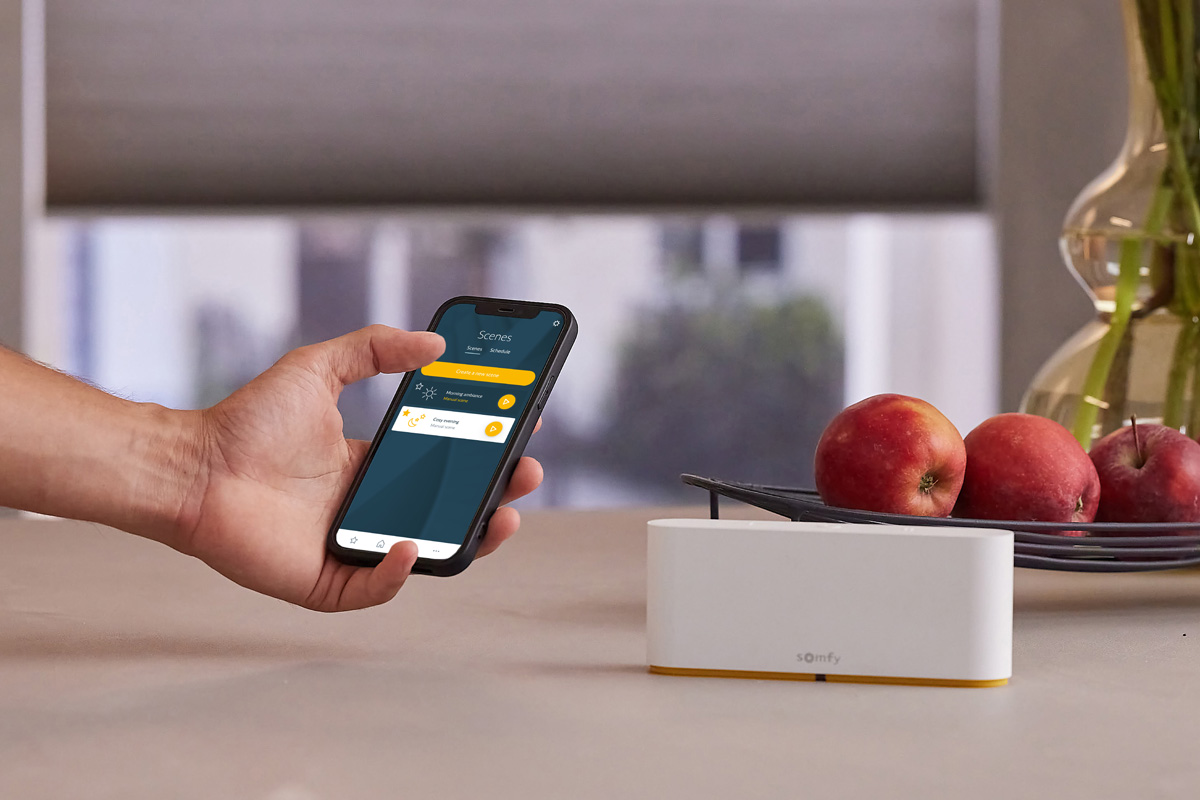
Somfy says the TaHoma switch connects all its products to a wide range of third-party partners, enabling control through a single point: the hub itself, via voice control or through the TaHoma by Somfy app, forming the foundation of a complete connected home.
“Adding a touch of connectivity opens a world of possibilities with the TaHoma switch boasting compatibility with close to 300 types of Somfy products and major home equipment brands such as Philips Hue, Sonos and Netatmo,” says Nicki Beggs, Product Marketing Executive, Somfy.
“It also meets the needs of end users who are looking for new ways to save on their energy bills. Somfy makes that simple by allowing you to set and forget.
“With TaHoma switch users can program window coverings to close at dusk during winter and keep the heat in before the temperature drops.
“Conversely, in summer, blinds can be programmed to lower at the hottest times of the day, so the home stays cool, relieving pressure on the air conditioning system.
“This is a major selling point for automation, particularly when paired with the compelling results produced by the WSAA’s WincovER tool.”
Energy management is also built into the TaHoma by Somfy app through ‘My Energy’, Somfy says, providing users with energy tips and consumption alerts to help them save money and reduce energy consumption.
“End users can set up parameters to conserve energy for products in the home. For example, if a connected light has been on for more than four hours, an alert will pop up on the end user’s phone and advise the light has been on, prompting them to take action,” Beggs says.
“The app is designed with the user experience in mind, providing value beyond just controlling window coverings.
“The real opportunity is to make the home work more intelligently around the people living in it.”
MEYER BLINDS: MOTORISATION GOES ARCHITECTURAL WITH PUREGLYDE
Meyer Blinds developed its new PureGlyde recessed curtain track system to address a challenge it sees across the trade. Motorisation has moved rapidly from premium upgrade to an increasingly expected part of the window furnishings specification, the company says. The challenge for the trade is no longer simply how to motorise a curtain. It is how to integrate that technology cleanly into the architecture while maintaining straightforward installation and future serviceability.
“Architects and designers increasingly want motorised curtains to disappear into the ceiling, but traditional recessed installations can create compromises around the motor end, access and finishing,” says Simon Meyer, Managing Director of Meyer Blinds. “We designed PureGlyde from the ground up to solve those issues.”
PureGlyde combines Somfy Glydea Ultra and Movelite motor technology with a custom aluminium recess extrusion and purpose-designed componentry. A key difference is the ceiling opening itself. Rather than requiring oversized or rounded cut-outs around the motor, PureGlyde allows a clean, straight wall-to-wall recess, creating a more resolved architectural finish.
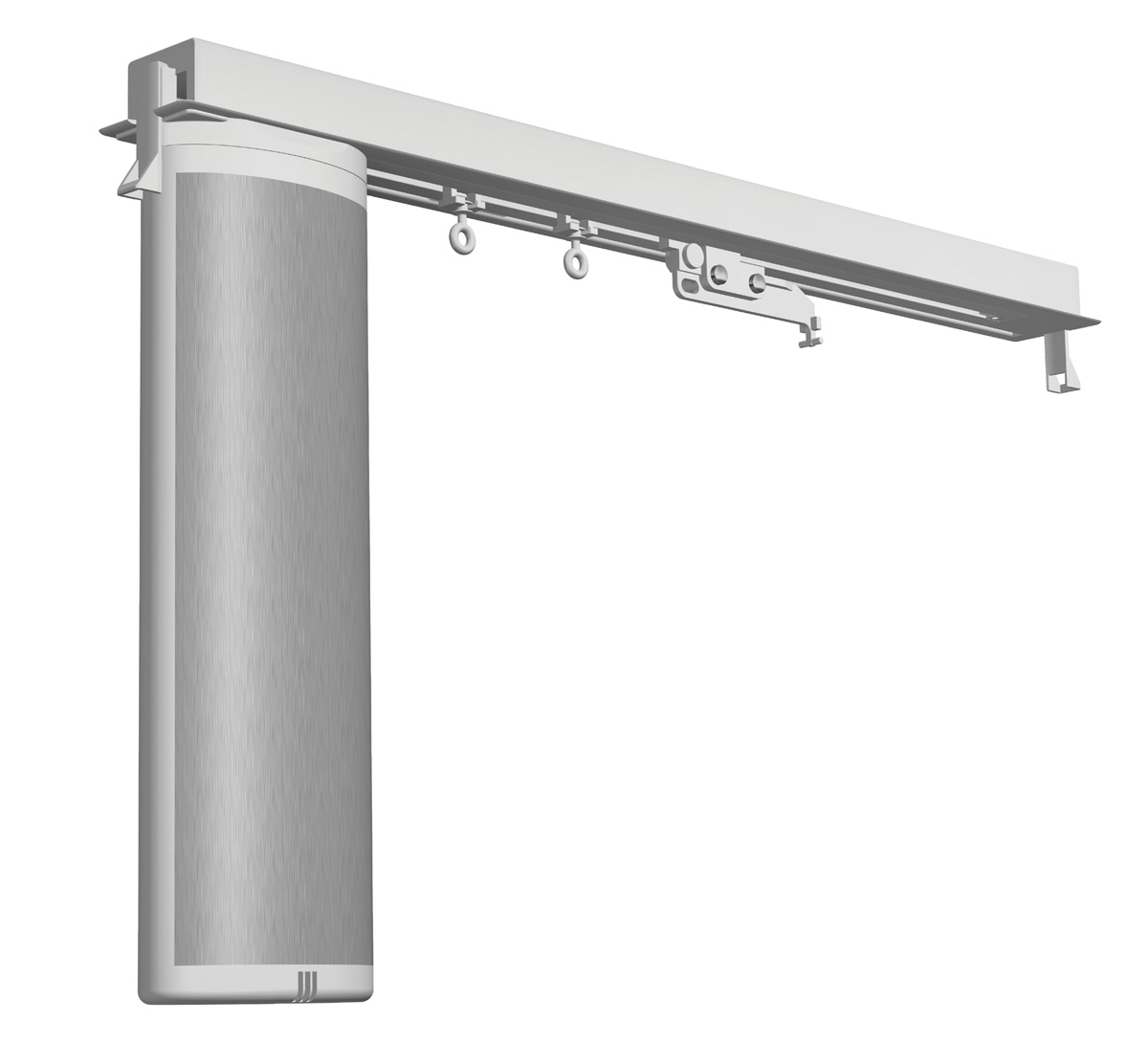
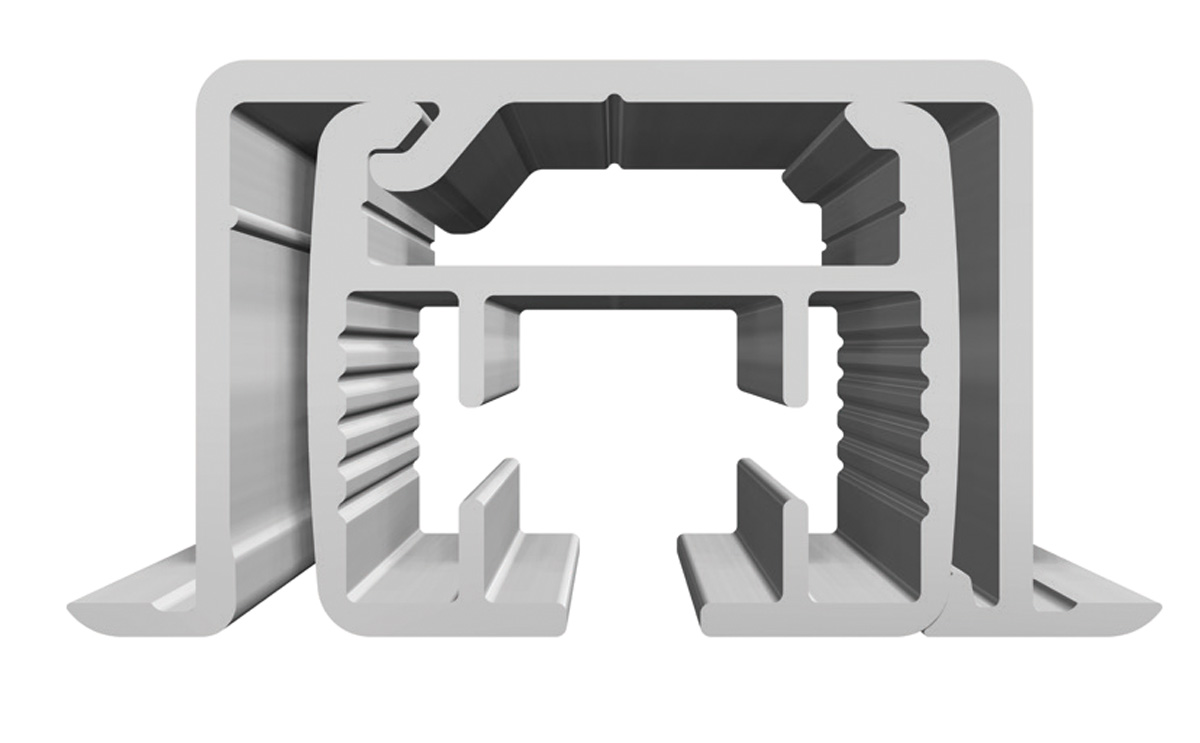
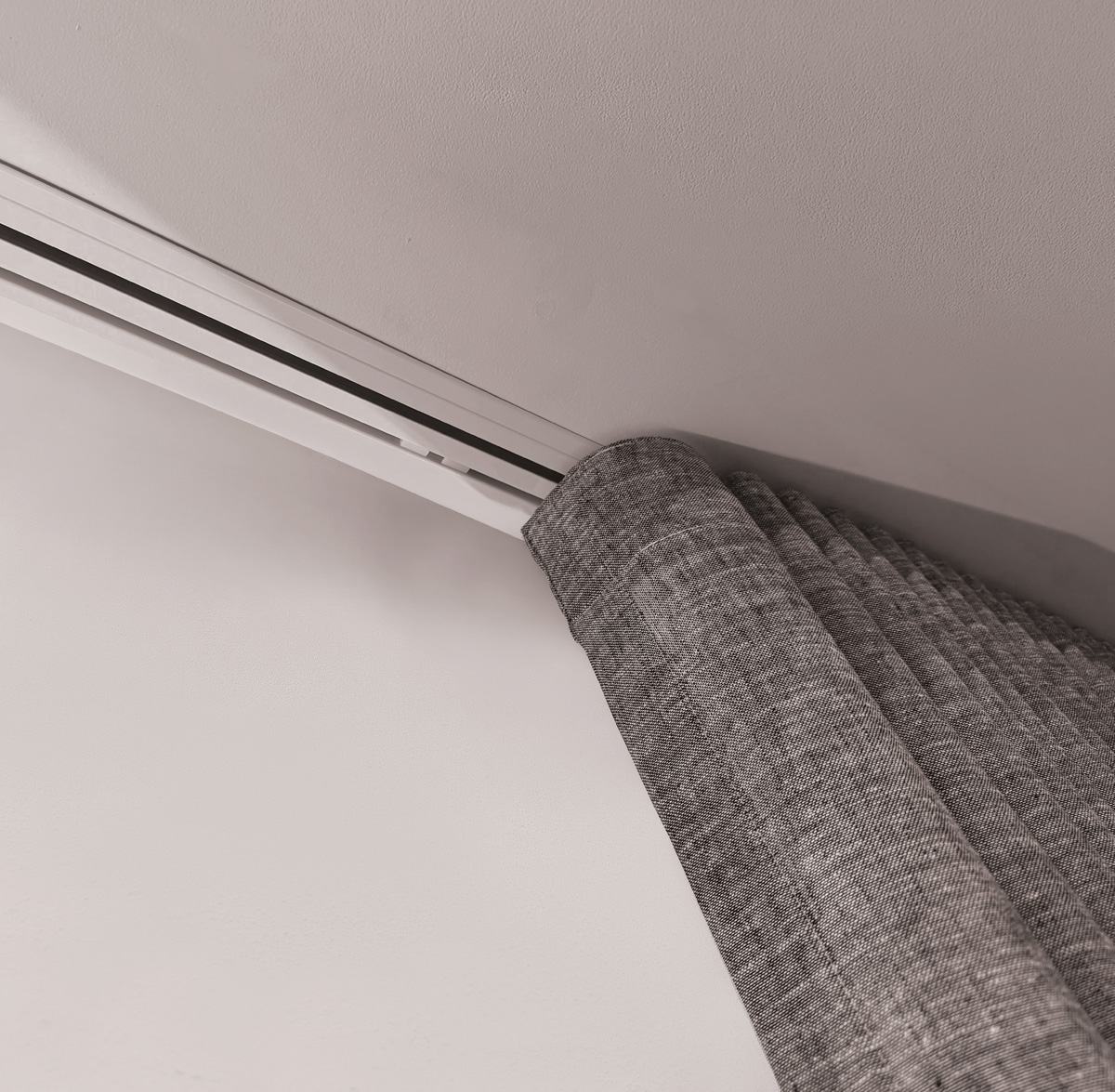
The track is secured inside the recess using Meyer Blinds’ removable wedge system. The wedges lock the track into the profile during installation but can be removed to provide access for future servicing.
“Recessing something into a ceiling shouldn’t mean making it difficult to access later,” Meyer says. “We wanted a system that looked integrated but was also practical for the people installing and servicing it.”
PureGlyde accommodates standard and wave curtains, with 60 mm or 80 mm glider spacing, and supports track lengths up to 15 metres and curtain weights up to 60 kg, subject to motor selection and configuration. Both the curtain track and recess profile can also be bent simultaneously, enabling fixed-radius or continuous curves with a minimum 500 mm radius, without relying on moulded plastic corner sections.
Motor options include hard-wired and wire-free Somfy solutions, with RTS, Zigbee and home automation control available. TaHoma integration can add app control, timers, scenes and scheduling.
“For retailers, the selling point is the complete solution,” Meyer says. “You’re offering Somfy motorisation, a purpose-built recess, easier access for servicing and the architectural finish the client is actually looking for.”
PureGlyde is designed and developed exclusively by Meyer Blinds and is available now. Contact the Meyer Blinds team for specifications and trade pricing.
MYT SHUTTERS TAKES MOTORISATION OUTDOORS
For MYT Shutters, motorised aluminium shutters extend an expectation that is increasingly familiar inside the home. Homeowners are now accustomed to controlling blinds, lighting and other elements at the touch of a button, and that same expectation for convenience is moving outdoors. For outdoor aluminium shutters, the combination of motorised operation, durability and greater control opens new possibilities for homeowners and the trade.
“Outdoor shutters are often installed across larger openings or areas where you might have several panels to operate,” says Scott Sloan, Global Technical Director at MYT Shutters. “That’s where motorisation starts to make a lot of practical sense. It simply makes the shutters easier to use.”
MYT’s motorised aluminium shutters allow homeowners to adjust the louvres remotely, making everyday control of light, privacy and airflow much more straightforward. That ease of operation can make a bigger difference than it first appears. “If someone has to manually adjust a number of shutters every morning and then again later in the day, there’s a good chance they won’t use them as much as they could,” Sloan says. “With motorisation, you remove that effort and get the most out of your shutters.”
Moving motorisation outdoors brings a different set of considerations. Australian exterior shutters need to handle sun, wind and changing weather conditions, and Sloan says it is important not to look at the motor in isolation. “The motor is only one part of the system,” he says. “You still need a shutter that has been designed for the environment it’s going into. Strength, hardware and overall construction all matter.”
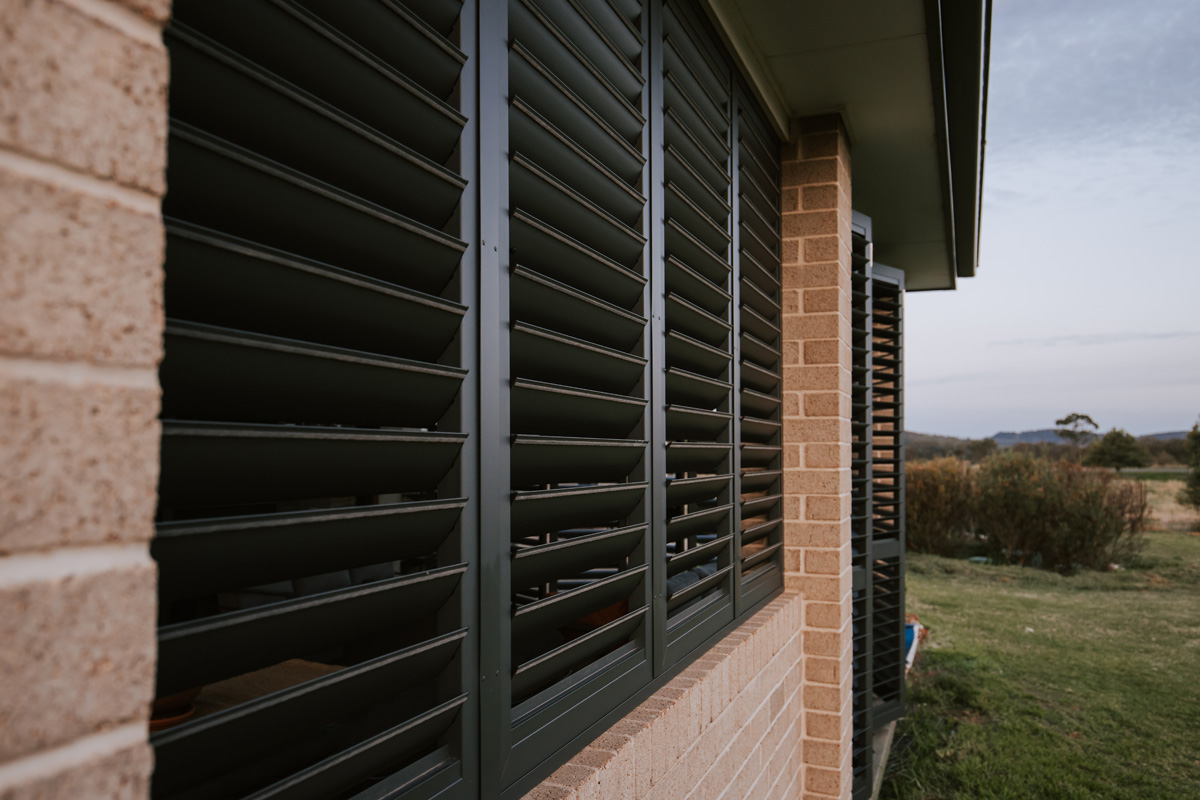
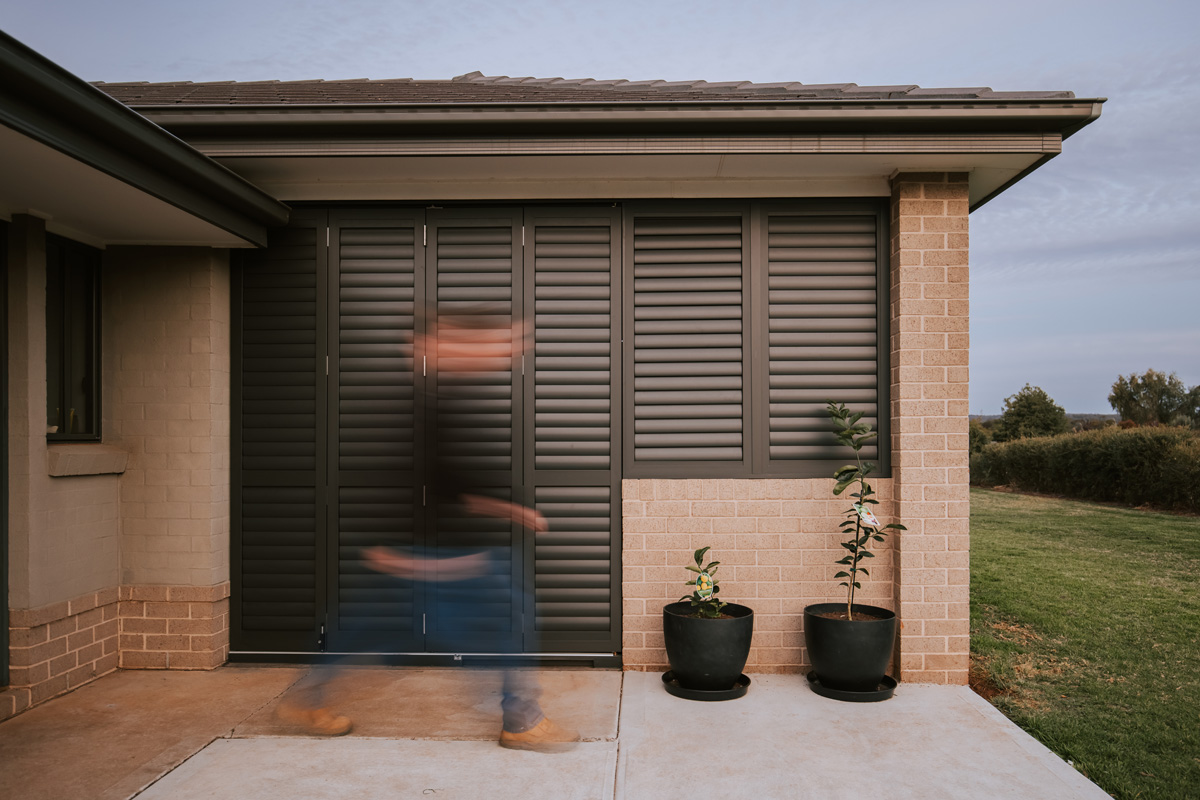
MYT’s exterior motorisation option is available within its Slimline aluminium shutter range, combining motorised operation with the strength and stability of T6-grade aluminium. The Slimline range includes custom shapes, giving retailers scope to bring motorisation into projects where architectural detail and finish are just as important as functionality.
For retailers, Sloan believes motorisation doesn’t need a complicated sales pitch. Instead, it can start with understanding how the customer plans to use the space. “Ask how often they’ll operate the shutters, how many panels they have and how they use that outdoor area,” he says. “If they’re going to adjust them regularly, motorisation can be a very practical upgrade.”
That shift in conversation is important. Rather than presenting motorisation as a piece of technology or a luxury add-on, it becomes a solution to an everyday inconvenience. As automated features become increasingly normal throughout Australian homes, the expectation for easy operation is unlikely to stop at the back door. For outdoor shutters, the opportunity is straightforward: combine the durability required outside with the convenience customers increasingly expect inside.
Somfy’s WireFree RTS motors move to USB-C
Somfy’s WireFree RTS battery motors now charge via USB-C and still install without wiring or an electrician, with the new range launching in October.
Unveiled at SuperExpo 2026, Somfy’s WireFree RTS motors now feature USB-C charging ports. Somfy says the motors also deliver improved acoustic performance and a streamlined motor head in line with its Zigbee range.
“Our new Sonesse 30 Ultra 2/20 WireFree RTS Li-ion with USB-C motor has an increased whisper quiet acoustic performance of just 42dBA,” says Nicki Beggs, Somfy Oceania’s Product Marketing Executive. “This improvement places Somfy’s WireFree RTS USB-C as the leading industry standard for 2Nm battery motorisation in Australia.”
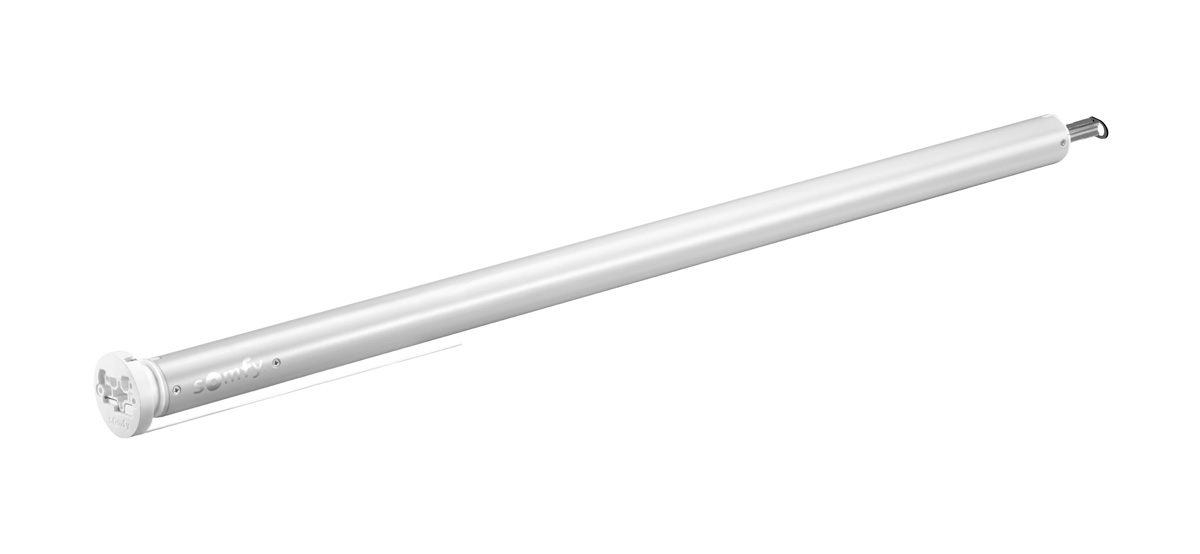
The new motor head is 8mm thick with a 40mm diameter, which Beggs says “guarantees a reduced light gap and streamlined approach for calculating deductions.”
Somfy’s WireFree motors have an inbuilt rechargeable Li-ion battery that Somfy says only needs charging once a year. Magnetic charging accessories, including the WireFree Solar Panel, add to the charging options.
“The USB-C charging is a direct response to customer pain points,” Beggs says. “We listened to our customers and came to market with a new motor range that not only resolves the charging experience but features all-round improvements.
“The beauty of WireFree is that the installation is simple and efficient, without the need for wiring or an electrician. This improved range takes that simplicity to the next level, with a patented quick drive assembly clip for a more safe, efficient and seamless installation of the Drive Wheel.”
The motors are compatible with Somfy’s TaHoma switch smart hub, for app and voice control and lifestyle automations aimed at end user comfort and convenience.
The WireFree RTS USB-C range officially launches in October, with pre-orders open now. To mark the launch, Somfy is giving customers the chance to win a trip to R+T Stuttgart 2027.
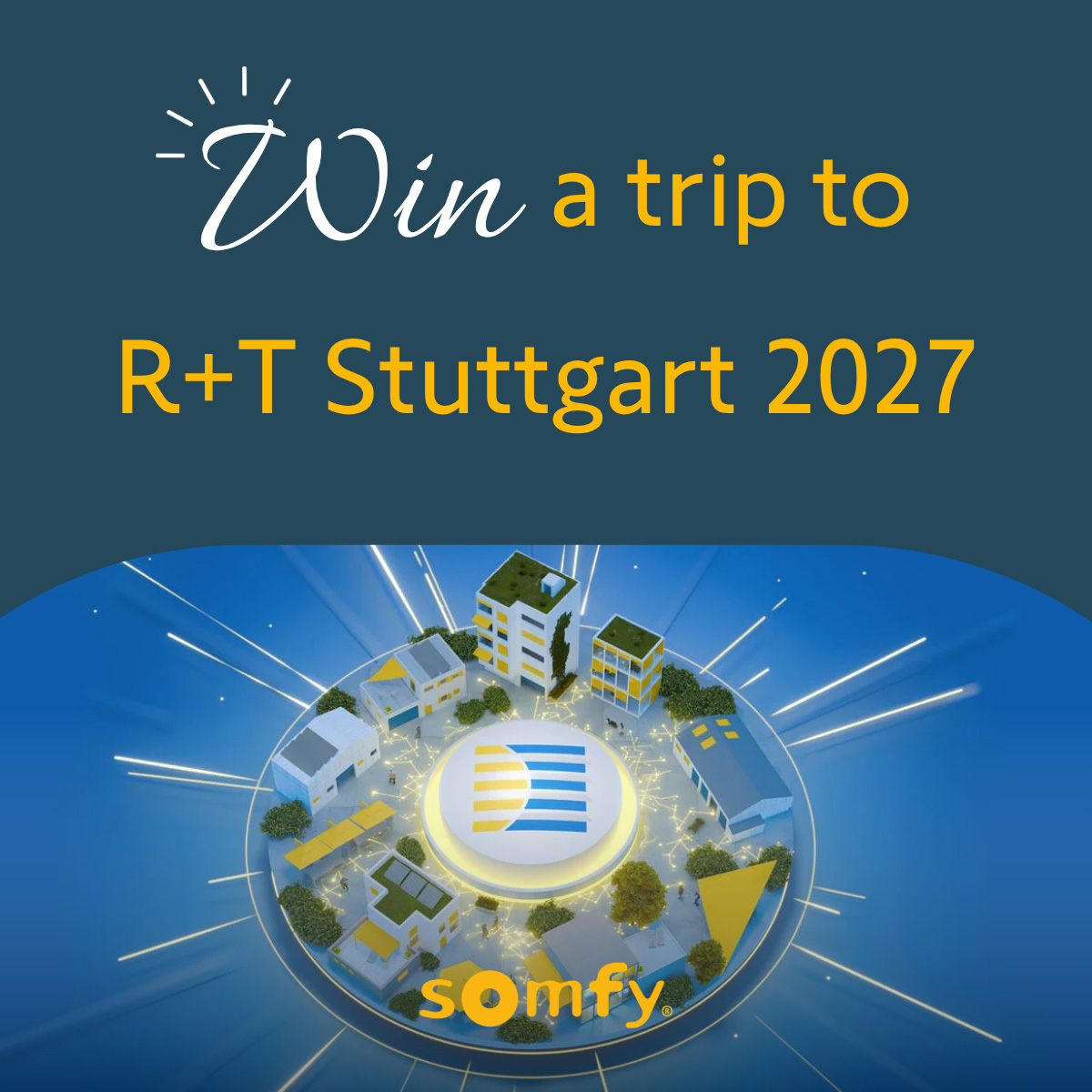
“For every 100 eligible USB-C WireFree motors pre-ordered on a single purchase order, customers receive one entry into the draw,” says Mary Ladu, Marketing Manager for Somfy Oceania. Two prize packs are on offer, each with return Premium Economy flights for two to Europe, two nights’ accommodation in Munich, Zurich or Strasbourg the weekend before R+T, and transport to Stuttgart for the show.
Authorised under ACT Permit No TP26/01748, NSW Authority No TP/05270, SA Permit No T26/1365.

Scan QR code for Terms & Conditions.