
Please turn your device to portrait.
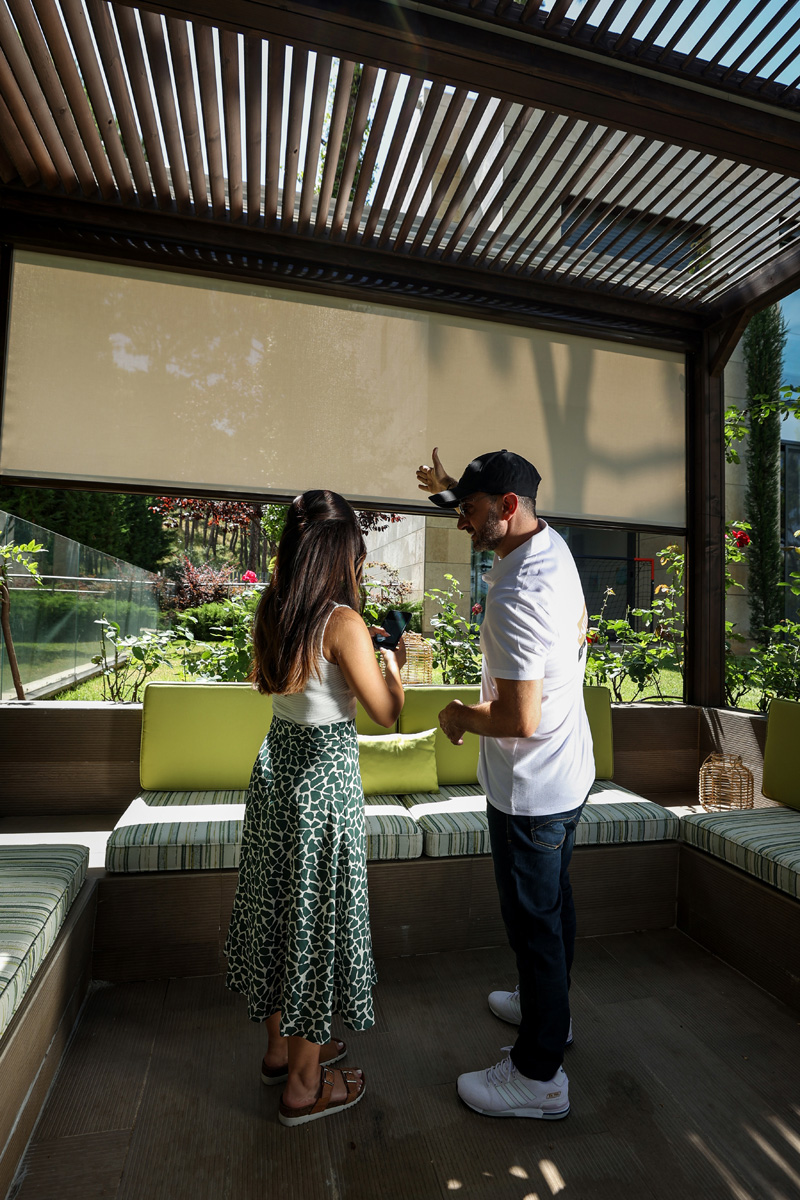
Somfy’s Maestria 50 RTS motor recalibrates after the first 30 cycles and then every 90, which the company says removes the need for return visits to adjust limits in the months after installation. Meyer Blinds has Griesser’s Grinotex external venetian blind available to the trade for project enquiries and pricing, ahead of its official Australian launch in 2027. Shaw says its ZipGrip Mega accommodates blinds up to 6.5 metres wide and 4 metres in drop.
On a large opening or an exposed elevation, the working question for the installer or retailer is where the extra load lands: on the fabric or slats, on the motor, or on the callback list.
Somfy, Meyer Blinds and Shaw all raise size. Somfy says external screens are often large. Meyer Blinds points to façades with expansive glazing and exposed elevations, and calls larger openings a key specification consideration. Shaw points to wide alfresco areas, patios and commercial spaces.
Somfy frames the problem around the fabric and the motor: sag over time, and the warranty claims and call-outs that follow when fabric unspools or jams inside the headbox. Meyer Blinds starts from the structure of the blind: stability in wind, daylight control and larger openings. Shaw puts the weight on fabric retention in the side guides, on the support behind the installer and on how the blind is operated day to day, including programming it to retract when high winds are forecast.
Somfy: the Maestria 50 RTS and Teleco
Somfy reports that as summer approaches and the weather warms, consumers turn their focus to shading their outdoor space.
“The outdoors has become a natural extension of the home, and these spaces call for greater comfort, customisation and reliability. That is a real opportunity for our customers,” says Mary Ladu, Marketing Manager for Somfy Oceania.
Ladu adds: “External screens are often large, with some spanning up to 8m, so motorisation is essential.”
Somfy says the Maestria 50 RTS has become a firm favourite among retailers and sets the benchmark for premium external screen motorisation. It suits all external screen types, including those with automatic locks.
The 50 mm diameter, 240V motor has a star head with six positioning options and a detachable motor head cable. According to Somfy, the star head gives installers the flexibility to accommodate varying bracket configurations and mounting requirements, installation is quick and straightforward, and the cable simplifies pre-wiring and commissioning.
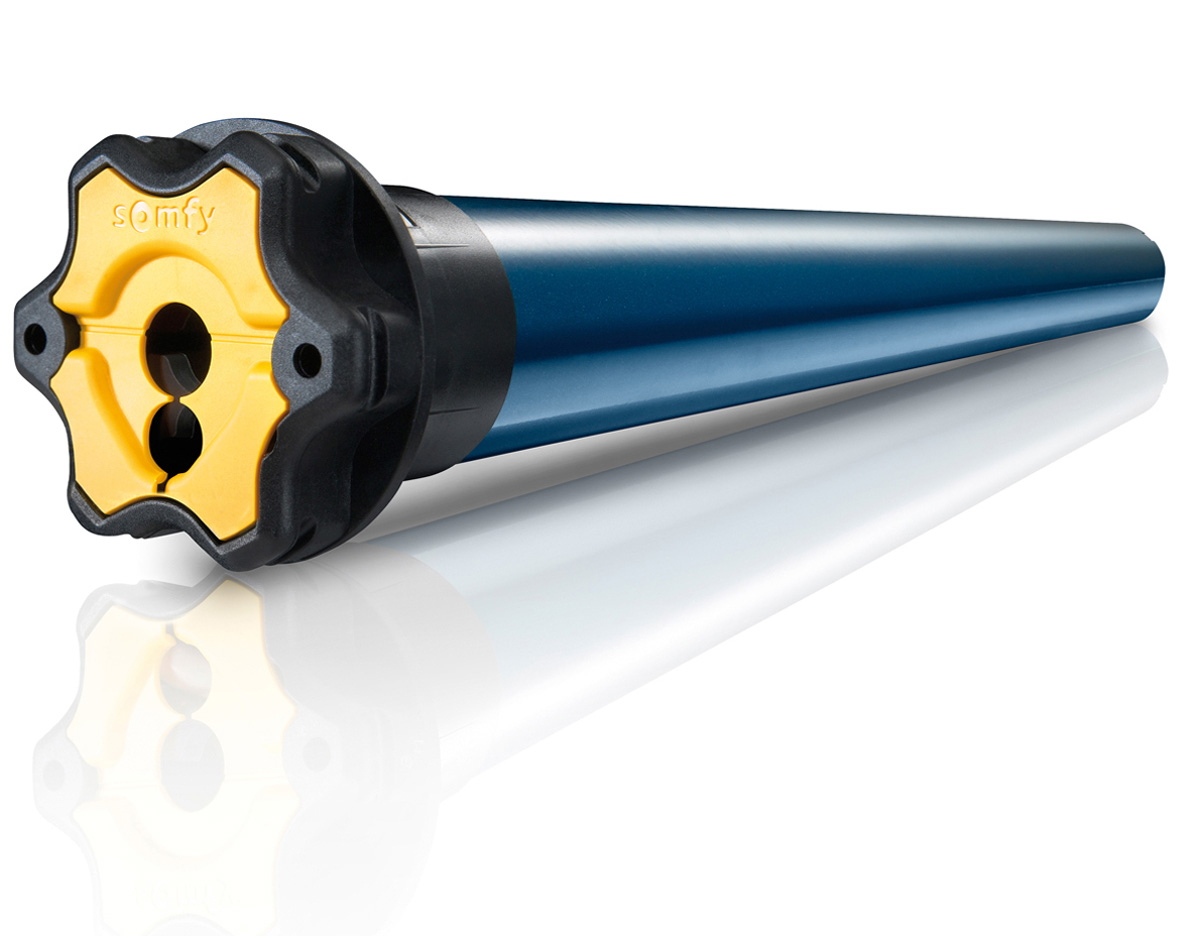
Limit setting is electronic, with three modes: automatic, semi-automatic and manual. Automatic self-tensioning recalibrates after the first 30 cycles and then every 90 cycles after that. The company says the electronic limits allow high precision, while self-tensioning addresses the common issue of fabric sag over time and eliminates the need for return visits to adjust limits in the months following installation.
The Maestria 50 RTS has obstacle and wind stall detection. If the motor encounters resistance or senses an obstacle, the screen automatically retracts. Somfy credits this with protecting both the fabric and application from damage and with reducing the risk of costly warranty claims and call-outs caused by fabric unspooling or jamming inside the headbox. The company adds that the result is peace of mind for consumers and long-term savings for both retailers and end users.
The Maestria 50 RTS also connects with Somfy’s range of RTS controls and sensors, as well as the TaHoma switch smart home hub. Somfy says users can manage their window coverings, lighting, music and heating with a single tap through the TaHoma by Somfy app.
Somfy has expanded its outdoor portfolio with the addition of Teleco. Somfy RTS is built directly into Teleco’s hardware, so outdoor lighting and automation can be controlled as one solution, including through the TaHoma switch.
“Bringing Teleco on board significantly expands what we can offer,” says Henri Laniece, General Manager of Somfy Oceania.
Laniece adds: “Our aim is a truly complete ecosystem covering indoors, outdoors, access, shading, lighting and heating, all connected and controlled from one place.”
For more information, contact your Somfy Regional Sales Manager.
Meyer Blinds: Griesser’s Grinotex
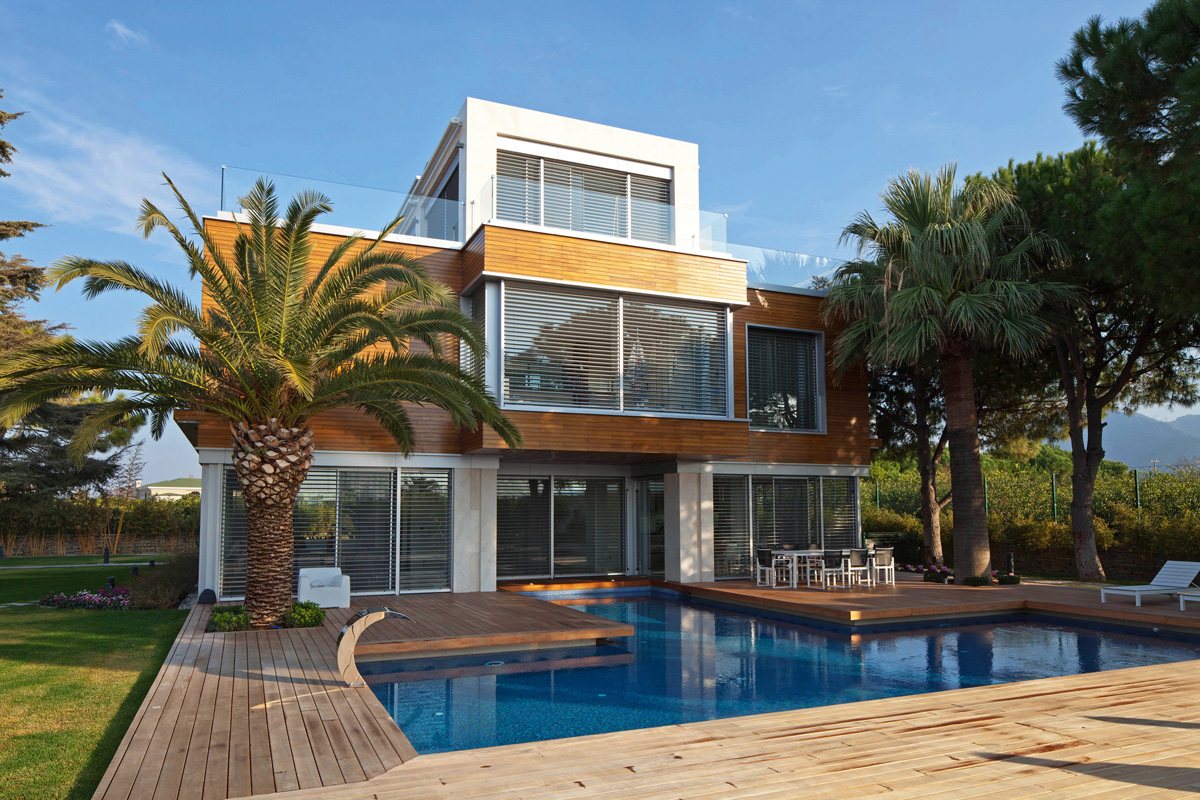
Meyer Blinds says increasingly sophisticated façade requirements are placing greater emphasis on External Venetian Blinds systems that combine precise daylight management, wind stability and architectural integration, while building design continues to favour expansive glazing and integrated façade solutions.
Griesser’s Grinotex system is scheduled for its official Australian launch through Meyer Blinds in 2027. It is already available to the trade for project enquiries and pricing, for architectural residential and commercial projects.
“Grinotex brings another level of engineering to External Venetian Blinds,” says Simon Meyer, Managing Director of Meyer Blinds. “It’s particularly relevant for architectural projects where controlling natural light, maintaining stability and accommodating larger openings are key specification considerations.”
Grinotex incorporates a patented slat adjustment mechanism with sinusoidal aluminium slats, a combination Meyer Blinds says is designed to optimise daylight distribution while minimising glare. According to Griesser, the system can deliver up to 50 per cent more natural light and 25 per cent less glare compared with conventional configurations, providing greater flexibility in managing interior daylight conditions.
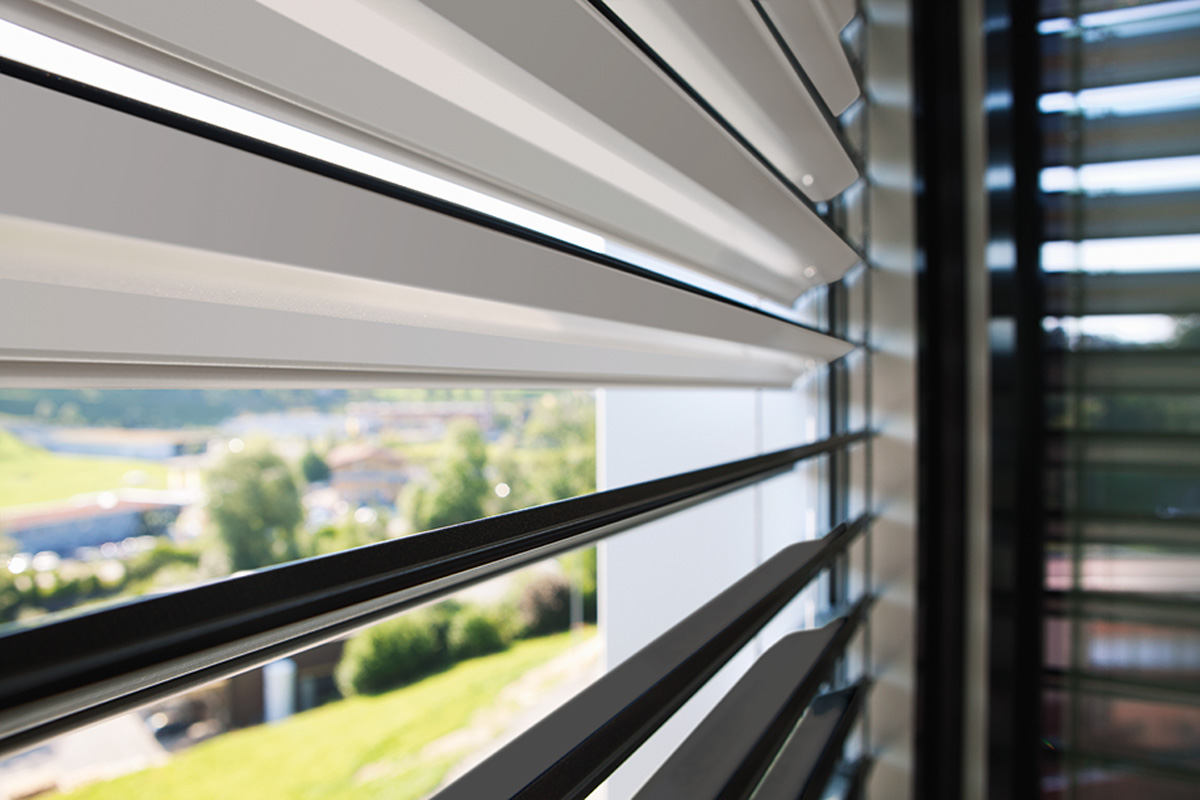
An integrated chain-driven lifting mechanism operates within the side guides, eliminating conventional textile lifting tapes. Sheathed steel adjustment cables contribute to precise slat positioning and consistent operation, Meyer Blinds says.
Meyer Blinds says the system offers wind resistance up to Class 6. Maximum width is 4,000 mm and maximum height 4,250 mm, with a maximum area of 8 m², depending on configuration. In the company’s view, that combination of mechanical stability and larger dimensions makes Grinotex particularly relevant for contemporary façades incorporating expansive glazing and exposed elevations.
Griesser’s BiColor technology allows different colours on the interior and exterior slat surfaces, with more than 150 standard colours and custom matching options available. Grinotex includes Soft-Close operation, integrated obstacle detection, motorised control and recessed guide options. Meyer Blinds says the recessed guides support clean architectural detailing, and that the system also provides effective room darkening and adjustable privacy without sacrificing the ability to admit controlled natural daylight.
Grinotex joins Griesser’s Lamisol III, Solomatic II and Aluflex systems. The company says each offers distinct advantages across daylight control, wind resistance, installation flexibility and façade integration, and that the range together gives specialist retailers a broader selection of engineered external venetian blind solutions for residential and commercial specifications.
“The ability to manage daylight precisely across larger openings, while maintaining strong wind performance, is a significant advantage,” Meyer says. “Grinotex gives retailers and specifiers another option for projects where standard external shading systems may have limitations.”
Shaw: ZipGrip, ZipGrip Mega and ShawSmart
Shaw starts with what installers and specifiers should look for in a system. “A great external blind system needs to do more than look the part. It needs to be built to last, straightforward to install and designed to deliver a reliable result long after the installer has left the site,” the company says. “For installers and specifiers, the real value lies in the details: smart component design, secure fabric retention, compatibility and a finish that complements the space rather than dominating it.”
“That’s where Shaw’s ZipGrip comes into its own,” Shaw says. “Its side-retention system is designed to keep the fabric securely engaged within the guides, while the cassette creates a sleek, streamlined appearance. Thoughtful engineering also helps simplify the installation process, giving installers a system designed to work as well in practice as it looks once fitted.”
The company adds: “Ultimately, it’s about making life easier for installers while delivering a result customers can be proud of. With ZipGrip, practical functionality and considered design go hand in hand, giving external shading projects the combination of performance, reliability and finish they deserve.”
On size, Shaw says demand is increasing for external blinds that can cover larger openings without compromising on style or performance. “Wide alfresco areas, expansive patios and commercial spaces are pushing traditional systems further, making the combination of capacity, reliable operation and a premium finish more important than ever,” it says.
The company says ZipGrip Mega accommodates blinds up to 6.5 metres wide and 4 metres in drop. “It delivers the coverage larger projects demand while maintaining a sleek, integrated appearance,” Shaw says. “Pair it with ShawSmart outdoor motors and the benefits go beyond size. The 20Nm DC motor combines powerful operation with an integrated rechargeable battery and solar panel compatibility, offering a flexible solution for demanding external applications.”
“Together, ZipGrip Mega and ShawSmart give installers the opportunity to deliver more ambitious shading solutions with confidence,” the company says. “It’s about more than making blinds bigger; it’s about making larger external spaces work better, with smart technology, streamlined design and effortless everyday operation.”
On weather, Shaw says: “External blinds in Australia have a lot to contend with, from intense UV exposure and summer heat to sudden downpours and changing weather conditions. Getting the most out of an external blind starts with choosing the right system, but its long-term performance also depends on how well the fabric is retained, how the components work together and how the blind is operated day to day.”
Through the ShawSmart app, Shaw says, users can control their blinds remotely and set automated schedules based on local weather forecasts. “With the right settings in place, blinds can be programmed to retract when high winds are forecast, helping reduce the risk of damage before conditions deteriorate,” Shaw says. “And because control isn’t limited to the home, users can respond remotely if the weather changes unexpectedly while they’re at work or away on holiday.”
“By combining a well-designed external blind with connected motorisation, protection becomes less reliant on someone being home to operate the system,” the company says. “It’s a smarter way to manage outdoor shading, giving homeowners greater peace of mind and helping them get more from their investment, whatever the Australian weather has in store.”
On callbacks, Shaw says: “Consistency starts with choosing products that are designed to work together, supported by clear installation processes and backed by reliable technical support. For manufacturers and installers, reducing complexity on site can save valuable time, minimise installation errors and help prevent the callbacks that eat into profitability. Having confidence in the products being installed is just as important as getting the job done efficiently.”
ShawSmart motors offer features such as obstacle detection to help protect the installation, the company says. Its ShawSmart Helpline provides technical assistance, installation resources and training, and Shaw says the installation program also offers optional on-site support for a customer’s first installation.
“Ultimately, simplifying installation is about more than reducing the time spent on the tools,” Shaw says. “It’s about giving manufacturers and installers the right products, knowledge and support to achieve consistent results across projects of all sizes. When the system and the support behind it work together, businesses can spend less time troubleshooting and more time growing.”