
Please turn your device to portrait.
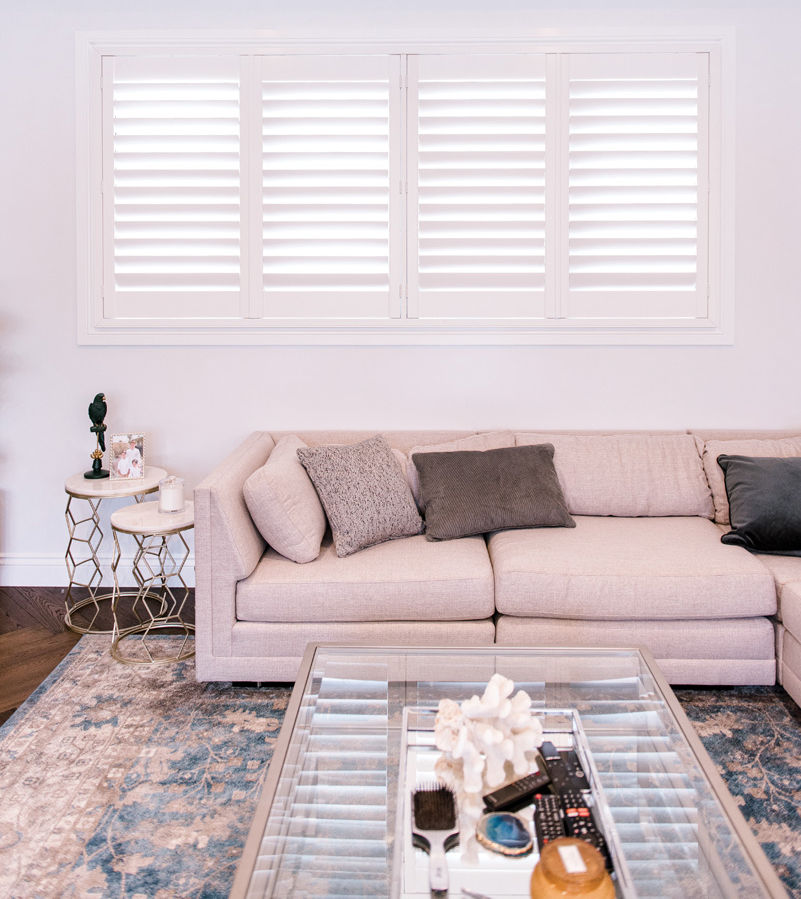
Amid heightened competition and disrupted global supply chains, what are the benefits of onshore manufacture? Key players share their thoughts with WFA.
MYT Shutters
“We’ve always believed that if we’re going to manufacture here, we need to do it exceptionally well,” says MYT Shutters Global Sales & Technical Support Director Scott Sloan. “Quality has been the priority since day one. The lead times people see are simply the result of a well-run production line – not because we’re chasing speed.”
Sloan notes that when MYT Shutters opened its shutter manufacturing facility in Seven Hills, Sydney in early 2021, the intention was clear: bring production closer, increase control, and raise the standard of what the market could expect from a locally made shutter. What followed was steady growth in capability and rising demand from retailers and homeowners who increasingly prefer products made locally.
Inside the facility, MYT produces its polymer shutter reinforced with the company’s patented aluminium core. The design keeps the profile lightweight while delivering durability and dimensional stability that stands up to real-world conditions. The team credits much of this consistency to the more than ten specialised machines on-site, including several custom-built CNC systems engineered internally.
“Part of MYT’s commitment to quality is reflected in how our shutters are designed and produced, he says. “Unlike standardised manufacturing approaches that rely on uniform panel sizes and simplified layouts, MYT fully customises every panel width and T-post position to suit the exact dimensions of each window. This level of tailoring allows for a more accurate and intentional fit. Each shutter is also pre-painted and finished before it leaves the facility, supplied ready to install straight out of the box – an approach that ensures a consistent finish without the need for on-site corrections.”
MYT’s decision to expand local manufacturing has also aligned with a noticeable shift in market sentiment, he explains. While international freight challenges initially sparked interest in alternatives, that trend didn’t fade. Retailers now increasingly look for suppliers offering locally produced shutters, and end users appreciate knowing they are supporting businesses within their own community.
“There’s definitely been a change in what people value,” Sloan explains. “It’s not just about avoiding long wait times. People like knowing the product comes from a team they can actually talk to.”
The hands-on nature of the operation has influenced how MYT trains new staff as well. Team members begin in non-critical areas and progress as their confidence grows, a method that supports genuine skill development and ensures every stage of production is handled with care. According to Sloan, “You can’t rush craftsmanship. Giving our team the time to learn properly has been one of the best decisions we’ve made.”
As manufacturing costs continue to rise in offshore regions, interest in local production has only grown stronger. MYT sees this as an encouraging trend for the wider industry, not just its own business.
“Local manufacturing has a real future,” Sloan says. “When people see the value in having products made here – better communication, better oversight, better reliability – it reinforces why we committed to this path.”
“For MYT Shutters, that commitment remains central. With demand increasing and capability continuing to scale, we remain focused on doing what we set out to do from the start: produce shutters that reflect a high standard of quality, engineered and assembled by a team that takes pride in every step.”
TBS
“More and more, Australian manufacturing is being moved offshore and treated as a cost problem rather than a capability worth protecting,” says TBS Managing Director Craig Foster. “Offshore production promises scale and lower unit pricing but in practice, many retailers and designers are absorbing the hidden costs in long lead times, inconsistent quality, limited flexibility and a lack of accountability when something goes wrong.
“At TBS, we take a different position. We manufacture all our roller blinds and curtain tracking systems in our Melbourne and Brisbane facilities and we are now certified Australian Made across these ranges. This isn’t a marketing reset. It reflects how we operate and why we believe local manufacturing still delivers practical advantages for retailers, installers and interior designers.
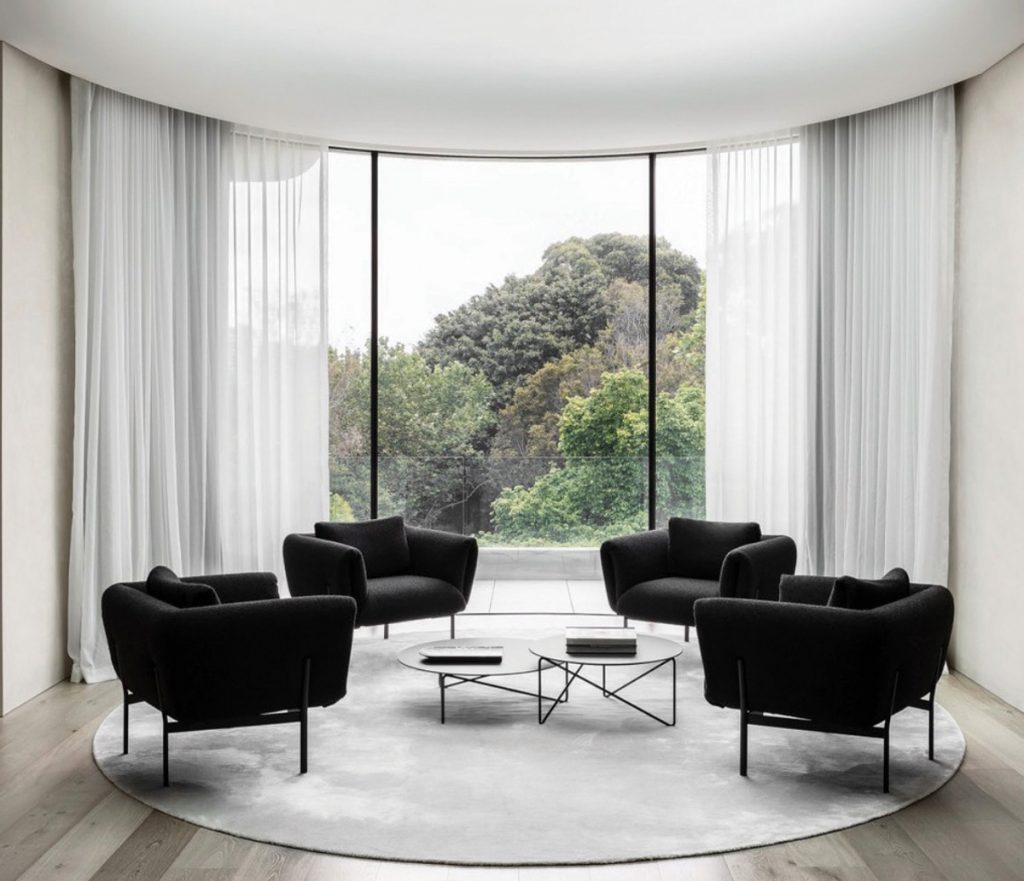
“Every roller blind and curtain tracking system we produce is made to order. That approach matters, particularly in a design-led market.
“Made-to-measure manufacturing allows deign freedom from the outset rather than adjusted to suit standardised stock lines. For retailers and designers, this means fewer compromises on dimensions, system selection and finishes. It also reduces the risk of rework and site issues caused by near-enough solutions.”
For designers, in particular, this flexibility protects design intent, says Foster. “Curtains and tracks are often among the final elements installed, and when they don’t align with the original vision, the whole space suffers. Made-to-measure production helps ensure the final outcome matches what was specified.”
One area where local manufacturing makes a clear difference is range. Foster notes that TBS manufactures what is arguably the widest selection of curtain track profiles, finishes and systems available in the Australian market.
“This includes fully automated curtain tracks and roller blinds that integrate seamlessly with Matter-compatible smart home platforms, as well as cord-drawn and hand-drawn systems. We also manufacture decorative rods where a visible design feature is required and concealed curtain tracking systems where a sleek and contemporary look is asked for.
“For retailers, this breadth simplifies supply. It reduces the need to source multiple systems from different suppliers and avoids compatibility issues across projects. For designers, it provides confidence that functional requirements and aesthetic preferences can be met within a single, coordinated offering.
“Automation continues to gain traction, but only when it’s reliable and easy to specify. Locally manufactured automated tracks allow tighter control over performance, integration and support.
“Our automated systems are designed to integrate cleanly with contemporary smart home environments, including Matter. Because these systems are manufactured and tested locally, issues can be resolved quickly, and refinements can be made without long offshore delays.
“This matters to retailers and designers alike. Automation failures damage trust, regardless of who supplied the system. Local manufacturing reduces that risk.
“Curtain tracks and hardware are no longer purely functional. They are increasingly part of the visible interior palette.
“Manufacturing locally allows us to offer a wide range of colours and finishes across curtain track profiles, decorator rods and associated components. More importantly, it allows us to maintain consistency across repeat orders and multi-room or multi-stage projects.
“For designers, colour accuracy and finish consistency are non-negotiable. For retailers, delivering that consistency builds credibility and repeat business.
When it comes to quality control, Foster notes that this only works when it’s immediate. Manufacturing in Melbourne and Brisbane means oversight is continuous, from material selection through to final inspection.
“When an issue arises, it’s addressed at the source, not documented for later resolution. That reduces variability across production runs and results in fewer installation issues and callbacks.
“Retailers benefit from smoother installations and fewer post-handover problems. Designers benefit from confidence that specified systems will perform as expected.”
Foster also observes that risk mitigation is a factor supporting onshore manufacture. Supply chain disruption has reshaped how retailers and designers assess risk. Long offshore lead times introduce uncertainty that’s difficult to manage, particularly in residential and commercial projects with tight handover schedules.
“Local manufacturing shortens the supply chain significantly. There are no international shipping delays or customs hold-ups to manage. Production schedules are clearer, and delivery timelines are more dependable.
“For retailers, this supports accurate scheduling and honest communication with customers. For designers, it allows curtain and blind specifications to align more closely with broader project timelines.”
TBS’ Australian Made certification provides transparency in a market where origin claims can be vague, Foster adds. “Our certification confirms that our roller blinds and curtain tracking systems are genuinely manufactured in Australia, not partially imported and rebadged.
“This gives retailers a credible, verifiable story to share with customers. It also reassures designers who are increasingly conscious of supply chain ethics, quality control and long-term support.
Manufacturing locally also sustains skills that underpin the entire industry. Our teams in Melbourne and Brisbane bring practical experience in fabrication, assembly and system design – knowledge that directly influences product performance.
Keeping these skills in Australia strengthens the industry as a whole. It also ensures accountability remains local. When products are made here, responsibility for their performance stays here.
Manufacturing in Australia will never compete on headline unit cost alone. But cost is only part of the decision-making equation.
“Reliability, flexibility, quality and support matter, particularly to retailers and designers whose reputations depend on consistent outcomes,” says Foster. “For TBS, Australian manufacturing is a commercial decision grounded in control, responsiveness and long-term value.”
Luxsol
In an industry increasingly shaped by offshore manufacturing and extended supply chains, Australian-made products are no longer just preferred – they are trusted.
“For Luxsol, manufacturing Poly100AU in Sydney is a deliberate commitment to quality, transparency, and accountability,” a Luxsol spokesperson tells WFA. “Carrying the Australian Made trademark, Poly100AU represents confidence backed by local production, not just branding.
“Manufacturing in Australia allows Luxsol to maintain control over every stage of production. From material formulation through to machining, finishing, and quality assurance, Poly100AU is produced under Australian standards and designed specifically for Australian conditions. High UV exposure, humidity fluctuations, and coastal environments demand materials that perform consistently over time. Poly100AU is engineered for exactly that reality, not adapted after the fact.
“Adding to this confidence, Poly100AU is REACH tested, providing retailers and specifiers with verified assurance around material safety and compliance. REACH (Registration, Evaluation, Authorisation and Restriction of Chemicals) testing confirms that materials meet strict international standards for chemical safety, ensuring they are free from restricted substances above regulated limits. For retailers, this adds an important layer of reassurance; not only is the product locally made, it is also independently validated against globally recognised safety benchmarks.”
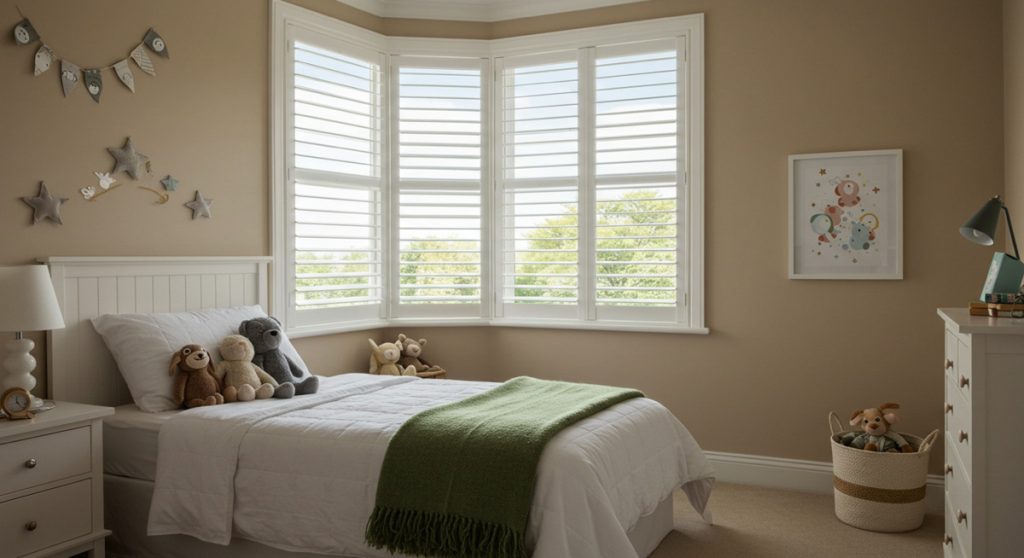
Local manufacturing also delivers tangible operational advantages. “Producing Poly100AU in Sydney significantly reduces lead times and supply-chain uncertainty, allowing Luxsol to respond quickly to market feedback and changing project requirements. Improvements, refinements, and product development happen in real time, not months later. For distributors and installers, this reliability translates into confidence on site and consistency across projects.”
“Precision is another defining factor. Luxsol combines Australian manufacturing with advanced CNC machining to achieve tight tolerances, accurate joinery, and a refined finish across every panel. This level of precision improves not only aesthetics but also functionality, ensuring smooth operation, long-term durability, and easier installation. When products fit correctly the first time, inefficiencies disappear and quality becomes visible.”
“The Australian Made trademark also speaks to something larger than the product itself. It represents regulated manufacturing practices, transparent sourcing, and adherence to stringent local standards. In a market where product claims can be difficult to verify, the trademark provides independent validation that resonates with retailers and consumers alike.
“Beyond performance and compliance, Poly100AU supports skilled local jobs and contributes to the strength of Australian manufacturing capability. In an era of global uncertainty, investing in domestic production is both a principled and practical decision.
“Poly100AU demonstrates that Australian-made window furnishings can lead on quality, safety, and innovation. For Luxsol, the Australian Made trademark and REACH testing are not badges of convenience – they are proof points. Together, they deliver a product retailers can specify, sell, and stand behind with absolute confidence.”
Dalekit
“For almost 30 years, Dalekit has been manufacturing high-quality awnings in Western Sydney, proudly standing as an Australian-owned and operated manufacturer committed to excellence,” says Managing Director Joe Pajeska.
Under Pajeska’s leadership, his long-held philosophy, “Dalekit gets it done,” underpins the company culture. For the Dalekit team, this means finding solutions where others see limitations and delivering outcomes that meet each customer’s unique needs.
“With more than 40 products available and extensive customisation options, Dalekit’s in-house manufacturing capability allows its highly skilled team to truly understand every product they create. This depth of knowledge enables the business to turn complex requirements into practical, high-quality solutions. The ‘Team Dalekit’ ethos resonates across the entire organisation, supported by cross-training across multiple departments to ensure flexibility, efficiency, and resilience in day-to-day operations.”
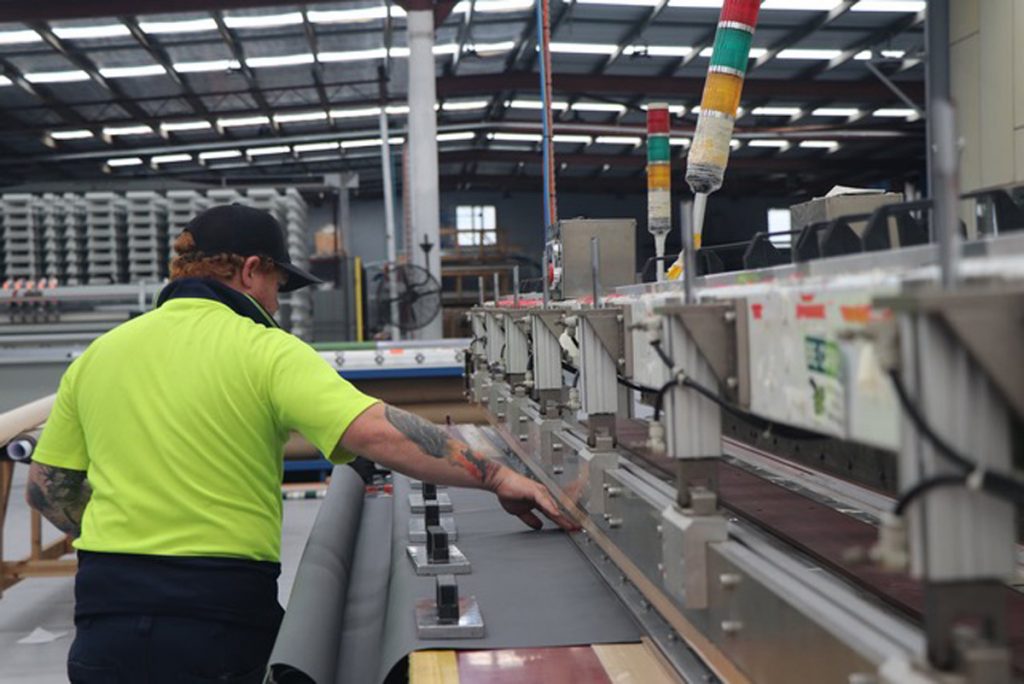
Dalekit places strong emphasis on sourcing Australian-made materials wherever possible. From fabrics to componentry, prioritising local suppliers allows for faster turnaround times, superior quality control, and the strengthening of long-standing supplier partnerships. This commitment to Australian manufacturing has fostered both customer trust and loyalty over many years.
The business operates across 80 workstations, with multiple staff trained across departments to ensure continuity of production even during periods of disruption. This capability was demonstrated during a challenging period in November, when a significant portion of staff tested positive to Covid-19. By dividing operations into two shifts, Dalekit was able to continue manufacturing uninterrupted, without rescheduling a single job.
“While manufacturing in Australia presents challenges, including workforce recruitment, training, and retention, Dalekit continues to invest heavily in its operations. The factory is equipped with automated cutting technology, nine sewing machines, five welders, six cutting tables, six saws, and nine assembly benches, alongside more than 1,000 rolls of fabric stocked on site and used daily. These investments ensure consistency, efficiency, and uncompromising quality.”
Dalekit’s extensive product range includes Zipscreens, traditional awnings, folding arm awnings, retractable roof systems, roller blinds, verticals, Verishades, and recently introduced roller shutters, all manufactured within the Dalekit facility.
“Dalekit is immensely proud to be an Australian manufacturer,” says Pajeska. “Every blind or awning produced represents locally made quality, delivered at an affordable price, giving customers confidence that they are investing in products built to perform and endure.”
Ziptrak
At Ziptrak, being Australian made is the foundation of who we are. For over 25 years, we’ve proudly designed and manufactured blind systems that reflect the Australian lifestyle and stand up to our country’s diverse conditions.
“From our home in the Tonsley Innovation District, South Australia, every Ziptrak blind is the product of local expertise and craftsmanship. Our team of designers, engineers and manufacturers work side by side to create solutions that deliver lasting performance and effortless style. Wherever possible, we source locally – from Australian made plastics to aluminium components supplied here in South Australia. By doing so, we ensure the highest quality standards while strengthening local industry and supporting fellow Australian businesses.
“Our commitment to Australia extends well beyond manufacturing. Ziptrak has been the Premier Sponsor of the Santos Tour Down Under for the past eight years, a partnership that celebrates community, endurance, and Australian excellence. We’re also proud supporters of the Australian Indigenous Education Foundation, South Australian men’s and women’s cycling teams, local youth athletes, and a range of community initiatives that help nurture future generations.
“While our foundations are firmly planted in Australia, Ziptrak has achieved international recognition, with our products now available in 17 countries. This global success reflects the world-class quality, innovation, and integrity that define Australian manufacturing.”
Viewscape
Viewscape Sales & Marketing Manager Andrew Curnow says tells WFA that local manufacturing is both part of the organisation’s heritage and a deliberate and ongoing strategic commitment.
“We continue to invest heavily in technology, people, and processes to ensure we deliver exceptional Australian-made products that represent genuine value,” he says.
“Our manufacturing facilities bring every major category of window furnishings under one roof. This includes precision-made aluminium core PVC shutters produced within eight days, One Touch Roman blinds, Ziptrak outdoor blinds, venetians, verticals, curtains, roller blinds and more. This breadth of capability has continued to grow over recent years and allows us to maintain tighter quality control, faster turnaround times, and consistent outcomes across a diverse product range.”
Ongoing investment in capital equipment is central to this capability, he says. “We are continually upgrading our machinery to improve both performance and reliability.”
A recent example is Viewscape’s updated base rail machine, which guarantees that roller blinds manufactured by Viewscape will never experience puckering regardless of weather-related fabric contraction or expansion.
“This level of engineering reinforces our commitment to quality targets of always getting it right the first time.”
Accountability is also built into Viewscape’s manufacturing processes, with cameras installed at selected workstations to photograph all accessories included with every order. These images are stored in a repository, providing complete traceability of all componentry dispatched, which ensures every job is installation-ready and reinforces a strong quality culture throughout the factory.
“We continue to expand our production capabilities to meet evolving demand. Most recently, we invested in a new 6.4 metre welder for larger outdoor blinds includingZiptrak®, enabling us to manufacture larger outdoor blinds without compromise. These investments ensure we remain agile and capable as product specifications and customer expectations increase.
“We have also invested heavily in online ordering software we are launching soon, with order automation into our ERP that will reduce leadtimes and human error rate.”
Curnow notes that as with all local manufacturers, Viewscape faces headwinds. “Recruitment remains a challenge. Finding high-quality staff with industry experience who are also customer-centric is increasingly difficult. We have placed a strong focus on training and development. We employed a dedicated trainer with over 20 years of industry experience who supports our retail customers and their teams with product training as required. Internally, we run continuous training programs to ensure skills, consistency, and quality keep pace with demand.”
And he adds that as the impact of the Covid19 pandemic recededs, the primary challenge facing local manufacturing is no longer disruption but competition, particularly from lower-priced imported products.
“There will always be demand for high-quality Australian-made goods, but in a tighter economic environment that segment inevitably becomes more competitive. Our response is clear: we do not compete on price alone. We offer extremely good value. This is supported by our quality guarantee, including our commitment to fund return-to-site fees if we make a manufacturing error; a fully trained, locally based customer service team; dedicated Business Development Managers across most states; new online ordering portal, regular new fabric introductions, and an experienced, committed factory workforce.
“Our quality is second to none, our pricing is competitive, and our added-value services are designed to make doing business with Viewscape easier and more profitable for our partners.”
He concludes: “The future of local manufacturing belongs to businesses willing to invest, innovate, and stand behind what they make and for Viewscape, that commitment remains unwavering.”