
Please turn your device to portrait.
A mixed-reality consultation tool, video placed in SBS’s World Cup coverage and a phone on a tripod: Weinor Australia, Somfy and Betta Blinds on the marketing they put in front of consumers and the trade.
Supplier marketing reaches the end customer by three routes. Some of it arrives as tools the retailer puts to work in the consultation: samples, brochures, display stock and, now, digital visualisation. Some of it runs as video, in front of consumers as advertising and in front of the trade as training. The rest arrives as leads, consumer enquiries generated by the supplier’s own campaigns and passed down the channel to a retailer who can measure, quote and install.
All three depend on the retailer. A sales tool earns its cost only when the consultant uses it in front of the customer, and an enquiry is worth generating only if it reaches the right showroom.
For September’s marketing issue, WFA looks at each route. Weinor Australia has made WeinorVision, a mixed-reality visualisation tool, available to its specialist partners. Somfy explains how it uses online video in two ways: to reach homeowners through its TaHoma Unlock campaign, and to train the trade through its video library. Betta Blinds puts numbers on two ways of producing video, names the two measures it uses to judge the work, and explains how the consumer enquiries its marketing brings in reach a retailer.
WEINOR AUSTRALIA GIVES RETAILERS A TRUE-TO-SCALE VIEW BEFORE THE ORDER IS PLACED
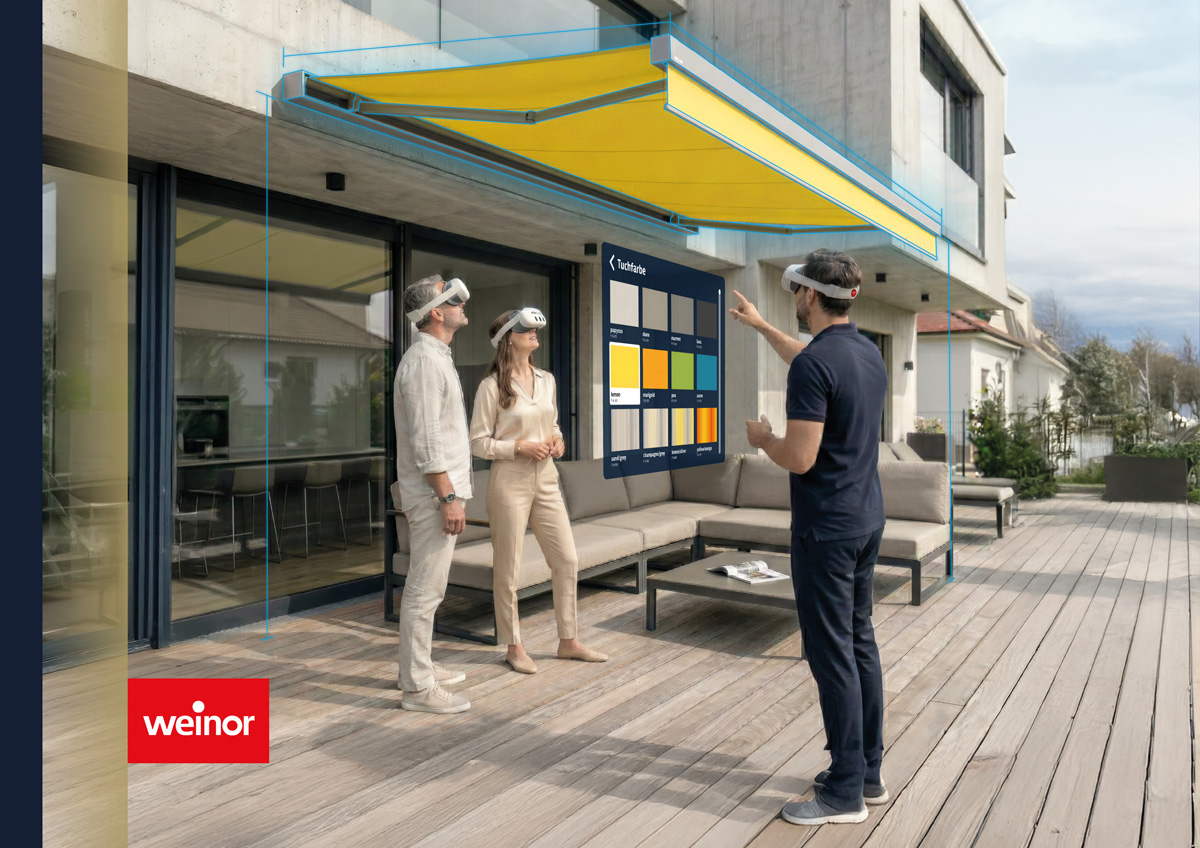
For specialist retailers, one of the persistent challenges in selling premium outdoor products is helping customers visualise the finished result. Samples, brochures and photographs can demonstrate colour and design, but asking a customer to imagine how an awning or patio roof will look at scale on their own home leaves uncertainty. WeinorVision is designed to close that gap.
Using mixed reality, the tool brings the proposed product into the customer’s actual outdoor space before installation begins. The technology has already received international recognition, taking first place in the Digital Innovation category of the German M&T Products of the Year 2026 awards.
“WeinorVision gives retailers a completely different way to communicate a product,” says Simon Meyer, Managing Director of Weinor Australia. “Instead of asking customers to imagine the end result, you can put them into that environment and let them experience it for themselves.”
Working from real site dimensions and Weinor product data, the tool creates a true-to-scale 3D representation of the proposed awning or patio roof within the customer’s own home environment. Customers can move through the visualisation, view the solution from different angles and compare alternatives during the consultation. The experience goes beyond aesthetics: customers can assess scale, height and proportions, compare colours and fabrics against the façade and surrounding architecture, and visualise how light, sun and shade interact with the space throughout the day.
“For higher-value outdoor projects, customers are making decisions about much more than a product,” Meyer says. “They’re considering how it will integrate with their home and how they’ll actually use that space. The more confidently we can demonstrate that, the stronger the consultation becomes.”
For the trade, the practical value lies in being able to change and compare variants during the consultation, demonstrating the impact of different specifications and addressing customer concerns before an order is placed. Weinor says the tool also reinforces the value of specialist consultation in a market where retailers need to differentiate themselves from price-driven competitors.
“The technology is impressive, but the specialist retailer is still central to the process,” Meyer says. “WeinorVision gives our partners another tool to combine their product knowledge and technical expertise with a much more engaging customer experience.”
WeinorVision is now available to Weinor Australia specialist partners. Price on application.
SOMFY PUTS ONLINE VIDEO AT THE CENTRE OF ITS TAHOMA UNLOCK CAMPAIGN
Where WeinorVision works inside the consultation, Somfy’s video reaches the homeowner well before it. A central component of Somfy’s current TaHoma Unlock campaign is online video, designed to build awareness of connected living and generate leads for Somfy Retail Expert partners across Australia and New Zealand. The campaign is built around the TaHoma platform, which connects motorised blinds, curtains, awnings, lighting and other smart home devices.
“Online video continues to be one of the most effective ways for us to build brand awareness and educate consumers about the benefits of connected living,” says Mandy Francis, Somfy Oceania’s Digital Marketing Executive. “Today’s consumer journey is no longer linear. People move between social media, video streaming platforms, search and websites before making a decision, so it’s important that our messaging is consistent and engaging across every touchpoint.”
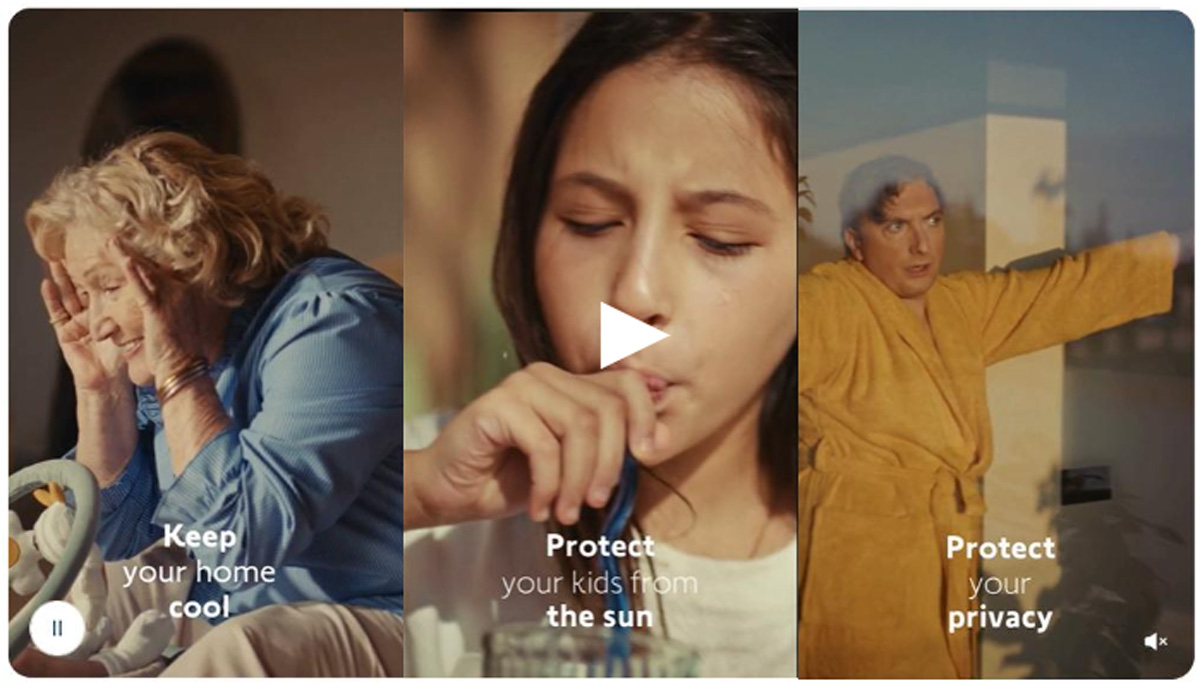
This year, Somfy extended its video advertising strategy with ad placements during SBS’s FIFA World Cup coverage, supported by YouTube Highlights and display advertising, reaching audiences across both broadcast and digital platforms.
“By combining broadcast-quality environments with digital video platforms, we’re able to reach consumers across multiple viewing moments and reinforce the value of smart home automation in a way that’s both relevant and memorable,” Francis says.
Francis links the mix to changing viewing habits. “Consumers increasingly choose when and where they watch content, whether that’s live sport, catch-up television or online highlights,” Francis says. “Digital video advertising allows us to reach highly relevant audiences based on demographics, interests and viewing behaviours, ensuring our message is delivered in the right context.”
Beyond advertising, Somfy has been expanding its online video library to support manufacturers, retailers and installers with technical training, product information and commissioning assistance.
“Online video is more than just a marketing channel for us,” Francis says. “It’s an important educational tool that helps our customers and partners gain the knowledge they need to confidently specify, install and commission Somfy solutions.”
BETTA BLINDS PUTS A PRICE ON VIDEO, COUNTS TWO NUMBERS AND ROUTES THE LEADS
Betta Blinds points its marketing, video included, at prospective distributors. “I direct all of our marketing efforts to focus on getting in front of our ideal customers, blinds and awnings store owners,“ says Tyler Nicholls of Betta Blinds. “All of our copy, all of our video is geared towards getting new retailers to sign up with us.”
His case for video starts from the point that retailers are already telling stories. “If you’re in sales you might not know it but you’ve been telling stories for years,” he says. “Think about how you convince a customer to buy your products or go with a specific option. You don’t just rattle off words on a spec sheet. You learn about your customers’ needs and you learn about what problem they are trying to solve.”
Only after that, he says, does the solution come, often in the form of a story: “We had a customer with the exact same issue, and here’s how we solved it for them.” That, Nicholls says, is what video should do. “You’re not listing features, you’re showing your customer a version of themselves, already happy with the outcome.”
The practical case is one of scale. “Instead of telling one story to one customer at a time, you can tell it once and let it work for you, on your website, in your showroom, on social media, over and over again.”
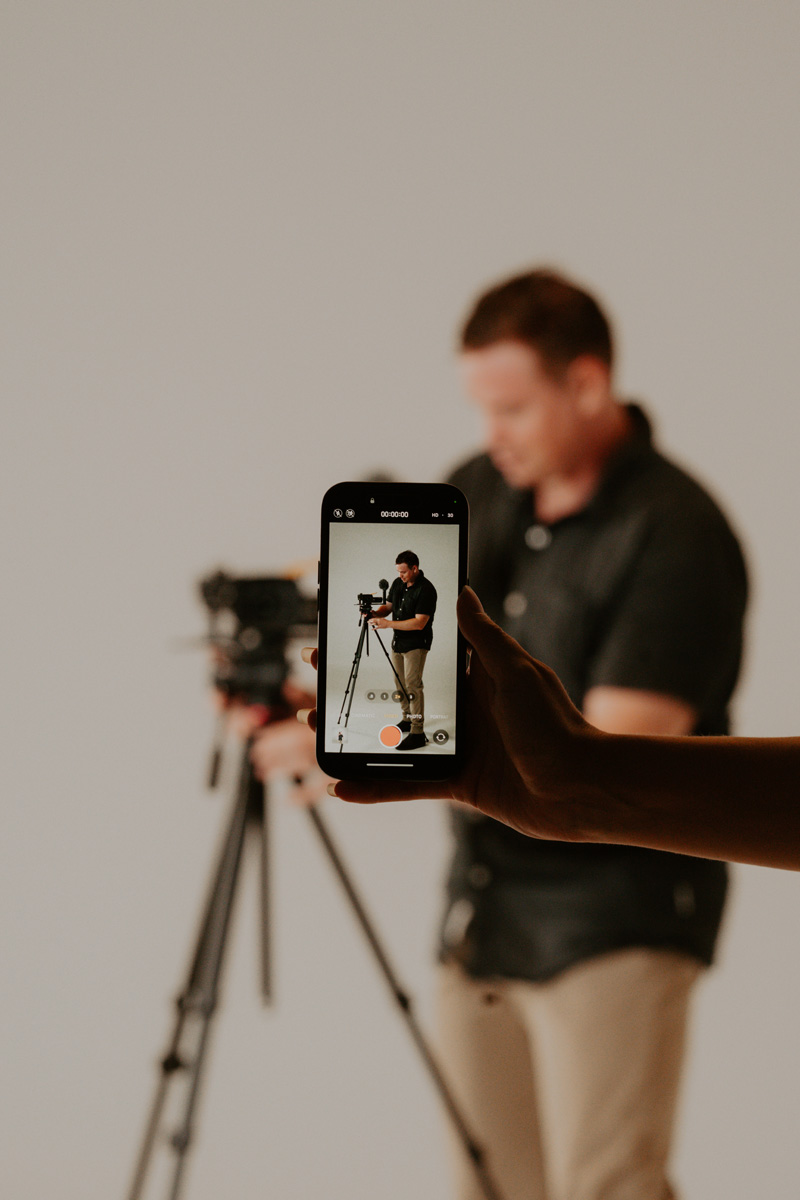
That reach does not require a production crew. “A happy customer. An installer at work. A close-up of your fabric range. Thirty seconds, no script, just your phone.”
What video does at Betta Blinds
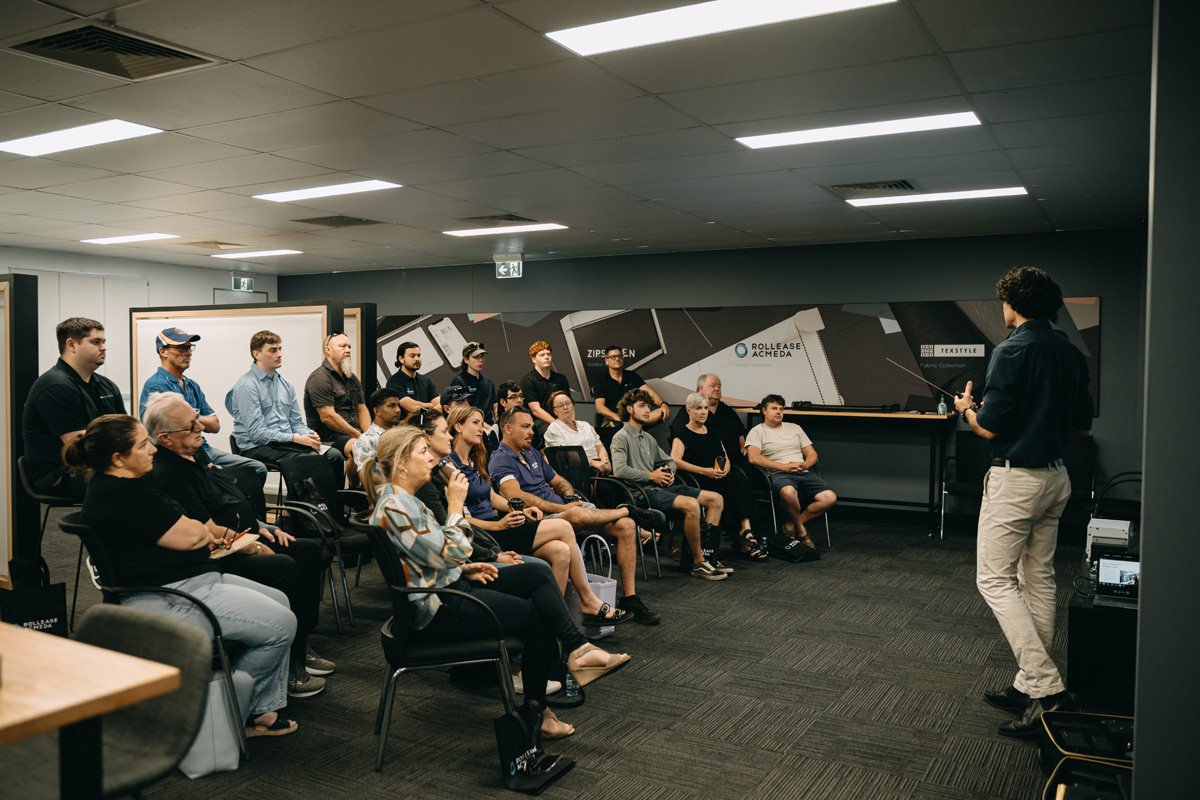
Betta Blinds uses video across three distinct functions. For brand building: “we get our team in front of the camera and share stories about Betta Blinds as well as any interesting projects or events.” For product training: “we record training sessions as well as tutorials as these become helpful resources our customers can come back to when they need a refresher or when new customers are onboarded.” And for leads, Nicholls says, video “is one of the most effective tools for driving leads through paid and organic social media. It captures attention faster than static content, keeps people engaged for longer, and gives platforms stronger signals to reward with reach. For a considered purchase like blinds and awnings, video also plays a key role in building trust, showing product quality and features in a way images and text can’t match.”
What it costs
Nicholls describes two real approaches to a workable video setup, with costs that differ substantially.
The first is a professional content agency. “This means handing video over to a dedicated team who handle strategy, filming and editing for you. It’s the higher-cost option, usually structured as a monthly retainer, and it offloads the ideation and planning work onto the agency, so internal staff mainly just show up and support the shoot rather than dream up what to make. Agencies typically batch filming into single shoot days, capturing a month’s worth of content in one sitting, which helps keep the retainer cost down. The trade-off is a bit less spontaneity, since content is planned and scheduled rather than captured on the fly,” Nicholls says. He puts the total cost of the agency option at $2,000 to $5,000-plus.
The second is in-house content produced by existing staff, filmed on a phone with a bit of basic gear and edited through simple apps. “The upfront cost is minimal and mostly one-off, with the main investment being a few hours of someone’s time each week, including coming up with the ideas themselves. It’s less polished, but far more responsive, content can be captured the moment something worth sharing happens.” Nicholls puts the in-house option at 20 hours of staff time per month plus a microphone ($200), a tripod ($150) and a phone-to-tripod adapter ($35).
Both approaches are genuinely effective, Nicholls says, and the right choice often comes down to budget and internal capacity. “That said, as audiences grow more skeptical of polished, ad-like content, approach two often builds a stronger connection. Raw, in-house video from the warehouse, showroom or even while your team is out installing tends to feel more credible and trustworthy than something clearly agency-produced, even when the production value is lower.”
AI tools
AI video tools, Nicholls says, are making high-quality video more accessible and more common. “This space has been advancing fast and we will soon reach a point where the outputs are indistinguishable from reality,” he says. The credibility risk, in his view, depends on the audience. “One thing to be mindful of is that AI-generated video may erode credibility with some customers, though not necessarily all of them. Awareness and sensitivity to this varies a lot depending on who’s watching, so it’s worth thinking about your specific customers and whether it’s something they’d actually notice or care about, rather than assuming it’s a universal risk.”
His own use has been in planning. “In my own experience AI has proven useful for generating ideas and mapping out specific shots, giving a solid starting point when planning what to capture rather than starting from a blank page each time. It’s a good way to move through the ideation stage faster and explore angles that might not have come up otherwise.”
AI editing, he adds, is coming. “AI editing is also on the horizon, and it looks set to meaningfully increase the productivity of editing real, filmed content, speeding up tasks like cutting, captioning, resizing for different platforms and pulling together rough cuts, all without changing what’s actually being shown.”
What to measure
Betta Blinds has reduced its video metrics to two numbers. “Two numbers drive most of our thinking, reach and leads, tracked by channel, and the simplicity is intentional. Reach measures how many people the content actually got in front of, which answers the first question, is anyone seeing this. Leads measure what happened next, whether that visibility turned into a real enquiry or a genuine step toward a sale, which answers the more important question, did it work.”
The rest carries less weight. “We’ve largely stopped weighing likes, comments and shares, since they capture reaction rather than outcome, and content optimised purely for those tends to drift toward entertainment over substance. Watch time gets a similar treatment, worth glancing at for understanding whether a video holds attention, but not something we chase as a goal in itself.”
“Keeping to just reach and leads means channel comparisons stay honest, and effort goes where it’s actually paying off rather than where the vanity metrics look best,” Nicholls says.
Where the leads go
Betta Blinds sorts the leads its marketing generates into two types. The first, and the one the company prioritises, it calls “become a distributor”: distributors looking to sell its products. The second, “find a retailer”, connects consumers with a retailer near them.
Consumer enquiries are a by-product of the trade focus rather than its objective. “A side effect of this approach is that we also generate a small portion of leads that are looking for a retailer to be shared among our customers,” Nicholls says.
Find a Retailer leads are still a manual process, and we’d be the first to say it’s not perfect. Each lead is shared among our retailers by hand, taking into account product range and expertise, loyalty and proximity to the customer. We often introduce a few retailers in the same area so the customer can choose the one that suits them best. It’s a personal approach that keeps us close to every lead, but it’s also one we expect to outgrow.
“Ultimately when the number of find a retailer leads becomes too high for our current manual process we will move to an automatic process of evaluating range, loyalty and proximity,” Nicholls says.