
Please turn your device to portrait.
Quality failures cost manufacturers in remakes, returns, and reputational damage, all of it preventable. Three companies explain how they have moved quality control from a final-gate inspection to a discipline embedded throughout every stage of production.
A blind that fails in the field costs more than the product itself. There is the remake, the installer callout, the retailer credit, and the frayed customer relationship behind it. Multiply that across a season’s worth of avoidable defects and the margin impact becomes material. It is why the most serious manufacturers in the window furnishings sector have stopped treating quality control as a checkpoint at the end of the line and started treating it as a condition of every step along the way.
The shift is not cosmetic. A final inspection can catch a defective product and pull it from dispatch, but it cannot recover the fabric wasted in producing it, the machine time consumed, or the labour already spent. Catching failures earlier, or eliminating them at source, is where the real cost reduction lies. It is also where supplier selection genuinely matters to retailers and specifiers. A supplier whose quality regime is reactive creates a different risk profile from one whose systems are designed to prevent failures from occurring.
Three companies operating in the Australian market offer distinct approaches to the same problem. What connects them is a shared starting point: quality cannot be inspected into a product. It has to be built in.
Louvolite
For Louvolite, quality control begins with how the business is structured. “Quality control is built into every stage of the manufacturing process rather than applied at the end,” says Rebecca Fennell, Louvolite Australia. “A key differentiator is our fully vertically integrated operation, which gives us complete control over both fabric and component production. This removes the variability often associated with outsourced supply chains and ensures consistency across every order.”
The vertical integration argument is one Louvolite makes with specificity. All components are manufactured and batch-tested in-house, with daily resistance testing, pull force testing, and extensive lifecycle testing carried out as standard. “Products are tested to simulate up to 10 years of use, ensuring durability under real-world conditions,” Fennell says. Fabric testing runs across fire resistance, heat gain, light and UV control, shading performance, colour fastness, and room darkening, all conducted in a dedicated in-house laboratory.
The production systems reinforce that consistency at scale. Robotic and computer-controlled assembly with image-based final quality verification is central to the operation. “Robotic, computer-controlled assembly systems with image-based final quality verification guarantee repeatability across production,” Fennell says. As volumes grow, the architecture is designed to hold the standard. “Computer-controlled and robotic assembly systems are central to this, reducing failures while simultaneously supporting higher production volumes. Processes are continuously monitored and refined, with testing protocols remaining consistent regardless of volume.”
On the question of where quality most often breaks down across the industry, Louvolite is pointed. “Across the industry, common quality issues typically relate to inconsistencies in components, fabric performance and product durability over time,” Fennell says. “These challenges are often linked to fragmented supply chains and limited control over manufacturing inputs. By contrast, a vertically integrated model allows for tighter control and continuous refinement, significantly reducing the likelihood of these issues.”
The commercial consequence of this approach is visible in warranty terms. The Louvolite One Touch Motors range now carries a five-year warranty, extended from the previous three-year period. “The most effective way to manage returns and warranty claims is to reduce their occurrence in the first place,” Fennell says. “We achieve this through rigorous testing, in-house manufacturing control and continuous quality validation. By ensuring that products meet strict performance and compliance standards before they leave the factory, the risk of failure in the field is significantly reduced.”
Full traceability across the manufacturing process also supports faster resolution when issues do arise. “This level of confidence in our product quality has also enabled us to extend our warranties,” Fennell says.
The human element underpins the systems. “Ongoing training ensures that staff understand quality standards, testing procedures and compliance requirements, while strong retention supports consistency and continuous improvement over time,” Fennell says. “We’re proud that many of our team members have served us for several years, many boasting 20-plus years of service with Louvolite. This combination of process control and skilled personnel underpins the reliability of the final product.”
Rollease Acmeda
Rollease Acmeda has achieved ISO 9001 certification, the internationally recognised standard for quality management systems, reinforcing its commitment to consistent quality, operational excellence and continuous improvement.
ISO 9001 sets the benchmark for how organisations manage process, performance and risk, ensuring products and services consistently meet customer expectations. For Rollease Acmeda, certification reflects a strategic focus on strengthening internal systems, driving efficiency and continually refining how the business operates.
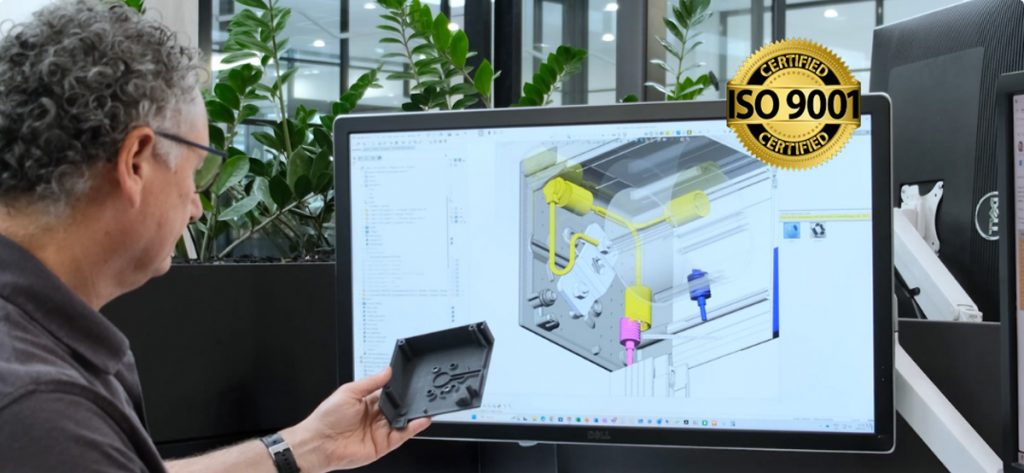
“Achieving ISO 9001 certification is a major step forward for us,” said Graeme Adam, Director of Operations. “It’s not just about meeting a standard, it’s about improving outcomes for our customers and staying competitive in an evolving market.”
For manufacturers and retailers, this certification provides added confidence that Rollease Acmeda is a reliable, forward‑thinking partner, supported by disciplined processes and a strong commitment to quality. It also marks ongoing investment in scalable systems designed to support long‑term growth and industry leadership.
Meyer Blinds
Meyer Blinds manufactures from its Homebush facility in Sydney, producing a broad range of custom-made products: Roller Blinds, Roman Blinds, Honeycomb Blinds, Curtain Tracks, and Timber Venetians. With nearly 40 years of Australian manufacturing experience, the company’s approach to quality control is built on a principle Simon Meyer, Managing Director, states plainly.
“Quality control is not treated as a final checkpoint before dispatch,” Meyer says. “It is built into every stage of manufacturing.”
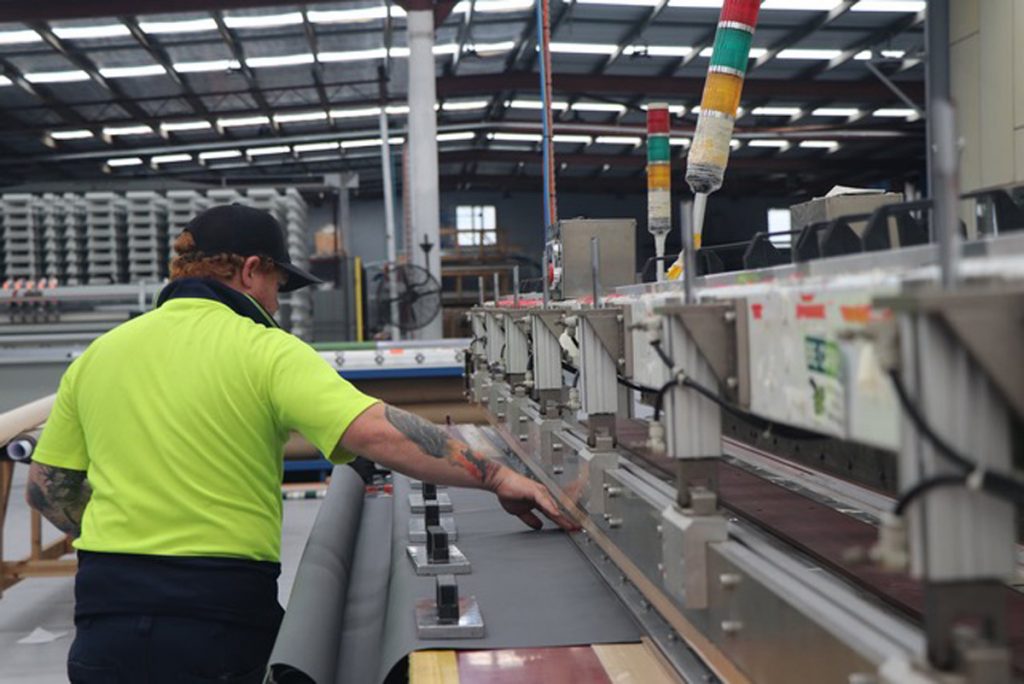
In practice, that means multiple intervention points through production, not a single gate at the end. Enhanced lighting has been introduced across workstations and hoist stations to improve visibility during assembly and inspection. Under-table flaw detection lighting is used during fabric cutting to identify imperfections at the earliest possible stage, catching problems in the material before they become problems in the finished product.


Every Blind is hoisted, inspected, and tuned prior to dispatch. Dedicated inspection zones positioned behind hoists allow staff to identify and rectify issues before products progress through the final stages of production. It is a methodical approach to what could otherwise be compressed into a rushed end-of-line check.
Technology investment has reinforced the consistency. An XY Plotting Table enables highly accurate fabric cutting, reducing waste and variation. Auto-programmed bending machinery delivers repeatable accuracy across custom Curtain Track applications, including curved and recessed systems, specifications common to commercial projects where tolerance for error is low.
What Meyer Blinds is careful to preserve alongside that technology investment is institutional depth. Many staff members carry more than 15 years of experience within the business, bringing product knowledge and attention to detail across fabrication and finishing that cannot be replicated by machinery alone. A dedicated Reworks team member provides a consistent point of contact for any warranty or rework requirements, keeping accountability clear after the product leaves the facility.
See Meyer Blinds at Stand L4 at WSAA SuperExpo | 10–12 June.
DALEKIT
Dalekit produces over twelve thousand awnings a year, alongside roller blinds, zip screens, folding arm awnings, retractable roofs, roller shutters, and a full range of internal window coverings. Every product is made to measure. Nothing comes off a shelf. In that environment, quality isn’t a department. It’s the whole game.
“We take it personally every single time something goes wrong,” says Joanne De Silva, General Manager at Dalekit. “The moment we know about an error, we’re already working out what caused it and making sure it can’t happen again. It’s why we don’t rush answers: we take the time to investigate and run through CCTV footage and photographs.” After nearly thirty years in operation, that’s not a line from a brochure. It’s just how the place runs.
Like most manufacturers, Dalekit has learned to distinguish between the problems it creates and the ones that find it anyway. Most quality issues don’t originate on the production floor. Damaged headboxes are the most common post-production complaint, damaged fabric second, and on-site performance failures (usually motorisation related) third. In almost every case, the fault happened somewhere between the loading dock and the installation, long after the product passed final inspection.
That reality pushed the business toward something that has proven quietly invaluable: a culture of documentation thorough enough that the truth of what happened is almost always recoverable. Every parts pack is photographed before dispatch. Roller blinds are photographed at the hoist during final inspection. Folding arm awnings are captured at key stages through the build. CCTV covers the production floor continuously, with every table and bench visible. Incoming deliveries are photographed daily, goods recorded in the condition they arrive before they reach production.
The impact on missing parts claims has been significant. For years, complaints about missing components were among the most persistent frustrations in the business, with some customers raising the same claim repeatedly. The photographs changed that almost overnight. “We can pull up an image showing exactly what was packed, and if need be the CCTV footage showing it being physically packed in the bag or box,” De Silva says. “That usually ends the conversation.”
“It’s not about catching anyone out,” she adds. “It’s about having an honest record. When you can show someone exactly what happened, it removes the conflict.”
The cameras and documentation hold Dalekit to account as much as anyone else. When evidence points back to the factory, the business doesn’t look away. And even when documentation clearly shows product left in perfect condition, Dalekit will often still contribute to the cost of resolution. “The client relationship matters more than being technically correct, provided it is not a recurring pattern,” De Silva says.
Inside the factory, the most common source of error is interpretation. Every product is built to customer specification, and many of those specs include custom instructions written as free text. The person writing it knows exactly what they mean. The person reading it mid-production run may read it entirely differently, and both readings can be completely reasonable. “That ambiguity, where a sentence means two different things to two different people, is genuinely our single biggest cause of job failures,” De Silva says. “Not anything mechanical. Just language.”
The second most common cause is the kind of mistake that creeps in when a task becomes too familiar. A roller blind was recently produced in the wrong colour and passed through six sets of hands undetected. “That’s not a skills problem,” De Silva says. “That’s a systems problem.” The process was reviewed and rebuilt: no blame, just an honest assessment of where things broke down. Double checks are now in place at most production stations, including check measures of skins, hoods, and packed parts, so issues can be identified and remade before a product reaches dispatch.
Dalekit has also learned that launching new products carries its own quality risks. “We own that,” De Silva says. “Every one of those moments taught us something, and we built that lesson into how we work. That’s how we stay on top of it: not by pretending we’re perfect, but by making sure we don’t make the same mistake twice.”
The most telling indicator of the quality culture is what the team does when no one is watching. Staff regularly stay back after hours to reinspect and remake product where they have spotted imperfections that many operations would never catch. “Nobody’s telling them they have to,” De Silva says. “That’s just the standard they hold themselves to.”
Dalekit holds no formal quality accreditation. What it has instead, built across nearly thirty years of making things, owning mistakes, and learning from every one of them, is a team that genuinely cares and systems designed to catch what human nature tends to let slide.
“We care deeply about what goes out that door. Every time something doesn’t meet the standard, wherever that happened, we feel it. And we do something about it.”