
Please turn your device to portrait.
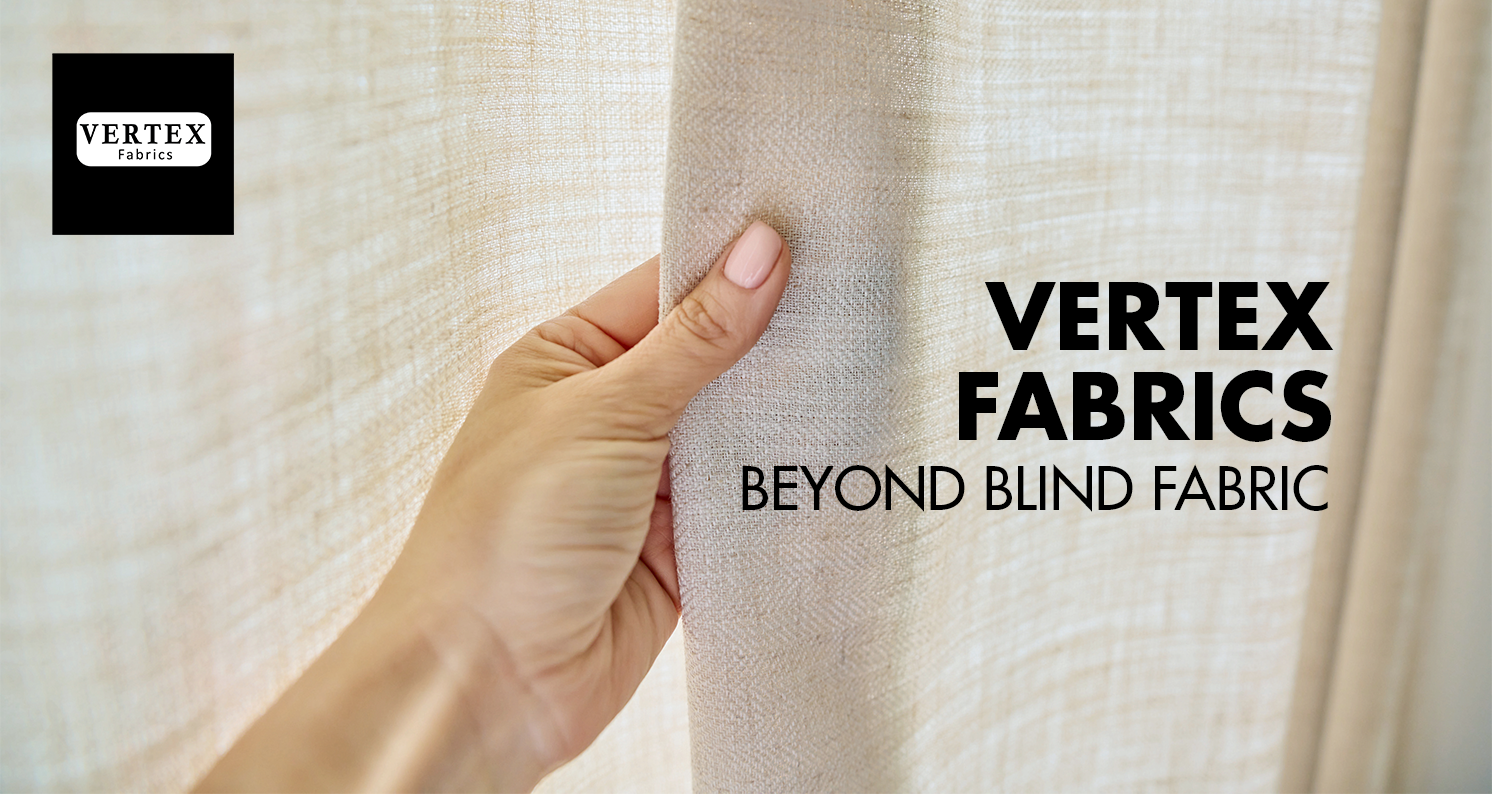
Vertex Fabrics built its business on blind fabric. In September, the Craigieburn wholesaler delivers more than 30 drapery ranges, sheers to blockouts, with a workroom network already in place. For blinds retailers, the entry point has never been lower.
Thirty-plus drapery fabrics, a workroom network already in place, and a September delivery date: Vertex Fabrics is no longer a blind-fabric wholesaler with a curtaining side project. The Craigieburn-based company, which WFA first profiled as a start-up in Issue 88 in January 2023, has committed the move fully, with sheers across a GSM range of 100 to 250 and a blockout line that runs six ranges. Andrew Fry, Director of Sales of Vertex Fabrics, says the decision was driven not by internal ambition but by what retailers kept asking for. “We launched our first sheer range, Cardinal, in 2023, and customer demand quickly accelerated. Based on ongoing requests from existing retailers, we expanded the category and have now developed more than 30 drapery ranges.”
The question for the trade is what this means for the blinds-only retailer who already buys from Vertex, has no workroom, and has never hung a sample book.
From one sheer range to a full catalogue
Cardinal arrived in 2023, not as a proof of concept but as a response to requests. Demand drove the pace of everything that followed: three years from a single sheer range to a catalogue of more than 30 drapery ranges, developed alongside the blockout and screen business rather than in place of it.
The decorative curtaining market Vertex is entering has different gatekeepers from the blind-fabric trade. The incumbent suppliers are specialist decorative houses with decades of designer and workroom relationships, sample libraries running to hundreds of hanging books, and sales forces built around specifiers who work from swatches, not product codes. Vertex’s proposition is not to displace those relationships directly. It is to give the blinds trade a curtaining path that does not require starting over with an unfamiliar supplier.
Andrew Fry says designer engagement is not new territory. “Vertex has worked closely with designers since our founding in 2019,” he says. “Our team collaborates directly with interior designers to develop colours, textures and constructions that meet current residential and commercial trends.” The colour palette for the drapery ranges reflects that alignment: whites, off-whites, beiges, ivories and greys that sit alongside the existing blockout and screen palette, so a retailer whose customers already specify Vertex can present curtaining without a jarring jump between sample books.
What Vertex counters the incumbents with is speed to market, a distribution network already spanning Melbourne, Sydney and Brisbane, and a trade account most of its target retailers already hold.
A different business, not extra SKUs
The specification language of curtain fabric is not the same as blind fabric, and for a supplier whose team was built on roller blind cloth, the adjustment starts in the yarn room. Andrew is direct about where the difficulty sat: “The main challenge was adapting our blind-fabric development processes to suit lighter yarns, higher widths, and drape performance.” What carried across, he says, was the testing bench: “Our advantage is deep experience in colour development, yarn selection, and colour-fastness testing, which allowed us to engineer high-quality sheer curtain fabrics.”
That translation has practical consequences for anyone selling or specifying the fabric. Blind fabric is assessed for opacity, dimensional stability under heat, and the mechanics of a roll-to-cut tube. Drapery is assessed differently: how a sheer diffuses light at two metres of drop, whether it hems cleanly, whether a seam visible in natural light puckers after the first wash, whether colour holds against the ultraviolet load of north-facing glass over a summer. These are failure modes a blind-fabric warranty has never needed to address.
The buyer also changes. The end customer for a curtain fabric is typically a workroom, not a fabricator with a slitting machine and a heat-welding bench. Workrooms work from cut-drop metreage at a rate per metre, using hanging sample books to show clients how a fabric drapes and falls. The swatch card that presents a blind fabric range does not present a curtain range.
Width is where the two categories part company most usefully for the retailer. Sheers run 3.2 to 3.6 metres, blockouts and non-velvet constructions 3.0 to 3.6 metres, and Andrew says most wide-width sheers in the range are suitable for railroading, with railroading and lining options varying by range. Railroaded off a 3.6-metre roll, the roll width becomes the drop, so a standard residential window under 3.6 metres hangs without a single vertical join. At the 250 per cent fullness Vertex specifies for S-fold, a three-metre track draws 7.5 metres of fabric off the roll in one continuous cut, and a 40-metre roll covers roughly five of those jobs. For a retailer quoting curtains for the first time, that is the whole metreage calculation.
Measuring and installing change with it. A roller blind is measured to a reveal or a face fix, and the tolerance that matters is the width of the tube. A curtain is measured to the track: width plus returns plus the centre overlap, then a drop taken from the top of the track to a finished floor, with the retailer deciding whether the client wants the hem sitting off the floor, breaking on it, or puddling. The fabric is attached with S-fold tape and glides rather than fixed to a barrel, and the track has to be bracketed to something that will hold the weight of a 3.6-metre drop in a heavy sheer. None of that is difficult, but none of it is what a blinds retailer’s measure sheet currently asks for.
Fire testing is handled at lot level. Most fabrics in the range are tested to AS 1530.3, and certification is traceable batch by batch. “Each production lot carries a batch number, enabling traceable certification for specifiers,” Andrew says. For contract work, that is the difference between a certificate that covers the fabric on the job and one that covers a fabric of the same name.


The September range
The September 2026 launch brings sheers and blockouts across two distinct product families.
The sheers are Cardinal, Melton, Lavish, Giverny, Chiffon, Calico, Crepe and Nara, running, Andrew says, from light, see-through sheers to heavy sheers. The blockout component comprises six ranges: Viva, Architecture, Universe, Velour, Mochi and Serenity. Velour is a velvet construction at a narrower 2.8 metres. Further ranges land alongside them to make up the catalogue of more than 30.
Sheer GSM runs from 100 to 250. Roll lengths across the catalogue run from 20 to 40 metres, maximum drop without a join is 3.6 metres, and minimum cuts are standard wholesale lengths. Cleaning is Code 4, gentle washing, so the care instruction that goes to the end customer is a wash rather than a dry-clean, which is the answer most retailers want when a client asks about a white sheer in a north-facing living room. Vertex says shrinkage sits within industry tolerance on its own testing, and that the fabrics are colourfastness tested.
Colourways align with the existing blockout and screen palettes: white, off-white, beige, ivory and greys. All designs are developed by Vertex’s interior designer, working with manufacturing partners the company says have more than 30 years of experience.
What a blinds-only retailer needs to start
“Retailers do not need their own workroom.” That is Andrew’s direct answer to the question most Vertex accounts will have before opening the new catalogue.
The workroom infrastructure is Vertex’s to provide, not the retailer’s to build. “Vertex already works with many established workrooms across Australia who can supply finished curtains made from our fabrics,” Andrew says. A retailer who can sell a roller blind can, in principle, take a curtain order, pass the cut-drop metreage to a Vertex-connected workroom, and deliver a finished curtain without investing in making capacity.
In practice the order runs the same shape as a blind order with one extra handoff. The retailer measures the track, settles the fullness and the heading with the client, converts that to cut-drop metreage, and sends the metreage and the fabric selection to the workroom rather than to a fabricator. The workroom returns a made curtain, and the retailer installs the track and hangs it. The retailer’s margin sits in the fabric and the making, and the making rate is the number to have before the first quote goes out.
The sample infrastructure is the physical change. Sample hangers are available immediately and supplied free. The move from a blind swatch card to a hanging sample book changes the showroom presentation but not, with Vertex providing the hangers, the capital cost.
Tracks, brackets, tapes and runners are also supplied by Vertex, so the hardware component of a curtain installation does not require a separate trade account.
Stock is held in Melbourne, Sydney and Brisbane, and Vertex says it offers next-day delivery to most customers. Its sampling programme is open now, ahead of the September range landing.

Where the category goes next
The ambition behind the move is specific. “We expect curtaining to represent 50% of total revenue within three years, driven by strong residential and commercial demand for sheer fabrics,” Andrew says. To support it, the company says it will continue building design capability, stockholding capacity and workroom partnerships.
Arriving with the fabric is a motorised curtain system, announced in August 2026 and designed to run the September range. Vertex says the system uses Matter and offers both battery and AC motor options, with technical support from the company’s engineering team. Fabric, track, hardware and drive therefore come from a single account, which for a blinds retailer adding curtains removes the usual first hurdle of assembling three or four new suppliers before the first quote goes out.
For the trade, the September delivery is the point at which a category that has been a specialist purchase becomes a line item on an existing Vertex order.
Vertex Fabrics September 2026 curtaining range
Sheer width 3.2 to 3.6m
Blockout width 3.0 to 3.6m
Velvet width (Velour) 2.8m
Sheer GSM 100 to 250
Roll length 20 to 40m
Maximum drop, no join 3.6m
S-fold fullness 250%
Minimum cut Standard wholesale cut lengths
Cleaning Code 4, gentle washing
Fire testing Most ranges tested to AS 1530.3, batch-traceable certification
Railroading Most wide-width sheers suitable; varies by range
Colourways White, off-white, beige, ivory, greys
Stock locations Melbourne, Sydney, Brisbane
Hardware Tracks, brackets, tapes and runners supplied
Sampling Free sample hangers, available now