Please turn your device to portrait.
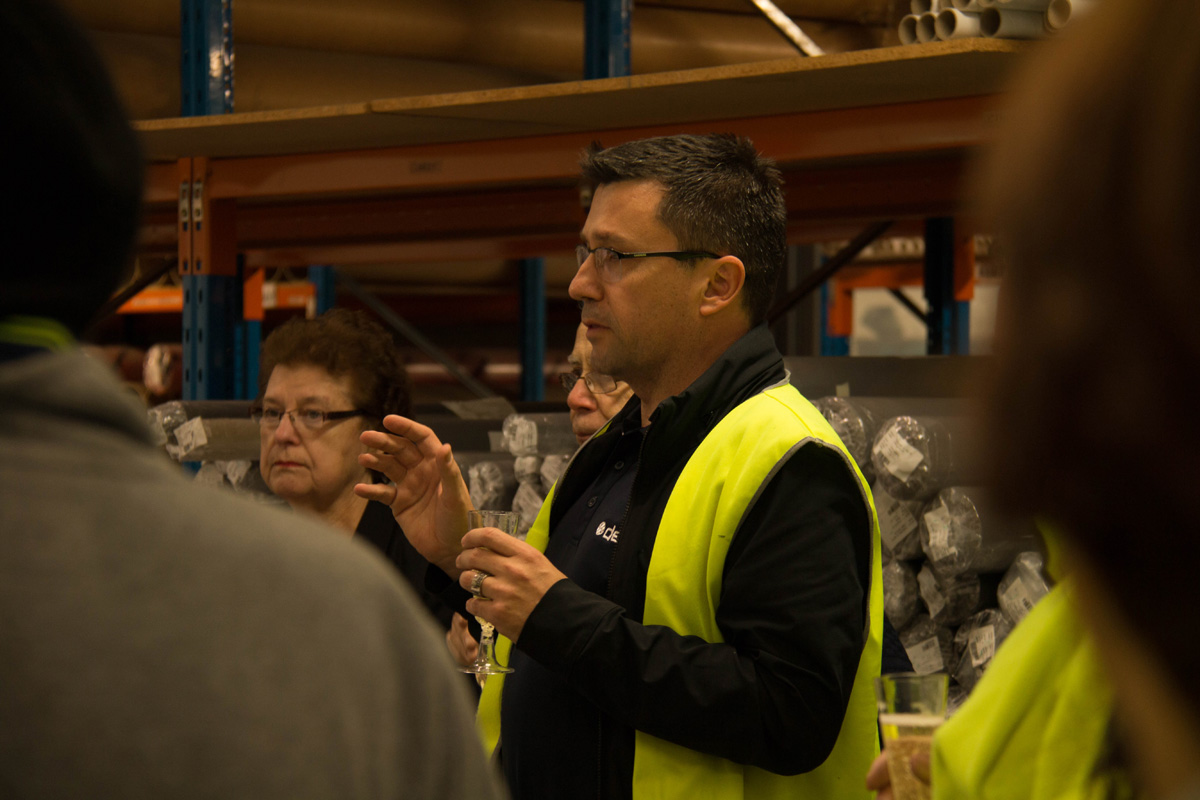
In this edition’s Ask the Expert, Tony Cassar sits down with Joe De Petro, CEO of Defab, to talk about humble beginnings, the company’s recent acquisition, and rising from the ashes.
Tony Cassar: Welcome, Joe! Thank you for being part of the WFA Ask the Expert series.
Joe De Petro: Thank you for having me. You’re welcome.
Tony: Defab was established in 1976 by your father Nunzio. Tell us a little about the Defab story and your father’s story.
Joe: My dad migrated from Sicily in 1954 at the age of 12, following his father who had arrived a year earlier. They settled in Preston, Victoria. Dad wanted to be a motor mechanic, but as a new migrant, he was told those jobs were reserved for Australians. So he took a job at Peerless Fabrics cleaning bobbins. While working, he attended the College of Textiles in Pascoe Vale and trained as a textile mechanic.
He worked at Tara Towels, then John Siggins (a warp knitting mill), then returned to Tara, followed by United Carpets, where he worked on Wilton looms and met my mum, Susan. He also worked as a demonstrator at the Textile College and finally joined Loom Glow Fabrics, where he spent nearly nine years, ultimately rising to the position of Production Manager. In 1975, the company closed due to tariff cuts under Whitlam.
Rather than leave the industry, Dad and Mum took the plunge and bought 18 looms to start Defab Weavers in 1976. Initially a commission weaver, Defab produced fabrics for fashion and apparel brands like Table 8, Country Road, Sportscraft, Hugo Boss, Portmans, Norman Ritchie and Undare. In the ‘80s, we expanded into industrial weaving for Brella, Bradmill, and Wax Converters Textiles (WCT). Later, we moved into finishing and coating, becoming the second largest weaver and coater in Australia.
In 2008, a fire destroyed our weaving shed. We lost everything but rebuilt using our own finances after the banks withdrew support. It took years to regain traction. In 2017, due to high overheads, we ceased weaving in Australia and now partner offshore with access to 1,200 looms.
Recently, we acquired all the IP assets of Wax Converters Textiles to preserve the brand and prevent misuse. This made Defab the largest canvas mill in Australia. It’s a major step in our strategy to be a house of respected, legacy-driven brands.
Tony: Is Nunzio still active in the business today?
Joe: Yes, Dad is now 82 and still comes into the factory daily. Even after losing Mum two years ago, he remains incredibly dedicated. He originally considered retirement, but ultimately decided against it. He’s slower physically now, but his mental sharpness and commitment remain inspirational. He never sought recognition, always focusing on creating opportunities for others.
Tony: So, Joe, what were you doing before entering the business?
Joe: I studied accounting and worked at Coles Myer in logistics and marketing, including ERP implementation at Westgate. My dad always believed you should work for others before working for yourself. Eventually, Mum told me it was time to return.
Tony: What’s your main strategy for market positioning?
Joe: We position ourselves in the mid-to-high end. Competing on price is a race to the bottom. Our goal is to sustain local manufacturing with quality and integrity.
Tony: How do you approach finance and growth?
Joe: We are fully self-funded. That gives us agility and keeps us out of the spotlight. We’re not chasing size, we’re chasing substance. I still personally manage strategic contract sales.
Tony: What’s your involvement with government policy?
Joe: I engage regularly with government through trade missions and policy discussions. I advocate for a differential GST on imports – say 22% – to protect Australian manufacturing without resorting to tariffs.
Tony: Defab is a family business. What about the next generation?
Joe: My nephew Sam, my sister’s son, started over a decade ago. He began on the floor splitting wastewater and inspecting fabrics. Today, he co-leads Defab with me and has reduced product seconds to under 1%. He’s an asset to the business and a testament to learning from the ground up.
Tony: What are your greatest challenges within the business now?
Joe: Labour. Our growth has been over 35% this past year. Without enough hands, we risk bottlenecks. We’re investing in equipment and people.
Tony: What was your greatest achievement?
Joe: Survival. Rebuilding after the fire. Navigating without bank support. And now acquiring WCT’s IP to preserve legacy brands. But most rewarding is helping our people succeed – watching staff buy homes or develop skills. That’s what legacy really means.
Tony: What kind of promotional activity do you focus on?
Joe: We’re very traditional. Face-to-face, trade shows, direct marketing. Social media has its place, but we use it to educate, not sell. Textiles are about touch and feel.
Tony: What about industry associations?
Joe: If you’re not part of your industry body, you become invisible. I support the Specialised Textiles Association because we need to be visible to government and work collaboratively. And we need less complaining, more action.
Tony: And sustainability?
Joe: It’s core to what we do. Our coatings contain no nasties. The byproduct is a sludge that goes into green waste, and the remaining water is clean. Our polymers are as safe as those found in shampoo.
Tony: How many people are at Defab now?
Joe: We’re at about 29 and growing.
Tony: What do you see as the key issues facing the window covering industry?
Joe: Government policy. Automation is changing how we do things – chains are vanishing. Fire retardancy standards are also evolving. We need to stay ahead.
Tony: Who influenced you most?
Joe: My parents. Mum taught me self-sufficiency. Dad taught me to fight for what matters. If I can live up to even half of what they gave, I’ll have done well.
Tony: How do you spend your time outside of work?
Joe: I play golf, I love music, and I spend time with my kids and my partner’s child. I care for my dad’s legacy and help guide my nephew. Family means everything.
Tony: Thank you, Joe, for your time today. We greatly appreciate it and thank you for being part of the WFA Expert Series.
Joe: Thank you, Tony.
Editor’s Note This interview took place on 6 June. Nunzio De Petro passed away on 26 June.