Please turn your device to portrait.
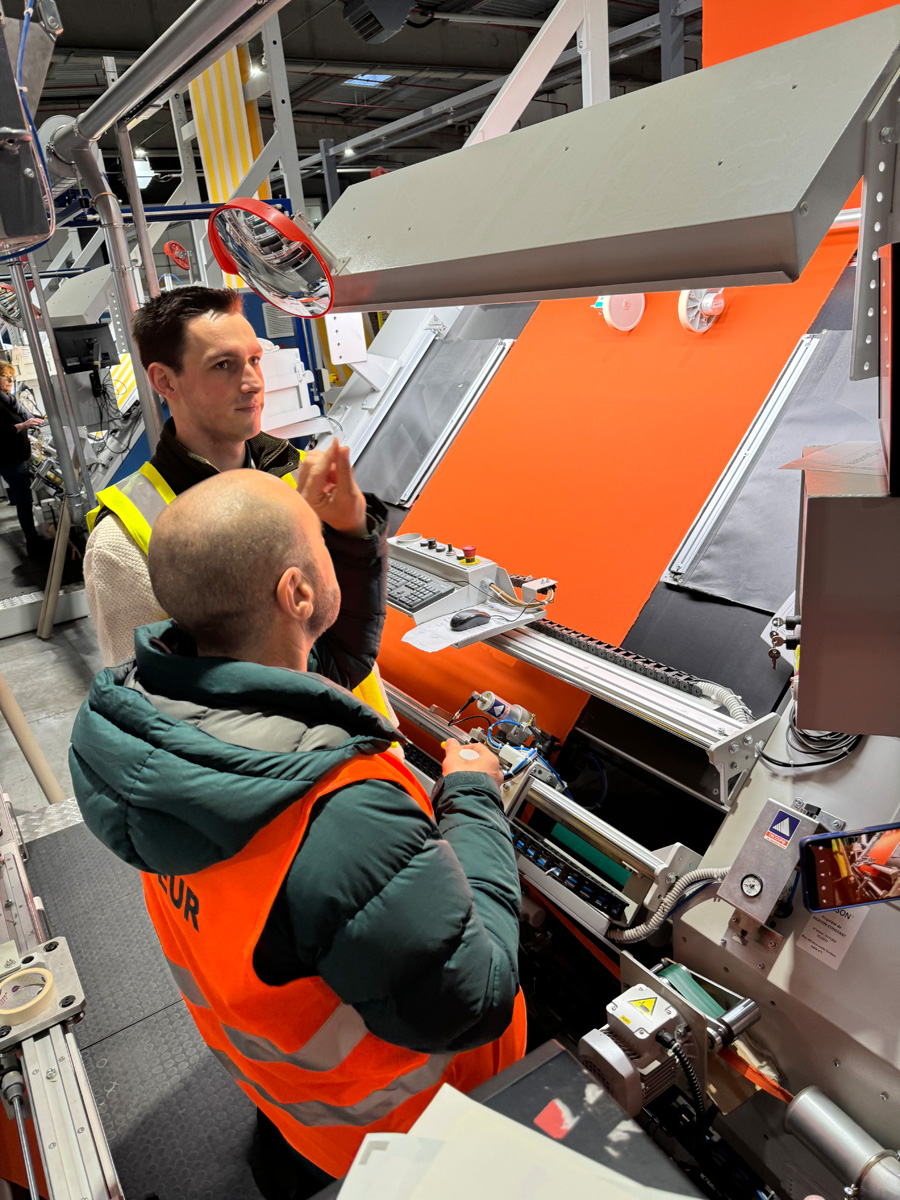
Goodearl + Bailey, Vertilux, Somfy and Meyer Blinds each describe what sits behind their environmental claims, from certificates and life cycle analyses to product declarations and cycle testing.
A green word on a sample book or swing tag now needs a document behind it, and those documents sit on three rungs. A self-declared label is the supplier’s own statement. A third-party certificate comes from an independent body and names a product, a number and an expiry date. An Environmental Product Declaration (EPD) reports a product’s life cycle environmental impacts within a recognised framework. For a retailer or installer, the working question is which rung a claim rests on, and whether the supplier can hand over the paper.
The ACCC published its environmental claims guide in December 2023, and greenwashing stays on its 2026-27 enforcement priorities. In April 2025 the Federal Court ordered Clorox to pay $8.25 million over a headline “ocean plastic” claim that its fine print did not cure. PFOS, PFOA and PFHxS have been prohibited for industrial use under the national IChEMS Register since 1 July 2025, and mandatory climate reporting extended to Group 2 entities for financial years starting on or after 1 July 2026.
Goodearl + Bailey: certificates, life cycle data and PFAS dates
Clare Corban of Goodearl + Bailey says Dickson-Constant supports its environmental claims with product-specific documentation, including independent textile certification and life cycle analyses. Dickson-Constant’s solar protection textiles are covered by oeko-tex Standard 100 certification, issued through IFTH in France. The current certificate for the Orchestra range, CQ 638/8, is valid until 31 March 2027. Dickson-Constant has also registered three Environmental and Health Product Declarations (FDES) for solar protection textiles on France’s INIES database, with a reported validity date of 2 May 2029. The certificate and declarations form part of Dickson’s wider Greenovation programme, which focuses on measuring and reducing the environmental impact of its products.
The Origin collection is made from 50 per cent recycled and 50 per cent virgin solution-dyed acrylic. Goodearl + Bailey says Origin’s recycled fibres come from the Recycle My Dickson initiative, which gives textile waste from Dickson’s own manufacturing processes and industry partners a second life, and that its finish is non-PFAS. Origin carries a 10-year warranty. “While not part of our locally stocked collection, Origin is available through Goodearl + Bailey on a project basis,” Corban says.
Dickson’s Orchestra life cycle analysis, published in October 2025 using 2023 data, measures the environmental impact of the fabric from raw material extraction through to end of life. The assessment reports an estimated carbon footprint of 5.21 kg CO2e per square metre across the fabric’s life cycle, based on an assumed 15-year lifespan, and identifies the contribution of raw materials, manufacturing, transport, use and end-of-life processes to that footprint. According to Goodearl + Bailey, it also shows where the greatest environmental impacts occur, which helps Dickson focus its efforts on reducing them.
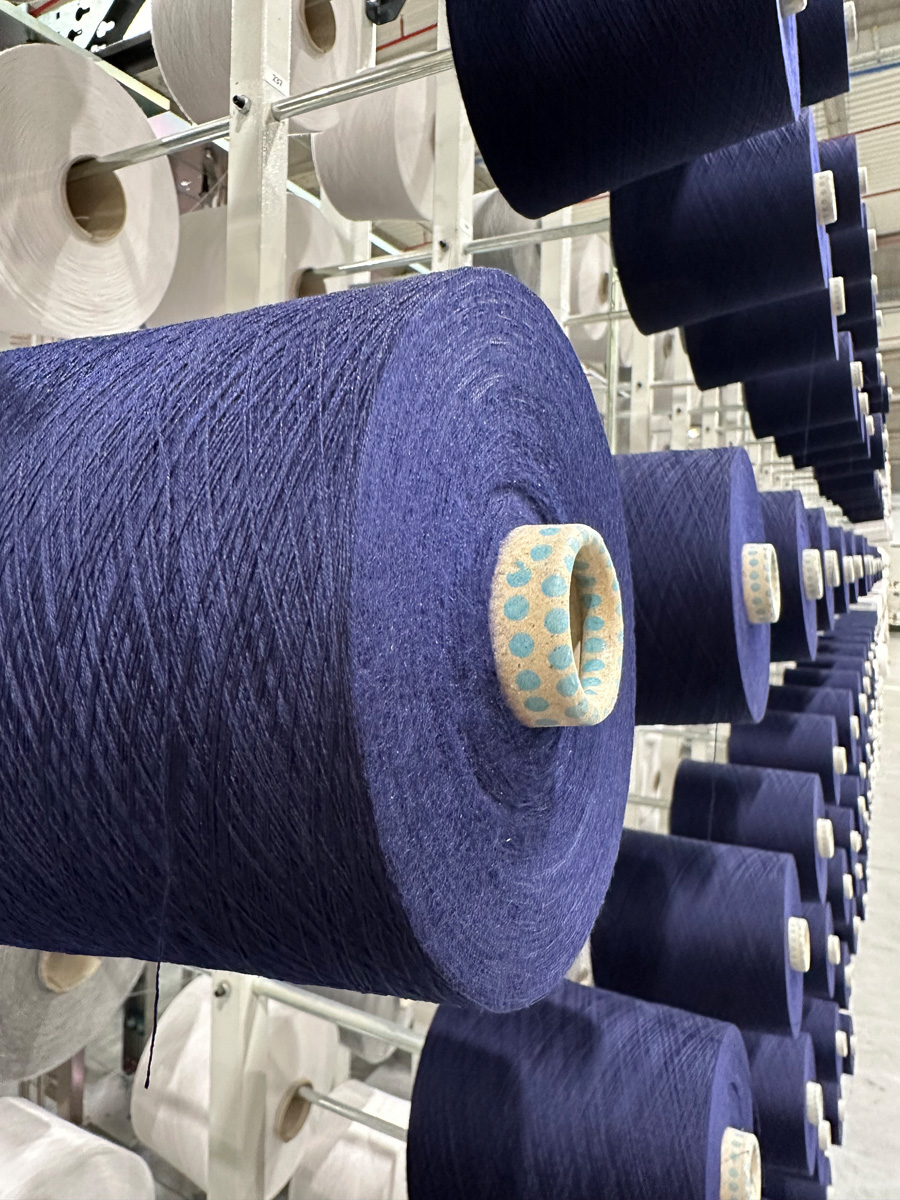
“At Goodearl + Bailey, we can provide relevant manufacturer documentation to fabricators, installers and specifiers on request,” Corban says.
“At Goodearl + Bailey, our approach has been to keep environmental claims clear, accurate and supported by manufacturer documentation rather than making broad sustainability statements,” Corban adds. “We have progressively updated our product specification sheets and website information to reflect changes in fabric composition, finishes and environmental performance, including Dickson’s transition to non-PFAS treatments.”
“We avoid general claims such as carbon neutral, low carbon or eco-friendly, instead focusing on specific product information that can be supported by our suppliers,” Corban says. “Our priority is to provide fabricators, installers and specifiers with reliable information they can confidently refer to and share with their customers.”
On product-level carbon data, Corban says: “While we haven’t yet seen significant demand from our customers for product-level carbon reporting, we recognise this is likely to become increasingly relevant, particularly for commercial projects.” Goodearl + Bailey says it can supply the Orchestra analysis readily on request, giving fabricators, specifiers and project teams access to documented product-level environmental information.
Dickson-Constant began investing in alternative textile finishes in 2015, according to Corban, with its transition away from PFAS treatments starting in June 2023, ahead of the restrictions Australia introduced on 1 July 2025. “Our Australian Dickson Orchestra collection transitioned to non-PFAS finishes from the beginning of 2025, supported by manufacturer documentation and Dickson’s annually renewed oeko-tex standard 100 certification,” Corban says.
“We have received customer enquiries regarding non-PFAS fabrics and can obtain specific supplier declarations addressing PFOS, PFOA and PFHxS where required,” Corban adds.
Vertilux: credentials, recycled content and take-back
Vertilux marks 50 years in the industry in 2027, and 20 years as a member of the Green Building Council of Australia (GBCA). More than a decade ago, the company says, it became the first Australian window furnishings manufacturer to have its products independently assessed by an environmental organisation, well before third-party environmental credentials became an established part of the specification conversation.
The same principle still guides its approach, according to Vertilux: “environmental claims should be supported by credible evidence, and responsibility should extend across the product lifecycle.”
Vertilux says fabric ranges across its Greenvision and Ecolight Fabric Series hold independent environmental credentials, including EPDs, Product Health Declarations (PHDs) and Global GreenTag GreenRate or LCARate certifications. Each does a different job: EPDs communicate life cycle environmental impacts within a recognised framework, while PHDs and GreenRate or LCARate certifications provide further independently assessed information relevant to health, environmental performance and responsible specification.
“For us, the value lies not simply in having an environmental claim attached to a product, but in having credible, independent evidence behind that claim that customers and specifiers can assess and use,” the company says.
Vertilux says the Ecolight Fabric Series saw the introduction of fabrics incorporating pre-consumer recycled industrial fibre waste and post-consumer recycled PET bottles, and that several Ecolight ranges also carry independent environmental credentials. The Series includes a hybrid fabric combining 50 per cent polyester and 50 per cent inherently flame-retardant Trevira, which the company says brings recycled-content technology together with the performance requirements of commercial window furnishings.
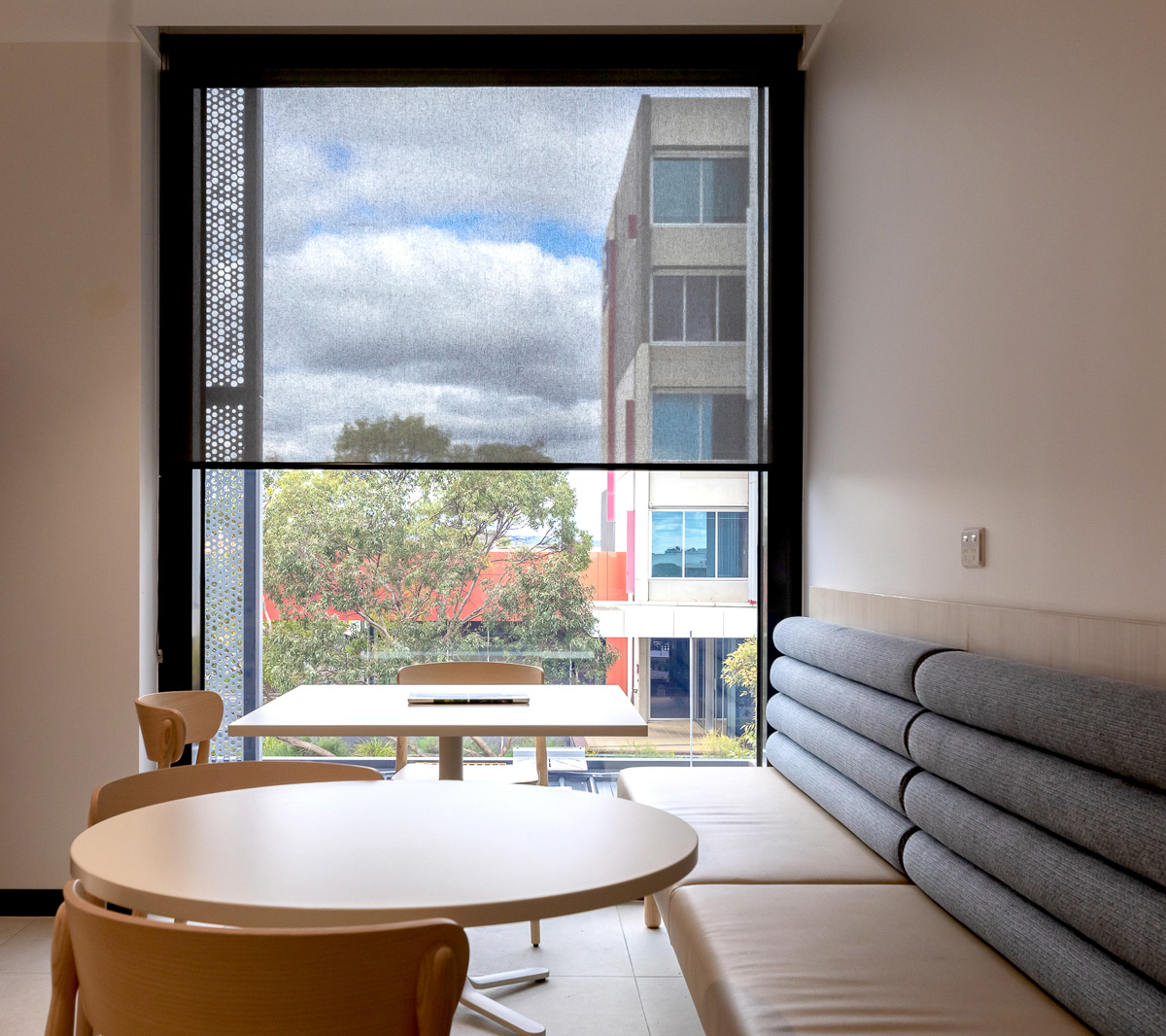
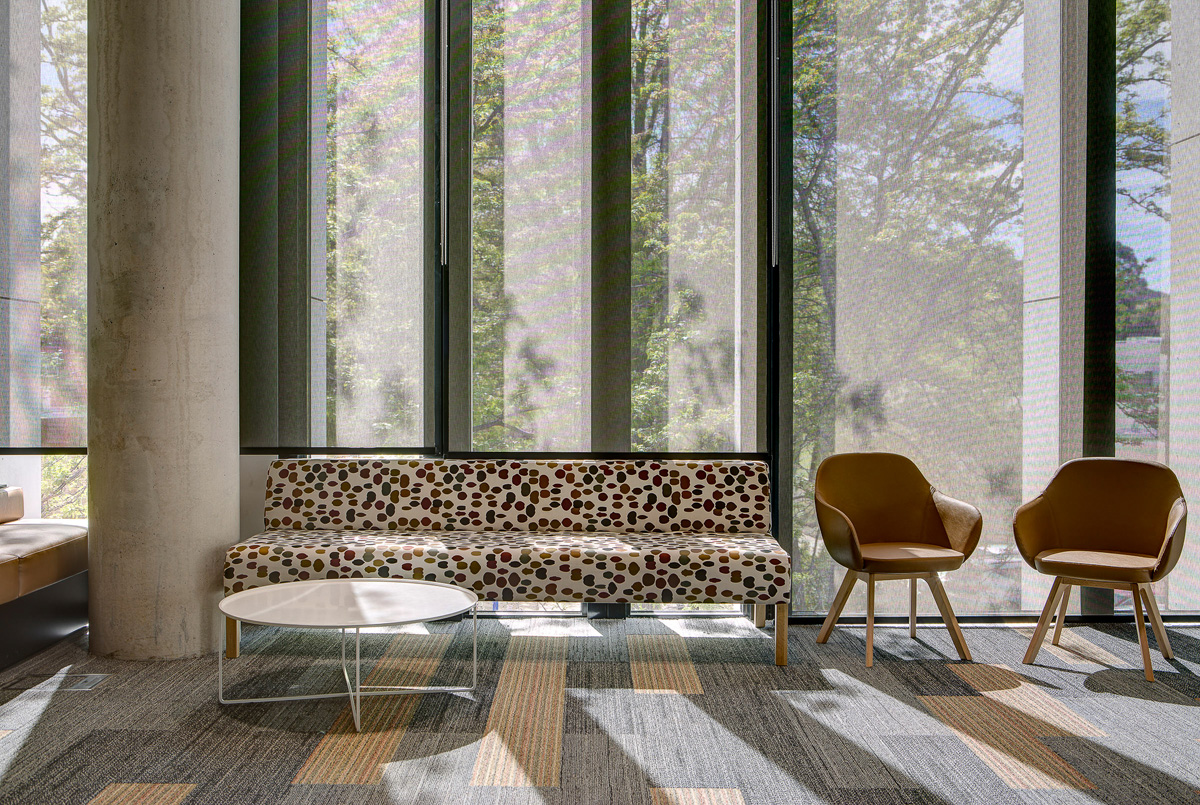
“This means conversations around recycled content can move beyond marketing terminology towards documented material information and independent verification,” Vertilux says.
Vertilux’s Product Stewardship programme considers product impacts across development, research, certification, manufacturing, marketing, storage and distribution, use and service, and ultimately disposal, reuse or recycling. The company says it recycles aluminium, cardboard, packaging and fabric to minimise waste going to landfill, that packaging from incoming goods is recovered and separated for reuse where possible, and that larger pieces of fabric and aluminium componentry can be recovered for product sampling and prototyping.
For PVC-based products, Vertilux says it will take back products on a project-by-project contractual basis, with the material recycled and reprocessed into second-generation products. Billboard material is currently the main end use. The company is also continuing to collaborate with industry stakeholders on recycling and post-consumer waste opportunities. “This is an area that continues to evolve. The objective is to look beyond the initial point of sale and consider how materials can remain in use for longer or be responsibly recovered at end of life,” the company says.
Vertilux says the conversation is also broadening beyond recycled content and life cycle impacts to include material chemistry and greater supply-chain transparency, with supplier declarations, substance information, product testing and third-party certification all contributing to a clearer understanding of what sits behind the finished product. For manufacturers and suppliers, in Vertilux’s view, environmental responsibility increasingly involves maintaining credible evidence behind product attributes rather than relying on broad environmental language alone.
“Ultimately, we believe the industry’s sustainability conversation is moving in the right direction. The question is becoming less: Is this a sustainable product? and more: What evidence supports the environmental attributes of this product, and what does that evidence mean for my project?” the company says.
Somfy: eco-design criteria and PEP Ecopassport sheets
Somfy says it has spent more than a decade working to reduce its environmental footprint. Eco-design is a core element of its strategy and product development, and it is central to the company’s industrial processes. Priority is given to the product phases with the biggest environmental impact.
The company adopted its current approach in 2015 and says this made it an industry pioneer. The approach rests on a multi-criteria analysis covering low electrical consumption, durability, substances and EPD. Its aim is to limit environmental impact across the entire product life cycle.
“Our objective is to ensure that 100% of our sales come from products following an eco-designed approach by 2030,” says Mary Ladu, Marketing Manager for Somfy Oceania.
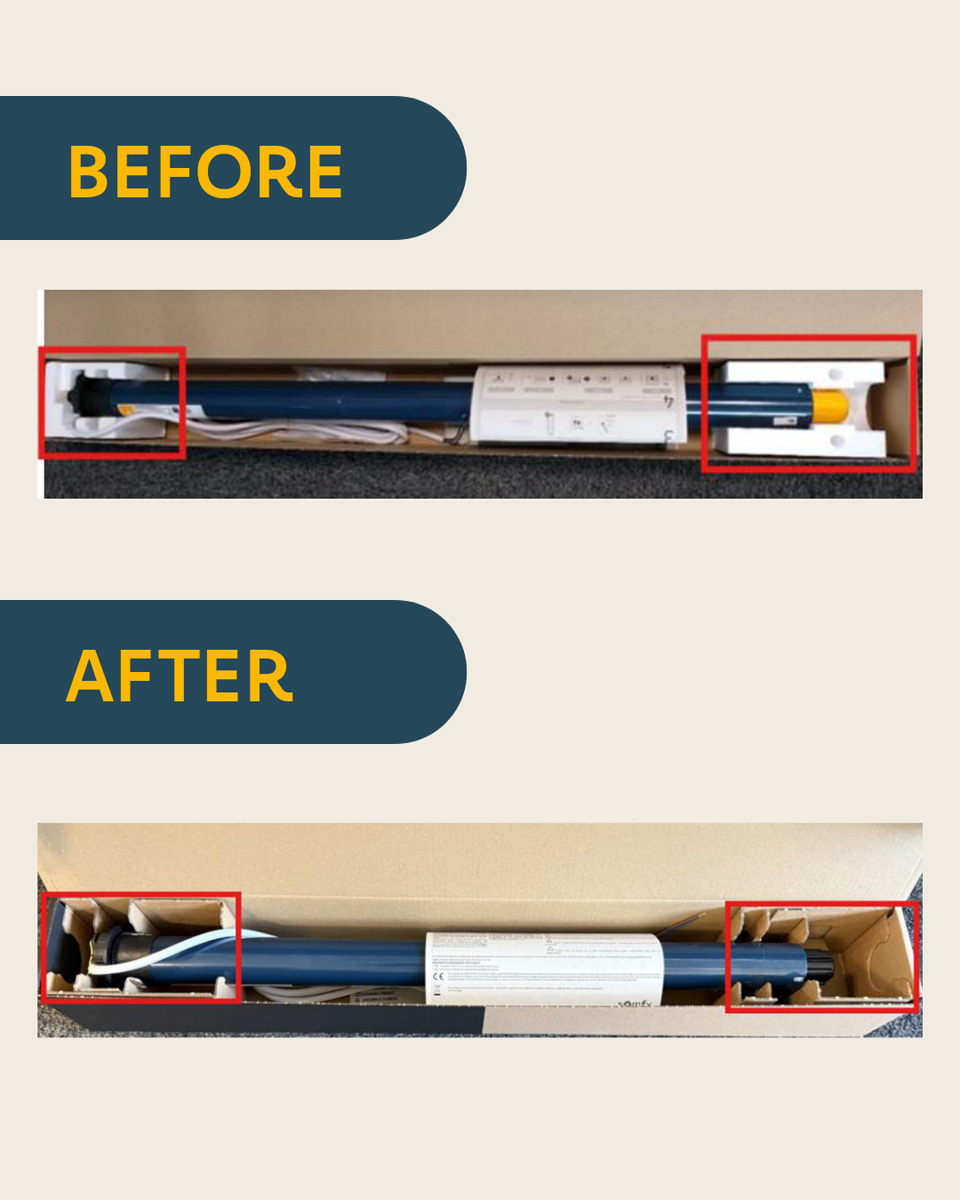
Five criteria underpin the approach:
Somfy says products that meet these standards are awarded the PEP Ecopassport, which documents the results of environmental impact calculations (www.pep-ecopassport.org). “With over 200 PEP Ecopassport sheets, covering nearly all of our best-selling products, Somfy offers one of the most extensive Environmental Product Declarations for motors on the market, providing our customers with high valuable environmental data,” adds Ladu.
“Somfy also doesn’t restrict eco-design to one product range. We are working to eco-design everything we make, to lessen our environmental impact. Our eco-designed products include motors, sensors, remote controls, and accessories,” Ladu says.
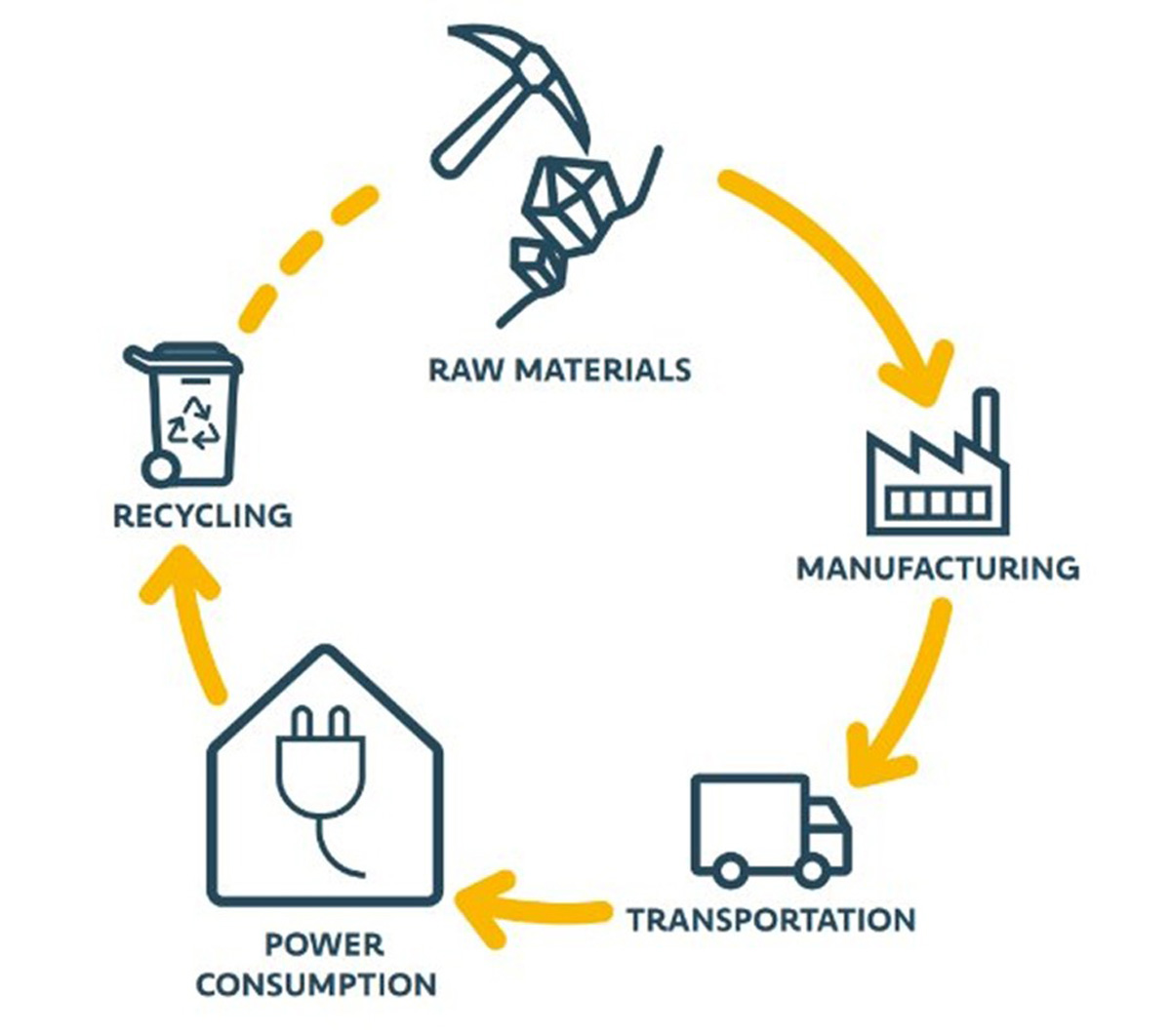
Packaging is another area of focus, with Somfy beginning to replace the polystyrene inserts in its motor packs with cardboard ones, the company says.
Meyer Blinds: operations, recycled fabrics and cycle testing
Meyer Blinds says sustainability extends well beyond recycled materials and energy-efficient products, and that manufacturing practices, resource management, freight efficiency and product longevity all contribute to reducing environmental impact. Its approach involves examining decisions from production and distribution through to the performance and service life of the products it supplies.
“Sustainability needs to be considered across the entire life of a product,” says Simon Meyer, Managing Director of Meyer Blinds. “It’s not just about the materials used, but how efficiently we manufacture, how we manage resources and whether the products we supply are designed to last.”
Meyer Blinds says a rooftop solar installation forms part of how it manages operational energy requirements, alongside ongoing consideration of production efficiency and resource consumption. The company lists efficient use of materials, reducing unnecessary production waste and consolidating freight movements as considerations in limiting the environmental impact of manufacturing and distribution, and says packaging, material recovery and opportunities to simplify production processes remain areas where incremental improvements can contribute to broader sustainability objectives.
On longevity, Meyer Blinds’ view is that durable, serviceable window furnishing systems that remain operational for extended periods can reduce replacement requirements and associated material consumption.
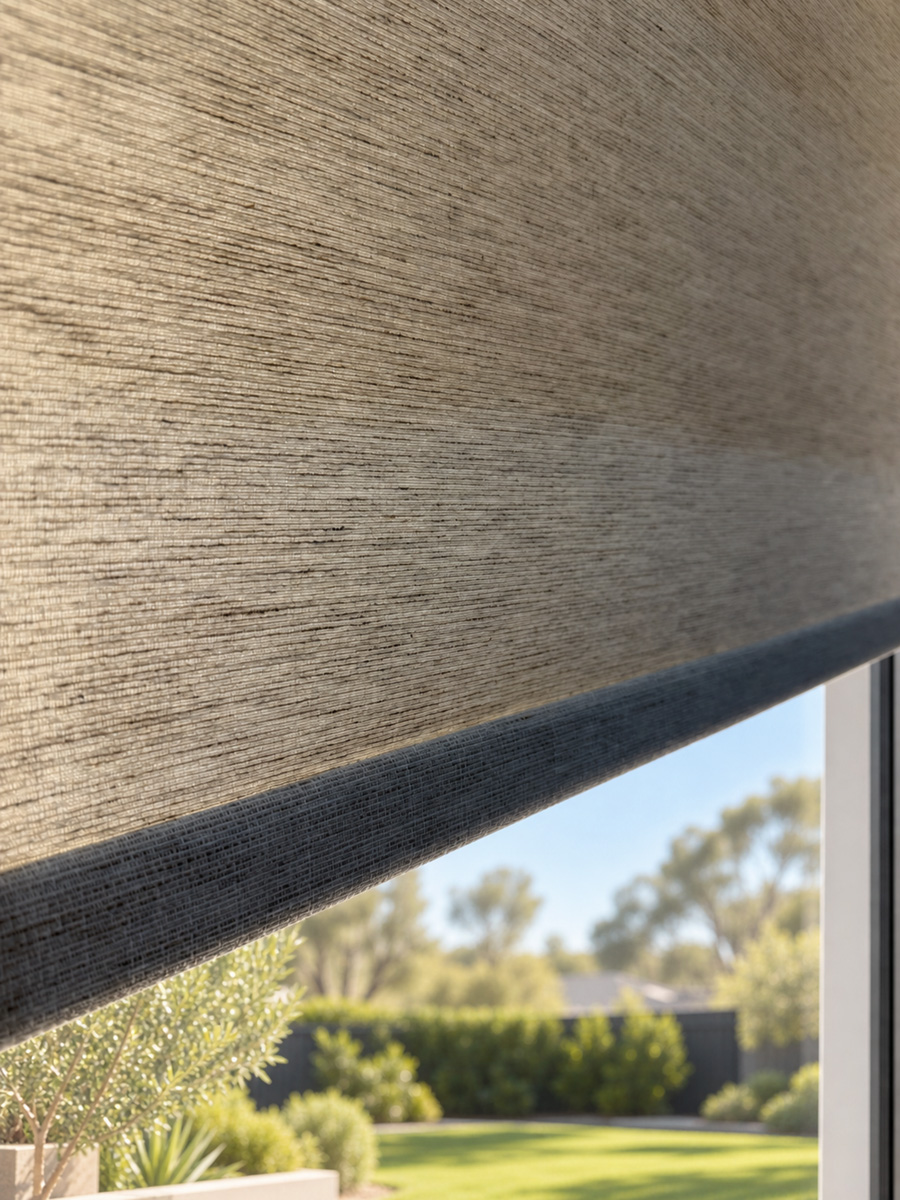
Meyer Blinds says its most recent Signature X collection has a stronger focus on recycled materials. The collection has 22 fabric ranges, with more than 60 per cent entirely new fabrics. Eden X is made from 100 per cent recycled polyester and Levan incorporates 43.6 per cent recycled polyester. Both are oeko-tex Standard 100 certified and come in light-filtering and blockout constructions for roller, Roman and panel blinds.
The Turon collection widens material choice through natural fibre blends, including Turon Hemp & Jute with 7 per cent recycled wool and Turon Cotton & Flax with 16 per cent recycled cotton.
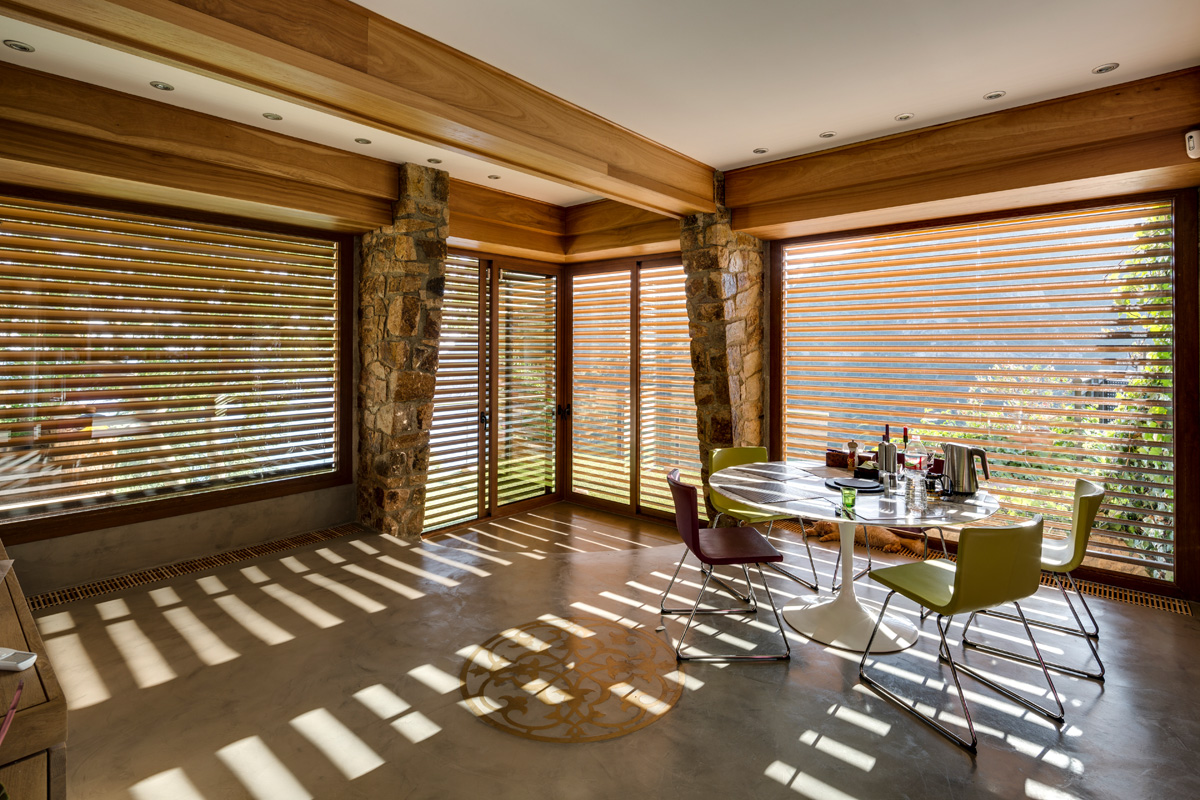
Meyer Blinds says Griesser External Venetian Blinds show another aspect of sustainable specification, through thermal performance and engineered durability: the systems can block up to 93 per cent of incident solar heat, which can contribute to reduced cooling requirements, and automation enables responsive daylight and solar management. Precision-engineered components and testing to approximately 20,000 operating cycles, depending on the model, also support long-term performance, the company says.
For specialist retailers, Meyer Blinds says, this broader approach gives an opportunity to discuss sustainability through measurable product characteristics, responsible manufacturing practices and long-term value rather than relying on general environmental claims.
“There’s no single solution to sustainability,” Meyer says. “It’s about continually reviewing how we operate, making responsible material choices and supplying products that deliver genuine performance and longevity.”