
Please turn your device to portrait.
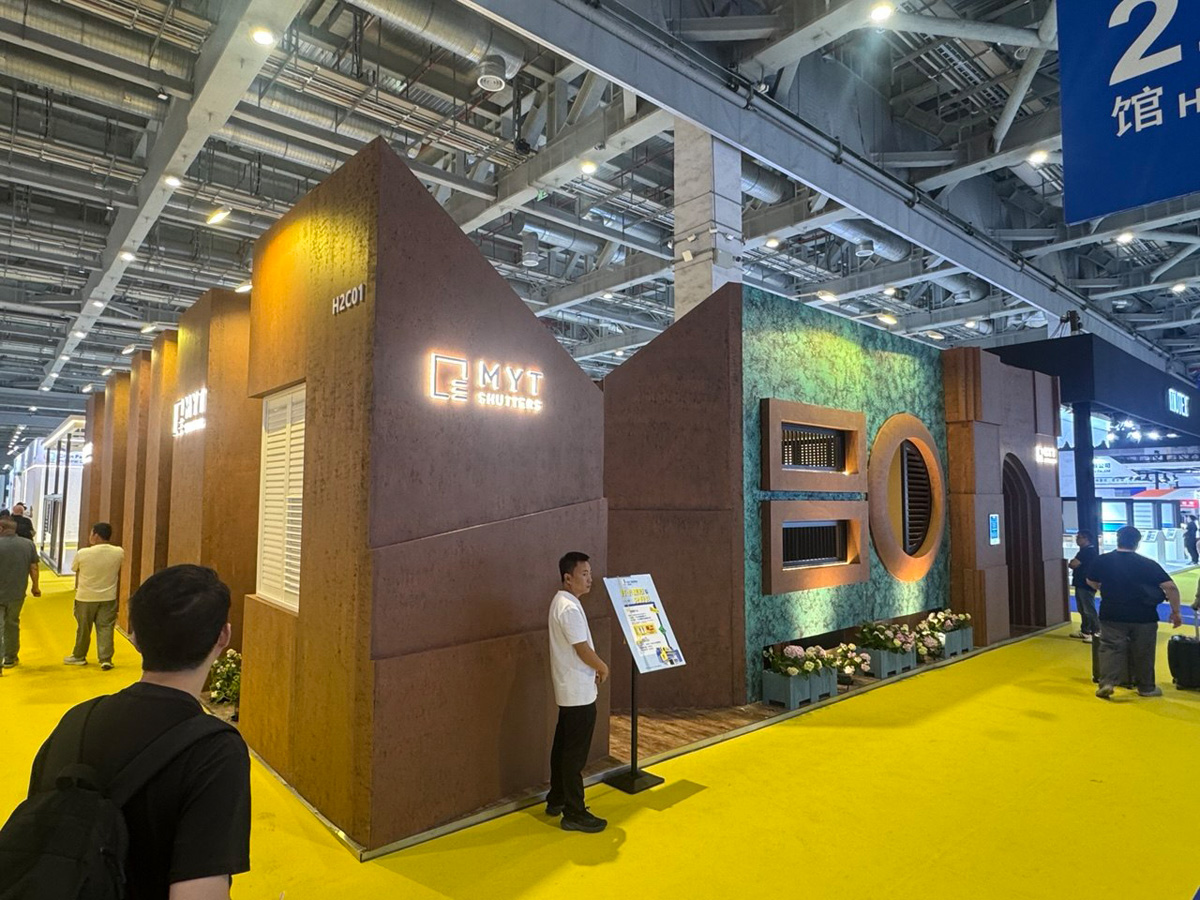
With Australian visitor numbers thinner than in previous years and WSAA just a fortnight away, three Australian exhibitors still made the trip to Shanghai for R+T Asia 2026. What they found on the floor, PVC dominating as families tighten budgets, local fabrication emerging as a hybrid strategy, and Australian software drawing interest from South Korea to Turkey, tells a sharper story about where this market is heading than any trend report could.
Three Australian companies. One show floor in Shanghai. A cost-of-living squeeze that is reshaping what buyers actually order.
R+T Asia 2026 drew exhibitors and visitors from Mauritius, South Africa, India, Pakistan, Crete and beyond, but the Australian contingent was noticeably smaller than in previous years. The timing was no coincidence: with the SuperExpo running a fortnight later, some Australians quietly decided one trip was enough. Those who came anyway had good reasons to be there.
WFA spoke with three of them who were exhibiting: Scott Lindsay Sloan from MYT, Steve Payne from Luxor, and Ed Sedgley from Viewa, a first-timer. Their accounts, taken together, sketch a market under real financial pressure, and an industry that is responding with a sharper eye on what customers will actually pay for.
PVC, PLANTATION SHUTTERS AND THE $10 DIFFERENCE
The dominant story on the floor this year was not technology or design. It was price.
“PVC is dominant purely because everyone’s scurrying for the cheapest price point,” says Scott Lindsay Sloan, who heads R&D at MYT. “Cost-of-living crisis, fuel, the cost of a litre of milk, all of it hits the family pocket. The first part of the window covering market to take a hit is when families lack a slush fund for a boutique product like a plantation shutter. They still want the shutter, but the extra $10 per square metre is a big difference.”
Sloan points to a surge in roller blinds. A textile supplier he spoke with on the floor reported vertical blinds making a comeback, a shift Sloan says few in the industry expected. He frames both as floor-level observation rather than hard data, but he sees the same price-driven pattern beyond Australia, in the Netherlands and UK markets.
For Steve Payne at Luxor, the challenge is familiar, but his response is to find an alternative lane rather than compete on price alone. The shutter category, he says, is Luxor’s core. The company knows it well, and the category is growing. But much of the market has shifted toward bottom-end PVC, which means every conversation risks becoming a price negotiation.
Nexus combines timber and PVC in a product positioned above commodity pricing without reaching the full premium tier. Payne was also showing a new aluminium product, a bottom roller system for sliding shutters, and road-testing a further product for development over the next six to twelve months. The logic is consistent: give retailers and installers options that let them have a value conversation, not just a price one. Early customer feedback on the quality has been strong.
THE HYBRID MODEL THAT KEPT COMING UP
Payne’s sales split at Luxor is roughly fifty per cent imported product and fifty per cent locally made. The locally made component is a quick-ship offering for installers who need fast turnaround; the imported program provides a lower entry point on price. Both exist for a reason.
“Local fabrication hybrid is a theme this week across several Australian companies,” Payne tells WFA.
It is an observation that cuts across the floor, not just Luxor’s stand. Installers and retailers are increasingly asking for both: the assurance of onshore fabrication for tight timelines, and the cost advantage of offshore sourcing when lead time allows. The suppliers who can offer both are finding the conversation easier.
Payne attends R+T in China every year, and has also been to the Stuttgart show. He will be at SuperExpo in Australia in a matter of weeks. The rhythm of international and local shows is deliberate. He contrasts the two experiences with some warmth: in Shanghai, the conversations are transactional and forward-looking; in Australia, there is something to be said for a familiar accent and an audience that has already committed the time to show up.
Payne describes SuperExpo as a great place to catch up: “People invest time and effort to attend, so they’re engaged.”
AUSTRALIAN SOFTWARE FINDS ITS FOOTING OFFSHORE
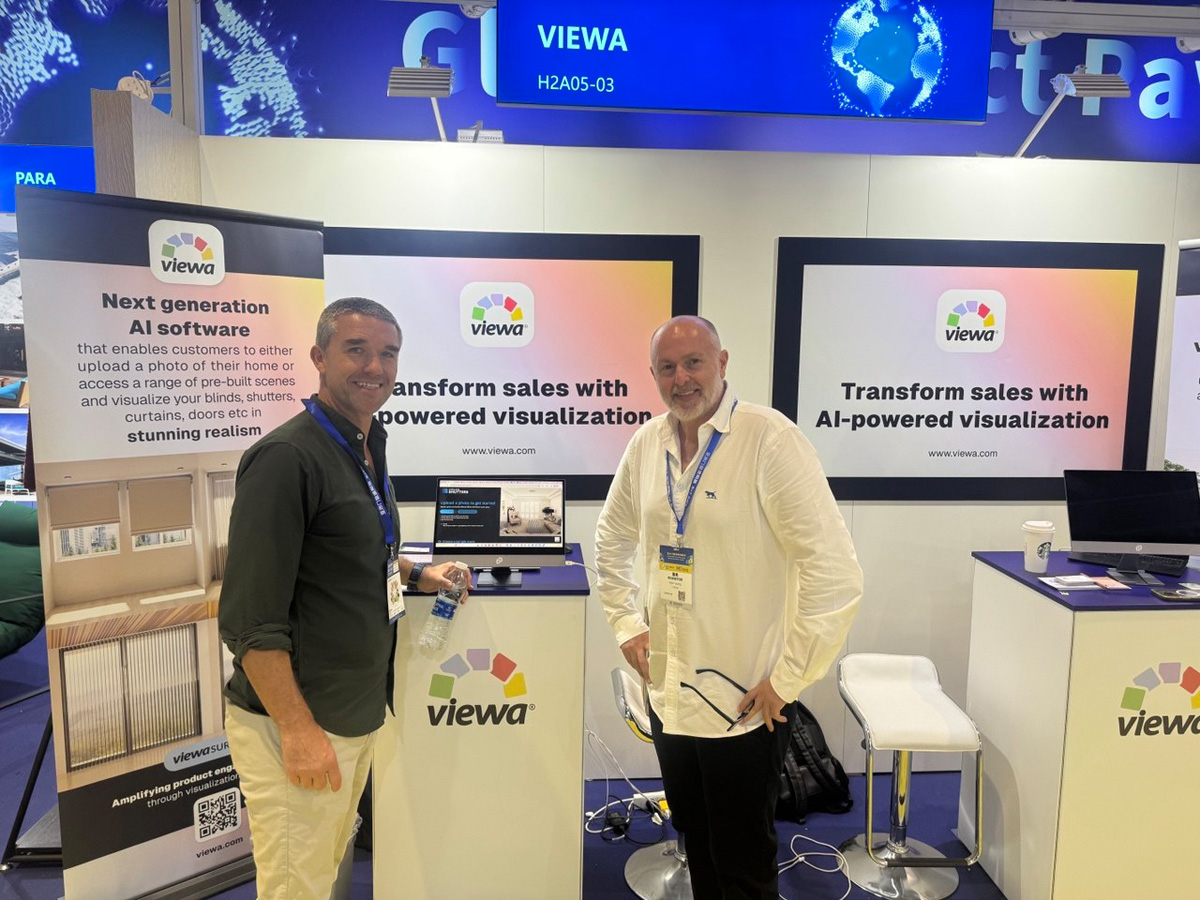
Ed Sedgley arrived at R+T Asia as a first-timer. His company, Viewa, is an Australian-based software business with a growing customer base spanning Australia, the US, Canada and the UK. He came to Shanghai to understand where the software fits in Asian markets and to build relationships across South East Asia.
The reception surprised him. Interest came from South Korea, Singapore and Turkey, as well as from visitors based in the US. Within China itself, response was mixed: some local interest, but the stronger pull was from the surrounding region.
The product is a purpose-built, industry-trained visualisation platform for window furnishings, and Sedgley says the current environment actually helps him explain it. The spread of general-purpose AI tools, including ChatGPT, Claude and similar platforms, has raised baseline awareness of what machine learning can do. That awareness makes the pitch easier.
“Those general products have deficiencies because they’re not purpose built,” he says. “When you show someone a purpose-built, industry-trained AI model, people get it straight away.”
He is not worried about retailers or manufacturers building competing tools themselves. The time, effort and industry-specific training required make it a more significant undertaking than it appears from the outside.
There was an unexpected bonus to bringing the Viewa stand to R+T Asia. Australian retailers and installers walking the floor encountered blind companies operating in Australia that they had no idea existed. The show became a local networking opportunity, not just an international one.
In Sedgley’s view, Australia punches above its weight in software at international industry shows. He offers that as his own assessment, not a measured finding, but it was reinforced by the response Viewa received from a diverse range of visitors across the week.
WHEN TO COME, AND HOW OFTEN
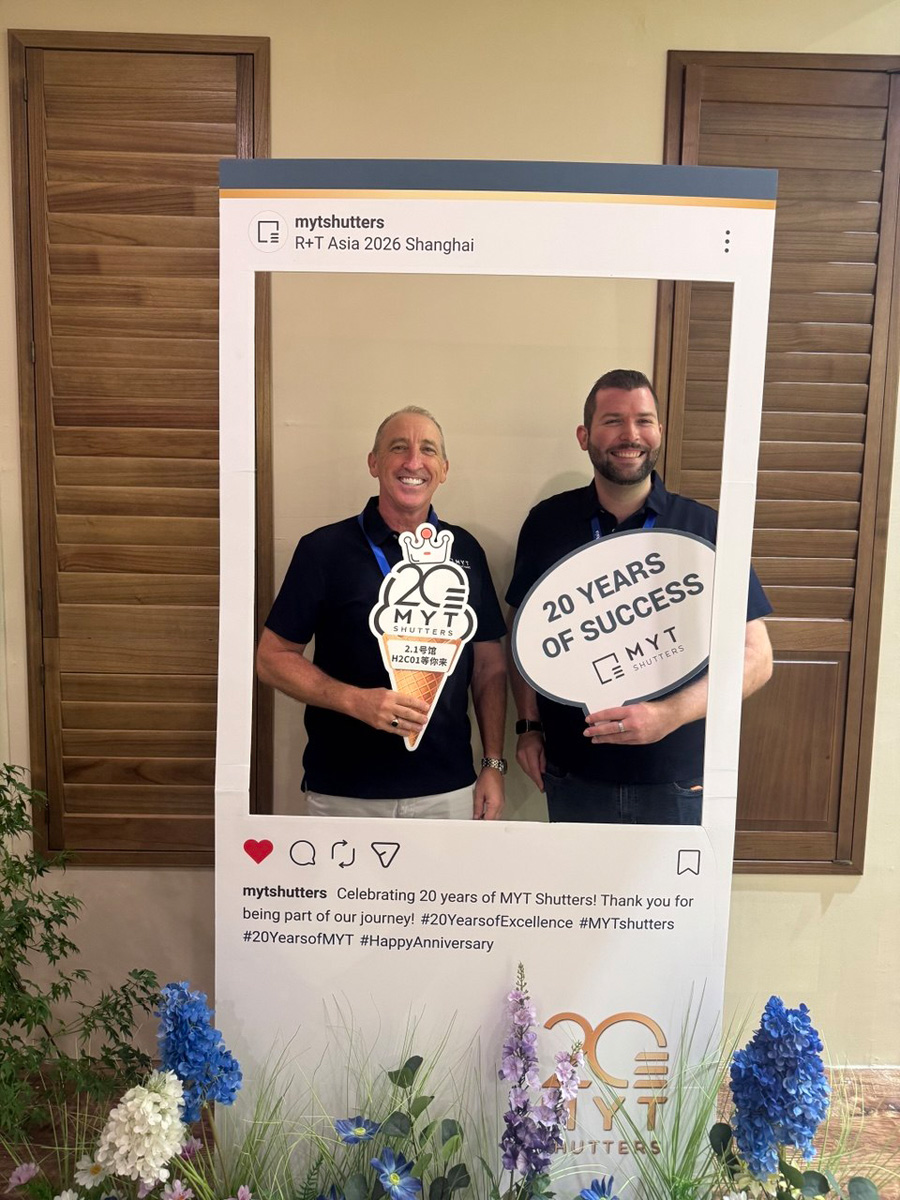
For MYT, the R+T commitment in Shanghai is non-negotiable regardless of timing clashes. The company is celebrating twenty years in business, a milestone that carries particular weight in China, and is using the moment to build visibility on both Australian and Chinese social platforms, including Xiaohongshu. MYT’s China marketing team has been running the campaign. (WFA covered MYT’s two-decade story in the May 2026 edition.)
Sloan’s framing is direct: the show is not optional if you are serious about supply chain relationships. The global mix of visitors, buyers from Mauritius, South Africa, India, Pakistan and beyond, reinforces the point. R+T Asia is not an Australian show, or even primarily a Chinese one. It is a global sourcing event that happens to be held in Shanghai.
WHAT THIS MEANS FOR THE TRADE
For retailers, the immediate signal from Shanghai is that the value conversation is not going away. Buyers are price-sensitive in ways that persist beyond a single economic cycle, and the bottom-end PVC product is not a temporary aberration. The suppliers doing well are those who have built a credible answer to the question: “What do I get for the extra money?”
For installers, the local-fabrication hybrid model is worth paying attention to. The ability to offer quick-ship, locally made product alongside a more affordable imported option is becoming a point of difference, not a concession.
For suppliers considering international shows: the Viewa experience at R+T Asia as a first-timer, finding both export interest and unexpected local connections, is a practical case for showing up even when the timing is complicated.
And for anyone who stayed home because WSAA was two weeks away, the Shanghai floor suggests the supply chain is moving with or without you.