
Please turn your device to portrait.
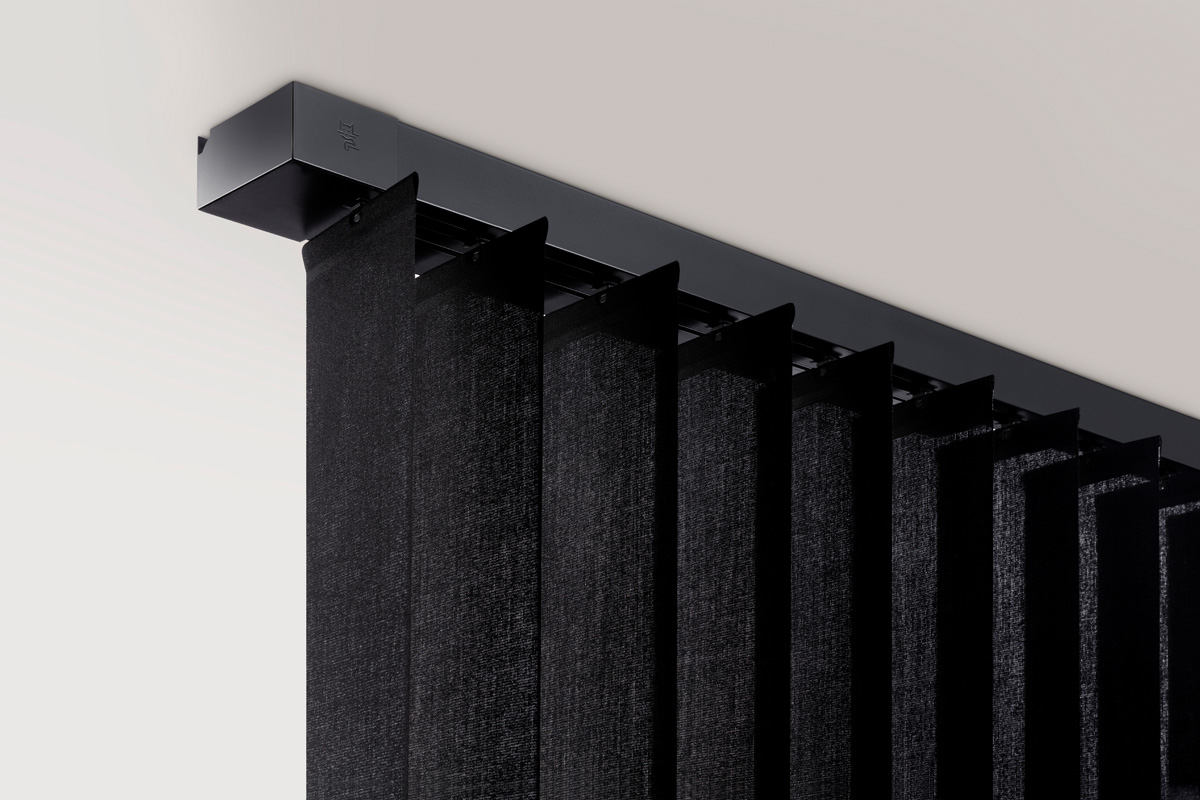
Vertical blinds carry a reputation built on price and convenience rather than design, leaving retailers with thin margin and limited specification appeal. Silent Gliss by Meyer Blinds is making the case that the category belongs at the premium end of the market, and has the tracking hardware and textile range to back it.
For much of the past decade, vertical blinds have occupied an awkward position in Australian showrooms. Retailers largely treated them as a volume product for sliding doors and rental fit-outs, while the design conversation moved toward curtains, roller blinds and panel glide systems. The category never disappeared from commercial specification, where large glazed openings and practical shading keep verticals firmly relevant, and Australian housing, with its open-plan layouts and broad glazed areas, keeps the functional case intact. In residential retail, though, the vertical blind became shorthand for the cheap option: a workhorse pitched on price rather than design. That positioning has a direct effect on retail margin.
RETHINKING A PRACTICAL PRODUCT
The argument for reconsidering verticals is not that the product has changed fundamentally, but that what can be done with it has. Simon Meyer, Managing Director of Silent Gliss by Meyer Blinds, makes the point directly: “Vertical Blinds remain a versatile solution available for larger windows and doors. The opportunity is to show customers that practical doesn’t have to mean plain.”
Meyer says there is growing demand for premium vertical blind tracking systems paired with high-quality light-filtering fabrics such as Colorama 2. “This combination offers a softer, more contemporary aesthetic that appeals to customers who might traditionally have considered Wave curtains,” he says. “The difference is that a Vertical Blind still provides the ability to tilt for light control and privacy or stack completely clear of the window when required.”
The practical distinction matters. A wave curtain covers the opening; a vertical blind can also tilt louvres for graduated light control or retract entirely. Meyer’s case is that the vertical blind can carry contemporary design credentials while retaining functional capabilities no curtain system can match in the same application.
THE DESIGN ARGUMENT: 3D VERTICAL WAVES
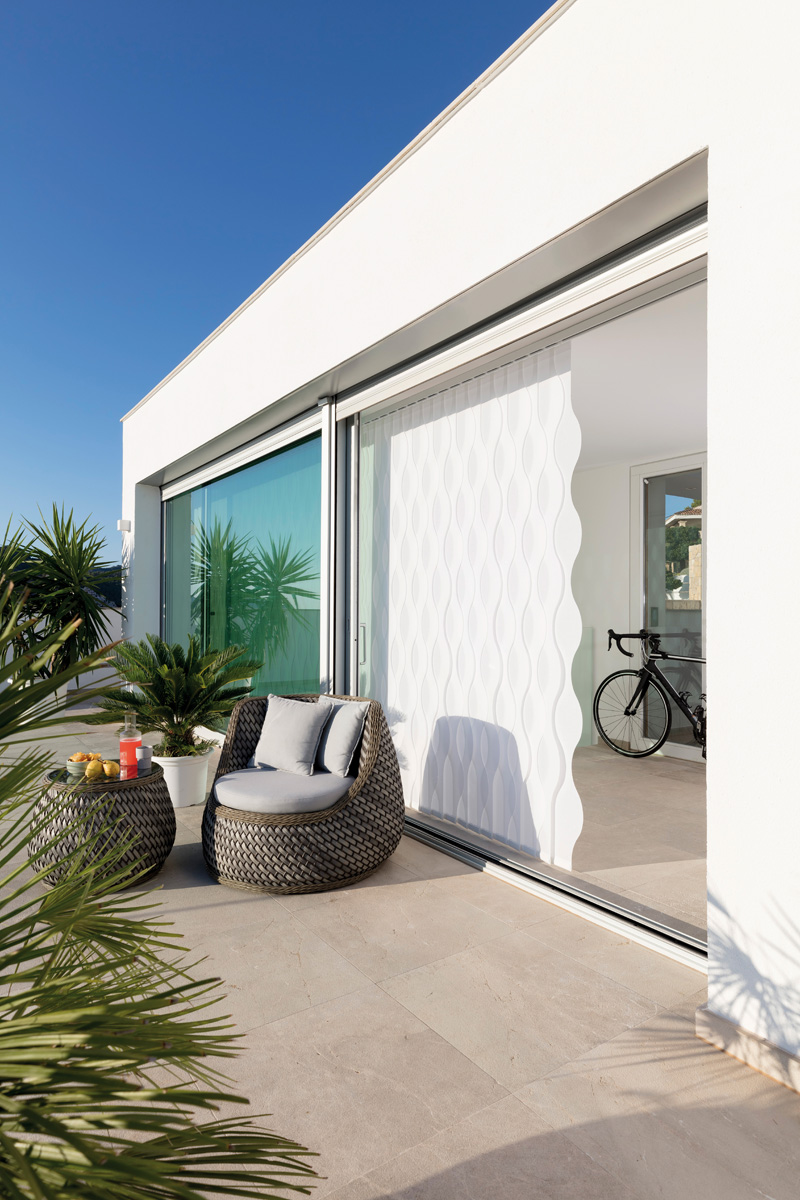
Silent Gliss by Meyer Blinds’ answer on the design side is the 3D Vertical Waves collection, developed in collaboration with Swedish textile designer Eva Marmbrandt. The collection uses precision laser-cutting and digital textile printing to produce louvres with flowing patterns, adding movement, texture and visual interest to what the company describes as a sculptural design feature.
Meyer says the collection is designed to fill the gap between purely functional shading systems and architectural interior features. Where a standard vertical addresses light, glare and privacy control, 3D Vertical Waves allows designers to incorporate texture, colour and visual impact without compromising performance. For retailers, the company identifies the sculptural, design-led appearance and the suitability for both windows and room division as the primary selling points alongside the performance credentials. Colour trends are running toward warm neutrals, soft whites, earthy tones and natural textures, Meyer says; internationally, it points to growing interest in layered textures and subtle tonal effects, with window furnishings expected to add depth and character rather than simply blending into the background.
SG2910 AND SG2960: THE TRACKING FOUNDATION
The collection is supported by two new Silent Gliss tracking systems. The SG2910 is chain-operated; the SG2960 is motorised. Both handle installations up to 5 metres wide and are compatible with Vertical Waves and 3D Vertical Waves. Meyer Blinds lists contemporary hardware finishes in white, grey and black, with matching ceiling recess profiles for a clean architectural result.
The SG2960 adds what Meyer describes as quiet motorisation and precise slat adjustment. For retailers and installers working in the residential specification market, where motorisation has become an expected inclusion rather than a premium add-on, the motorised option extends the vertical blind’s reach into project fit-outs without a product category switch. Meyer also lists extensive colour customisation through the RAL colour spectrum across the range.
WHAT THE REPOSITIONING MEANS IN A SHOWROOM
The practical takeaway for retailers and installers is one of positioning rather than product knowledge. Vertical blind volume is not at risk; commercial and rental demand keeps the category moving without particular effort. What changes with a range like 3D Vertical Waves is the conversation available in a residential showroom, particularly when a client is comparing options for a wide sliding door or full-height glazing.
Meyer Blinds says the broader vertical blind market remains strong on versatility and suitability for large glazed areas, and that retailers should be looking for opportunities in premium solutions that offer both functionality and design appeal. Its argument for 3D Vertical Waves is that combining Silent Gliss engineering with textile design gives retailers a distinctive alternative for projects where both performance and aesthetics matter.
Retailers who present vertical blinds strictly as the budget option leave margin on the table. Whether the premium argument reaches clients depends on how confidently retailers and installers have engaged with the range before they sit down to quote.