Please turn your device to portrait.
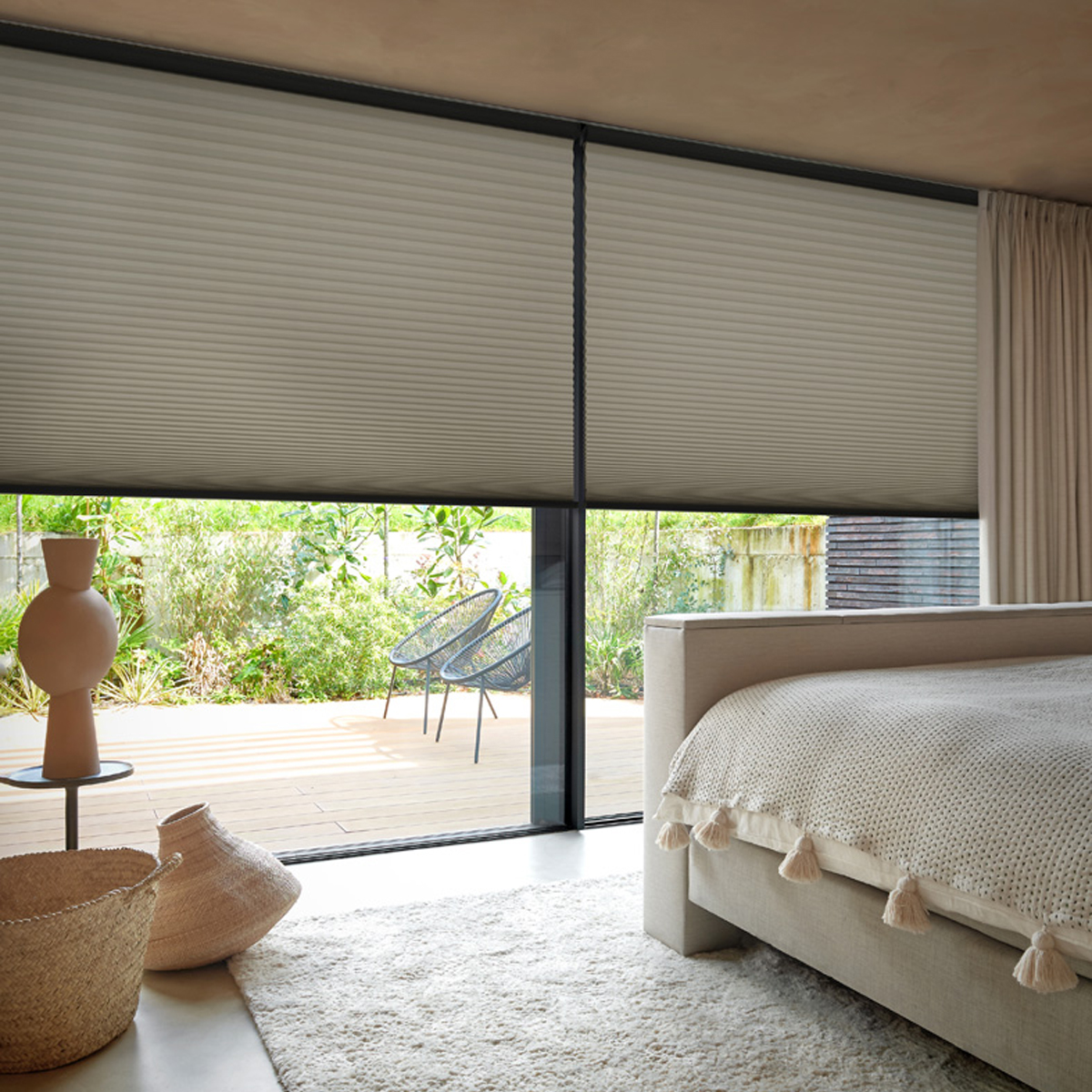
With NCC 2025 energy provisions adoptable from May 2026, honeycomb and pleated blinds are moving into conversations they were rarely part of before, with builders, specifiers and energy assessors now asking what window furnishings actually contribute to thermal performance. Four manufacturers tell WFA how they are responding.
Australia’s housing stock loses and gains heat through its windows at a rate that makes everything else in the building envelope look efficient by comparison. In winter, windows account for a significant share of heating loss. In summer, unmanaged solar heat gain through glass extends air conditioning run times well into the evening. These are not new facts. What has changed is who is paying attention to them.
Record energy prices, combined with the expiry of government cost-of-living support measures, have brought household energy bills into sharp focus. Homeowners who might once have chosen window furnishings on colour and price are now asking specific questions about thermal performance. At the same time, NCC 2025 energy provisions (adoptable from May 2026) are pushing builders, specifiers and energy assessors to evaluate every component of the building envelope more rigorously than before. Interior window shading, which has historically sat outside that conversation, is beginning to move into it.
The honeycomb and pleated category is well positioned to benefit. The physics are sound: cellular constructions trap air within the fabric structure, creating an insulating barrier between the glass and the interior space. The product range has also matured considerably. Cell sizes have diversified to address a broader range of window types and architectural applications. System configurations have expanded to solve installation challenges (skylights, tilt and turn windows, large-format spans) that the category previously had no clean answer for. And fabric design has advanced to the point where aesthetics no longer require a trade-off with performance.
Four suppliers operating in this segment (Coulisse, Norman, Louvolite and Meyer Blinds) spoke to WFA about what is driving the category, where retailers should be focusing, and what the specification conversation now looks like.
Coulisse
The energy efficiency story has been a constant in the honeycomb category for years, but Rogier Krabbe, Managing Director, Asia-Pacific at Coulisse, tells WFA that the nature of customer interest is shifting. “Demand for pleated and honeycomb products is increasingly driven by the desire for greater everyday comfort in interior spaces,” Krabbe says. “Customers are placing more emphasis on acoustic comfort, precise daylight control and the ability to actively shape the atmosphere of a room throughout the day.”
Thermal performance sits alongside those comfort drivers rather than leading them. “Energy efficiency continues to play an important role, particularly in honeycomb constructions,” Krabbe notes. “The insulating air pockets help retain warmth during colder months and reduce heat ingress in summer, supporting a more stable indoor climate year-round. This combination of comfort, ambience and thermal performance is what makes these product categories highly relevant in both renovation and new-build contexts.”
On the product side, Krabbe reports that cell size ranges have expanded in step with the architectural applications being specified. “In many hardware systems and blind solutions, 25mm cell sizes have become well established, particularly for smaller window dimensions and applications where compact systems are required,” he explains. For larger windows and facade installations, bigger configurations are increasingly common: “Cell sizes such as 32mm and 45mm are well suited to these environments and are often combined with motorised solutions. The combination of a strong textile aesthetic with smart technology not only creates a striking visual effect, but also reflects the level of comfort and functionality that is increasingly expected in contemporary interiors.”
Krabbe is direct about where he sees the retail opportunity. “One of the most important messages for retailers is that there is no one-size-fits-all solution,” he says. “Every project requires an individual assessment of the customer’s wishes, the architectural context and the functional requirements.” That specificity is the commercial opportunity: “In the pleated and honeycomb segment in particular, the combination of fabric options and technical hardware solutions allows retailers to tailor the product very precisely to each situation. Solutions can range from simple light-blocking applications through to intelligent systems that actively manage light and energy.”
For all the performance data available in the category, Krabbe observes that design remains the initial decision driver for most customers: “While functionality and technical performance are essential, the aesthetic quality of the fabric remains the primary decision driver for many customers. When the design meets expectations, the technology is expected to work intuitively and reliably in the background, supporting comfort without drawing attention to itself.”
On the most common failure points in projects, Krabbe identifies the pre-sale stage as where most problems originate. “The most common issue does not usually lie in the installation itself, but much earlier in the process. Problems tend to arise when customer expectations are not clearly identified and matched with the right solution from the outset.”
The NCC 2025 provisions are sharpening how Krabbe communicates the category’s value. “There is clearly a growing awareness in the market as a result of the upcoming NCC 2025 energy provisions,” he tells WFA. “The topic of energy performance is gaining additional visibility, which is influencing how different building components are evaluated. It is increasingly important that the role and contribution of interior sun shading are clearly communicated. When its broader benefits are understood, it becomes easier to position these solutions not only as design elements, but as part of a holistic approach to comfort and energy management.”
Norman
Giorgia English, Marketing Manager at Norman, frames the energy conversation in terms its retail customers can take directly to the showroom floor. “Australian households are paying more for energy than ever, and for the first time in years, they’re doing it without government support to soften the bill,” English tells WFA. “What most don’t realise is that their windows are working against them, responsible for up to 40 per cent of a home’s heating loss in winter and a primary driver of the solar heat gain that keeps air conditioners running long into summer evenings.”
English says the customer arriving in the showroom today has already done some of that thinking. “The customer walking in today already knows energy efficiency matters, as it’s having a direct impact on their finances. They’re asking what’s actually going to make a difference, and the answer is one retailers can deliver with complete confidence.”
That confidence, English argues, is grounded in independent research. Norman Honeycomb Shades have been validated by the CSIRO, Queensland University of Technology, the University of Melbourne and the University of Wollongong to reduce heat loss by up to 64 per cent, according to the company.
Norman has used that research base to underpin a program English describes as “the most comprehensive honeycomb program on the market,” giving retailers “everything they need to have that conversation.”
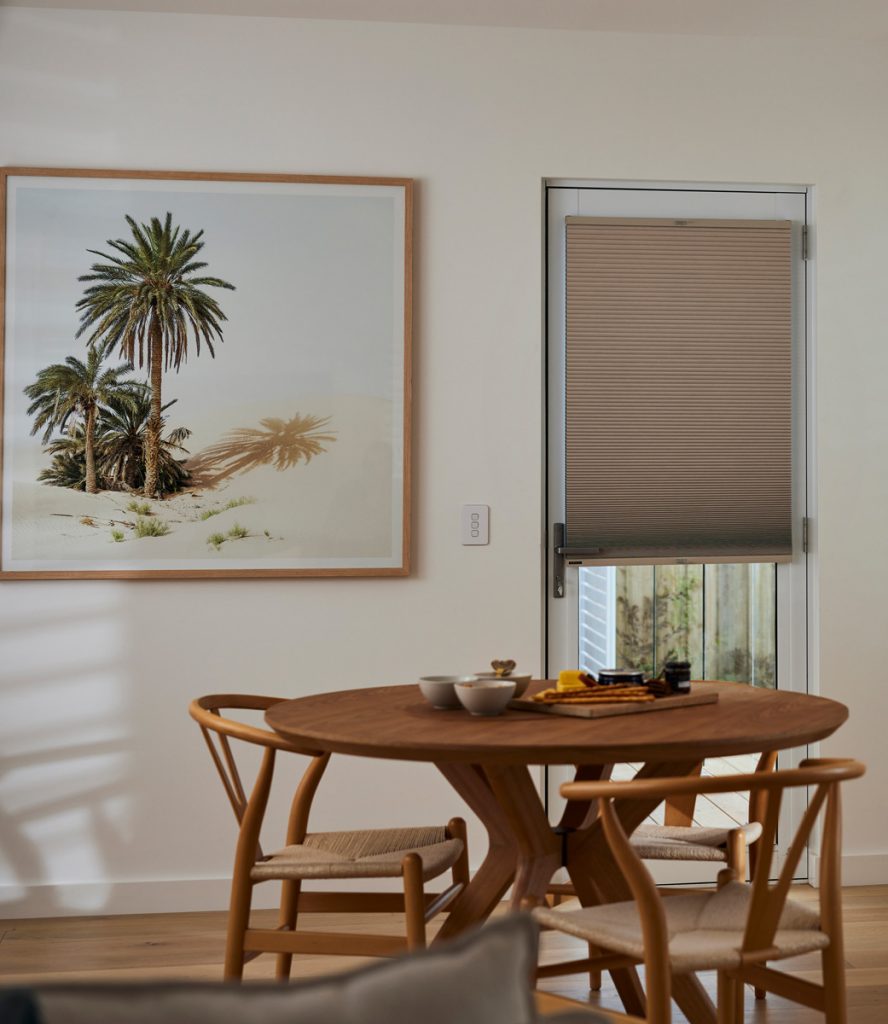
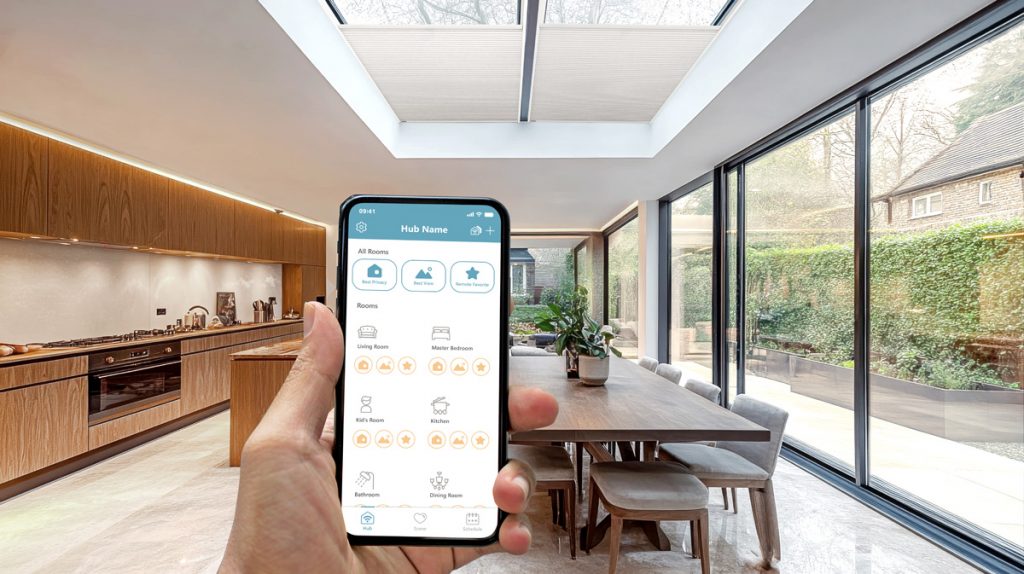
Recent development has focused on window types that have historically been difficult to furnish. The company has launched a motorised skylight honeycomb system, addressing what English describes as one of the most underserved applications in residential window furnishings. “Skylights are a disproportionate source of heat gain in summer and heat loss in winter, yet they’re rarely part of the window treatment conversation,” she says. The system operates through the ShadeAuto app, a remote or full home automation integration, powered by a plug-in AC adapter.
Tilt and turn windows presented a similar brief. The newly launched SmartFit Plus honeycomb operating system addresses that application with a drill-free adhesive mounting, requiring no penetration of the window frame. English notes that the elimination of centre cords and top rail produces “unobstructed views, a cleaner finish, and a full perimeter light guard that minimises light leakage.”
Installation simplicity is built into the broader program. “Motorised units arrive pre-programmed and ready to go, with no on-site configuration required,” English says, “reducing installation time and eliminating the callbacks that come from setup errors.”
On the design side, the recently launched Ashton fabric range adds fourteen new colours to the honeycomb offering, available in light filtering and room darkening opacities. English describes the fabric as developed “through an innovative production process that gives each fabric depth and definition,” across “a palette of whites, neutrals and pastels that work with a broad range of interiors.”
The company’s overall retail message, as English puts it, is straightforward: “With electricity costs at record highs and no government rebates to soften the impact, the case for honeycomb has never been more straightforward to make. The research is there, the product range is there, and the customer is ready to listen.”
Louvolite
Andy Burford of Louvolite Australia sees the energy efficiency conversation as the central force reshaping how retailers and their customers think about window furnishings. “Demand for cellular honeycomb products is being driven by a growing focus on energy efficiency and indoor comfort,” he tells WFA. “Window furnishings are no longer seen as purely decorative. They are now a key part of how homeowners, schools and commercial settings manage light, heat and overall living conditions.”
Cellular honeycomb products, Burford says, are gaining ground because the performance case is concrete. “Cellular honeycomb fabrics are gaining traction due to their ability to support passive cooling. By reducing solar heat gain and limiting reliance on air conditioning, they offer a practical solution for more energy conscious homes.”
That thermal performance argument is anchored in data from the British Blind and Shutter Association. Louvolite cites BBSA research indicating that internal shading can reduce indoor temperatures by up to 9 to 13 degrees Celsius during summer months, significantly reducing the need for active cooling systems.
Design remains part of the pitch. “Consumers continue to prioritise design,” Burford notes. “A wide selection of colours and installation options allows these blinds to align with modern interior trends while still delivering strong performance.”
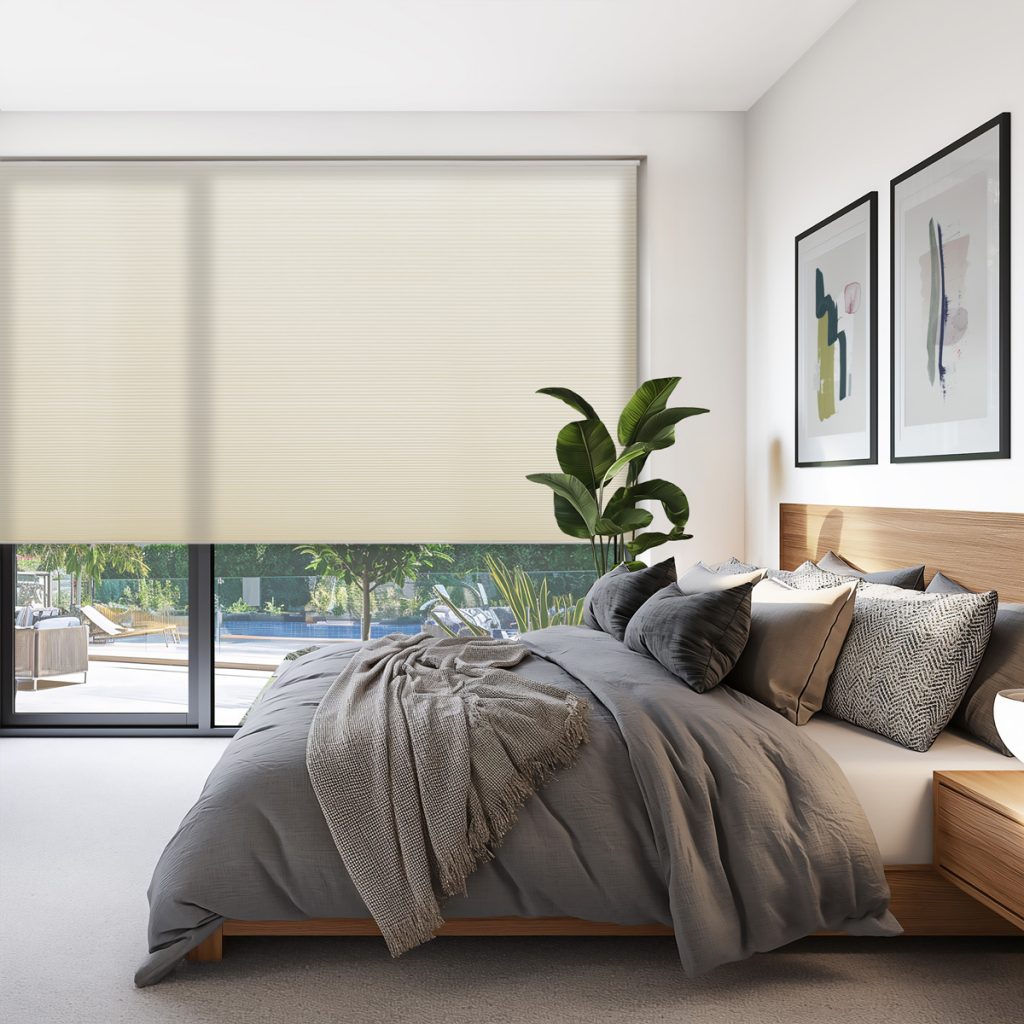
On system configurations, Burford points to increased adaptability as a key development. “Today’s systems are designed to suit a wide range of window types, from standard openings through to skylights and more complex configurations. Options such as free hang systems and Perfect Fit solutions provide greater adaptability, allowing the product to be specified across a broader range of residential settings.” On tilt and turn windows specifically: “Louvolite Perfect Fit blinds marry perfectly with uPVC tilt and turn windows and move with the window for enhanced functionality and aesthetics.”
Blockout capability has also become a more prominent part of the range. “There has been a continued focus on enhancing functionality, with the inclusion of blockout fabrics to support privacy and light control in spaces such as bedrooms and media rooms,” Burford says.
For retailers constructing the sales conversation, Burford recommends leading with the performance fundamentals. “Retailers should lead with performance, particularly around energy efficiency and comfort. The unique honeycomb structure traps air within its pockets, creating a barrier that helps reduce heat transfer through the window. This supports more stable indoor temperatures and reduces the need for active cooling.” Beyond energy, light management and privacy close the argument: “Light control and privacy are also important selling points, especially with the availability of blockout fabrics. Ease of use is another important factor. Motorisation enhances convenience and encourages more consistent use of shading throughout the day.”
On specification errors, Burford identifies product selection as the most common point of failure. “Common installation issues often relate to incorrect product selection for the application. Not all systems are suited to every window type, so it is important to consider factors such as window size, orientation and accessibility when specifying the product. Measuring inaccuracies can also impact performance and appearance.” Perfect Fit cellular blinds reduce this risk, he argues: “they are among the easiest blinds to measure for and install, reducing the risk of error and improving overall fit and finish.” For hard-to-reach applications, Burford adds: “Incorporating motorisation and solar panel charging can significantly improve usability and long-term convenience.”
Meyer Blinds
Simon Meyer, Managing Director of Meyer Blinds, points to three converging forces behind the category’s growth. “Demand for Honeycomb Blinds continues to accelerate across both residential and commercial sectors, with energy efficiency, streamlined aesthetics and increasing smart home integration all contributing to category growth,” he tells WFA.
Thermal performance is, for Meyer, the structural driver. “A major driver of demand is the growing focus on thermal performance within Australian homes. As energy costs continue to rise and NCC 2025 energy provisions approach adoption from May 2026, builders, specifiers and homeowners are placing greater emphasis on window furnishing solutions that contribute to insulation performance and energy reduction.” The cellular construction underpins that claim: “Honeycomb Blinds remain one of the strongest performing internal shading solutions in this area due to their cellular construction, which traps air within the fabric structure to assist with temperature regulation and improve overall comfort.”
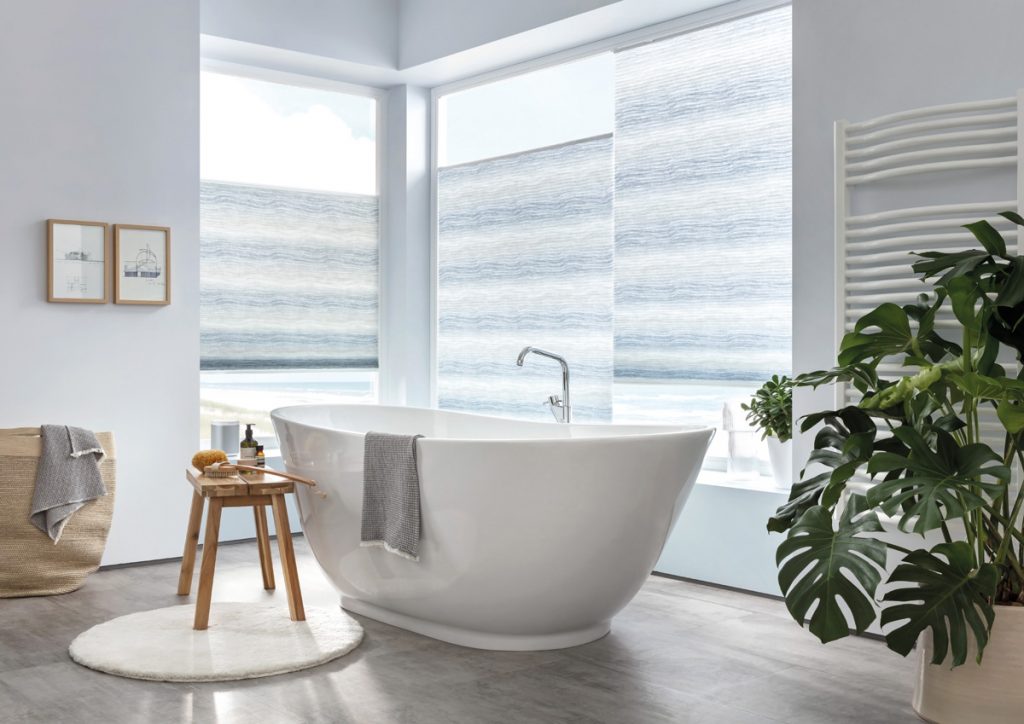
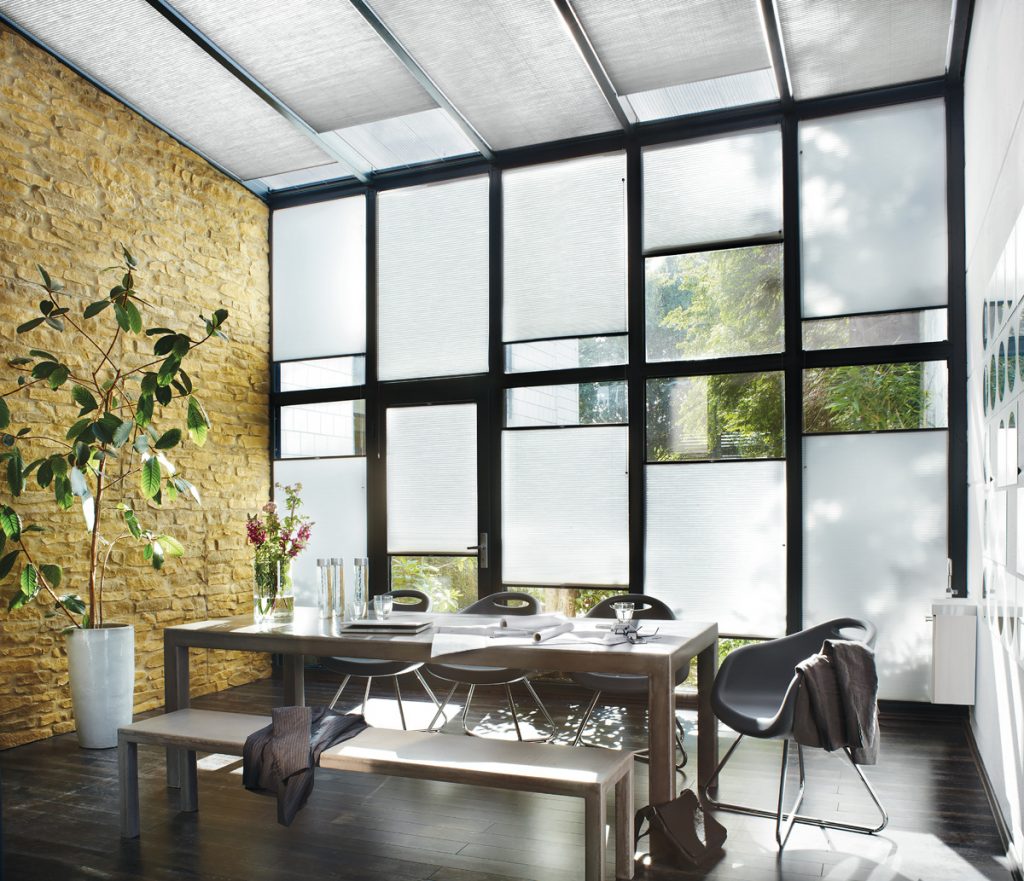
The design side of the category has moved just as decisively. “The category has evolved significantly from a design perspective. Honeycomb fabrics are no longer limited to basic neutrals and functional applications,” Meyer says. The Simply Cell range now includes 196 fabric options, with “refined textures, tonal effects, contemporary colours and design-led finishes suited to modern interiors.”
Configuration options have expanded in parallel. “Different cell sizes, translucent and blockout options, top-down bottom-up systems, tensioned applications, Skylights that are motorised, crank and wand operated and increasingly compact hardware systems now allow Meyer Blinds Simply Cell Honeycomb Blinds to be specified across a far broader range of windows and applications than previously possible,” Meyer explains.
A significant recent development is the VS2 Maxline system, designed specifically for larger format windows and sliding doors. “Featuring enlarged rail profiles, the system allows spans up to 1800mm wide and drops up to 2200mm while maintaining a slimline appearance suited to contemporary architectural projects,” Meyer says.
On the most frequent installation error, Meyer is specific: “One of the most common installation mistakes seen within the category remains inaccurate recess measuring, particularly where handle clearance, window beading depth and operating tolerances are not properly considered.” With compact hardware systems being pushed into tighter spaces more frequently, measurement precision has become more consequential, not less.
See the Simply Cell range at the Meyer Blinds Stand L4 at WSAA SuperExpo | 10–12 June.