Please turn your device to portrait.
Labour shortages, rising input costs, and growing demand for custom orders are exposing the limits of manual production in Australian blind factories. From CNC fabric cutting through to automated end-of-line packaging, three suppliers outline what the new generation of machinery is delivering on the floor.
Walk through a mid-sized Australian blind factory and the pressure points are easy to spot. A queue of cut fabric waiting to move to the next station. An operator retaping fabric to the cutting table before each job. A team at the end of the line hand-cutting cardboard boxes and taping them shut, one at a time.
None of these are new problems. But they have become harder to absorb. Labour costs have climbed steadily, and finding experienced production staff has become genuinely difficult in most manufacturing centres. At the same time, the product mix has shifted. More custom orders, more external shading systems with larger dimensions, more clients expecting shorter lead times. The tolerance for inefficiency is narrowing.
The response across the industry has been a move toward integration. Not simply replacing one machine with a newer version, but rethinking how cutting, welding, and packaging systems connect to each other and to the software that runs the business. Quoting platforms, ERP systems, and production machinery are increasingly expected to communicate in real time, with job data flowing from order entry to the cutting table without manual re-entry.
This feature draws on input from three suppliers active in the Australian market: Aeronaut, covering CNC fabric cutting and digital integration; Ultracut, on cutting tables and long-length impulse welding; and Triple M Trading, representing the Stand-By automated packaging range. Each is addressing a different part of the production chain, and each is responding to the same underlying market conditions.
Aeronaut
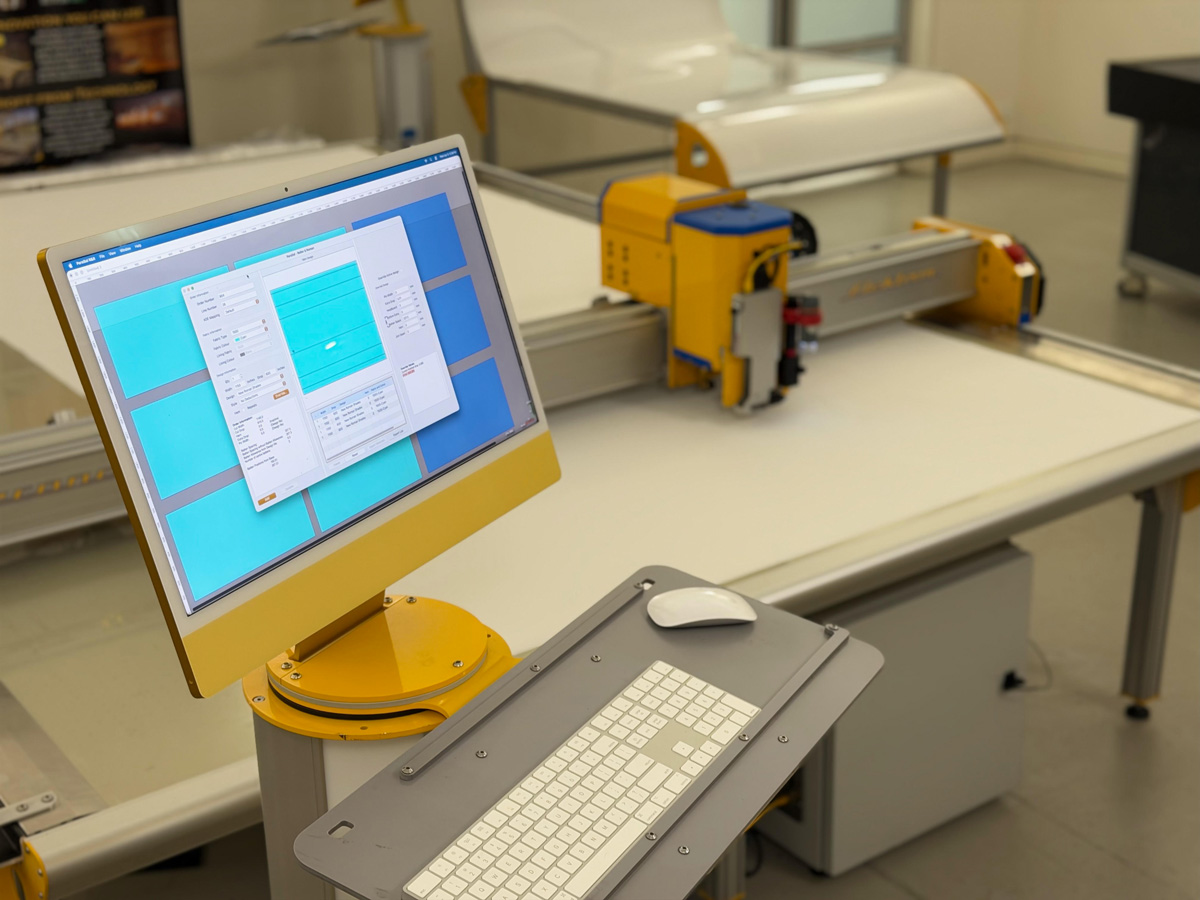
The development focus at Aeronaut over the past 12 months has been multi-tool CNC cutting systems capable of doing considerably more than cut fabric. Adam Dent, Aeronaut, says the latest systems integrate “creasing, marking, and labelling within a single workflow,” allowing manufacturers to process a job from start to finished label in a single pass rather than moving material through separate stations.
The efficiency case is straightforward. Dent says manufacturers running these systems are seeing “higher throughput with fewer operators, reducing reliance on manual labour,” alongside “improved accuracy and repeatability, resulting in consistent product quality.” Material waste is down as well, through “advanced nesting and optimised cutting paths” that make better use of each roll of fabric.
The more significant shift, Dent argues, is in software integration. Current systems connect directly to quoting platforms, design tools, and ERP systems, enabling what Dent describes as “a fully digital production process from order entry through to finished product.” When job data flows automatically from the quoting system to the cutting table, manual re-entry is eliminated, scheduling becomes more visible, and errors at the handoff between systems are reduced.
Dent identifies the most common problems seen in Australian factories: “labour shortages, increasing reliance on automation; inconsistent manual processes, particularly when handling fabrics; ageing or outdated machinery, leading to inefficiencies and downtime; limited integration between machinery and existing ERP or quoting systems.” Many operations, Dent says, are “running with a mix of legacy equipment and disconnected systems, which can create bottlenecks and limit scalability.”
For manufacturers considering new investment, Dent recommends a structured approach: assess production volume, product range, and the degree of customisation required before selecting a system. Compatibility with existing software is a practical prerequisite. So is scalability. “A successful investment is not just about the machine itself, but how well it fits into the broader production workflow,” Dent says.
On the longer-term technology horizon, Dent points to machine vision as a capability that is already changing what is possible. Machine vision allows CNC systems to “detect printed patterns or registration marks and automatically adjust cutting paths in real time, ensuring precise alignment even for highly customised or digitally printed designs.” The practical effect is material savings and waste reduction: “By optimising each cut, manufacturers can make the most of every roll of fabric, reducing both costs and environmental impact while maintaining consistent product quality.”
The result, Dent says, is that mass customisation is “quickly becoming a reality for Australian manufacturers.” When integrated with quoting and production systems, manufacturers can “efficiently produce one-off or small-batch orders with the same effectiveness as large-scale runs,” enabling “leaner, environmentally responsible manufacturing, where high levels of customisation are delivered without sacrificing speed, quality, or sustainability.”
Ultracut
The strongest demand Ultracut has seen over the past 12 months has been for two platforms: the Vectrocut Sono 6.5m cutting system and the DuoWeld 8.0m impulse welding machine. Both are established products, but Garth Jacobs, Ultracut Industries, says the shift toward these larger-capacity configurations “reflects where the industry is heading.”
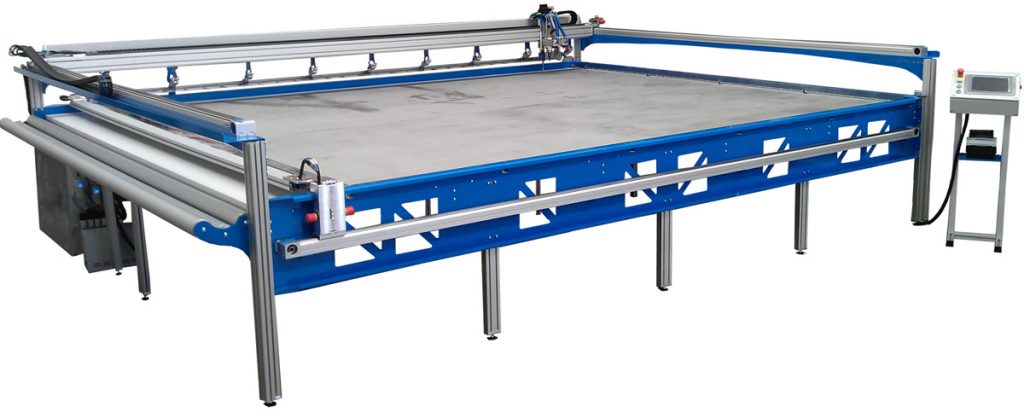
The Vectrocut Sono 6.5m addresses a challenge that has grown directly with the market for external shading. As zip screens and other external systems have grown in volume, fabricators have needed a single cutting table capable of handling both internal and external blind skins. The Vectrocut accommodates this, with a working area of up to 3.3 metres wide by 6.5 metres long. The practical significance for a fabricator running a mixed product range is that one table handles both applications rather than requiring separate setups or separate equipment.
What Jacobs emphasises as the operational advantage is what the Vectrocut removes from the process. The system “cut[s] a wide range of fabrics using ultrasonic and pressure cutting without the need for plastic film or taping fabric down, eliminating a time consuming preparation step.” Combined with “a unique clamping system, direct job import via CSV from ERP systems or even Excel, and integrated label printing,” the machine reduces operator handling and minimises the points at which errors can enter a job.
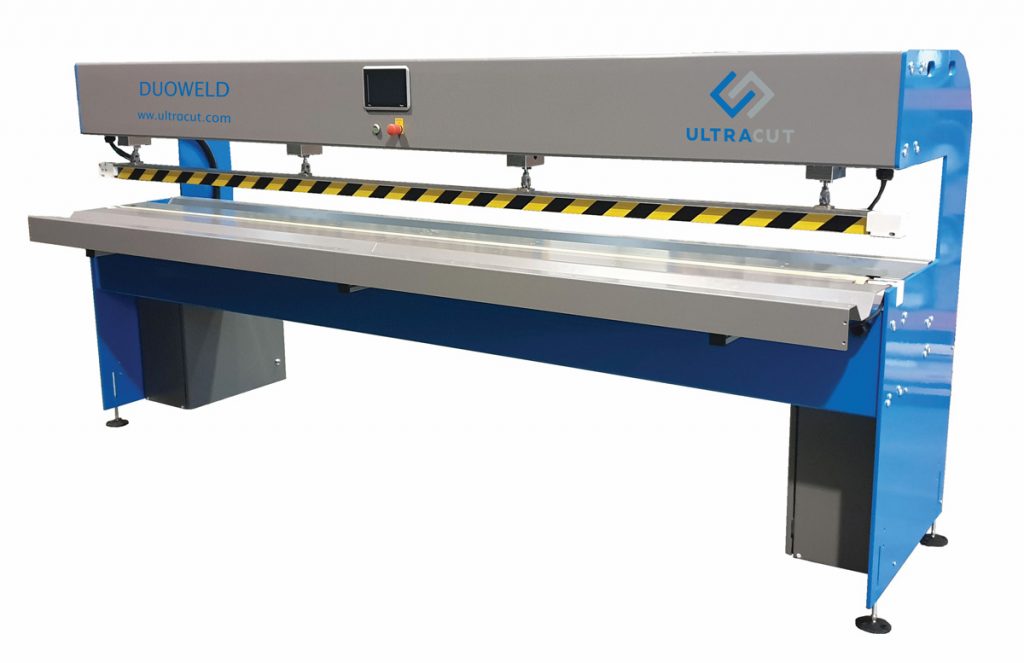
The DuoWeld tells a different story. Long-length welding of external blind skins has historically been a skilled task, with hot air or wedge systems that “are more complex to operate and require higher skill levels.” The DuoWeld simplifies the process considerably, Jacobs says, “making it easier to train staff and achieve consistent results.” For operations struggling to retain experienced operators, the lower skill threshold matters as much as the throughput gains.
On throughput, the 8.0m configuration delivers a specific production advantage. By welding multiple skins in a single cycle, it is “effectively doubling or tripling throughput without increasing labour.” Jacobs says this is “particularly valuable in higher-volume environments” where the constraint is not machine speed but the number of cycles required.
Ultracut Industries draws a direct line between the current investment environment and operational economics across a machine’s life. “Before investing, manufacturers should consider not just the purchase price, but how a machine integrates into their workflow, reduces labour dependency, and performs over its full service life,” Jacobs says. “Long-life components and low maintenance requirements can make a significant difference over 10 to 14 years of operation.”
On emerging technology, Jacobs’s assessment is measured. Machine vision and digitally printed blinds “are emerging and will likely play a bigger role over time, particularly in niche or custom applications.” But for most Australian manufacturers today, Jacobs says “the primary focus remains on reliability, throughput, and ease of use” rather than frontier capability.
Triple M Trading
Triple M Trading’s Stand-By packaging range occupies the part of the production chain that attracts the least attention and, as Simon Meyer notes, is often the most visible bottleneck in a high-volume factory.
“As Australian manufacturers continue looking for ways to improve efficiency, reduce freight damage and streamline production, demand for smarter packaging systems is rapidly increasing,” says Meyer, Managing Director of Triple M Trading and Australian representative for the Stand-By range. The systems are manufactured in Holland and have been developed specifically for the Blinds, Awnings, and Curtain Tracking sectors.
Recent additions to the range bring fully automated functionality into a single line: barcode scanning, box construction, sealing, and inline labelling. A key design feature is the system’s ability to create boxes custom-sized to each product. Rather than selecting from a fixed range of carton sizes, the machine builds to the dimensions of the item being packed. The result, Meyer says, is a “significant reduction in excess packaging material and void fill.” Hotmelt glue sealing replaces staples and tape, delivering “a cleaner and more secure finished package.”
The size range is deliberately broad. The Stand-By system handles “box lengths from 35cm through to 9 metres,” which means the same platform can manage small hardware components and complete awning assemblies without changeover to a different line. For manufacturers with a mixed product range, that flexibility removes a common source of complexity at end-of-line.
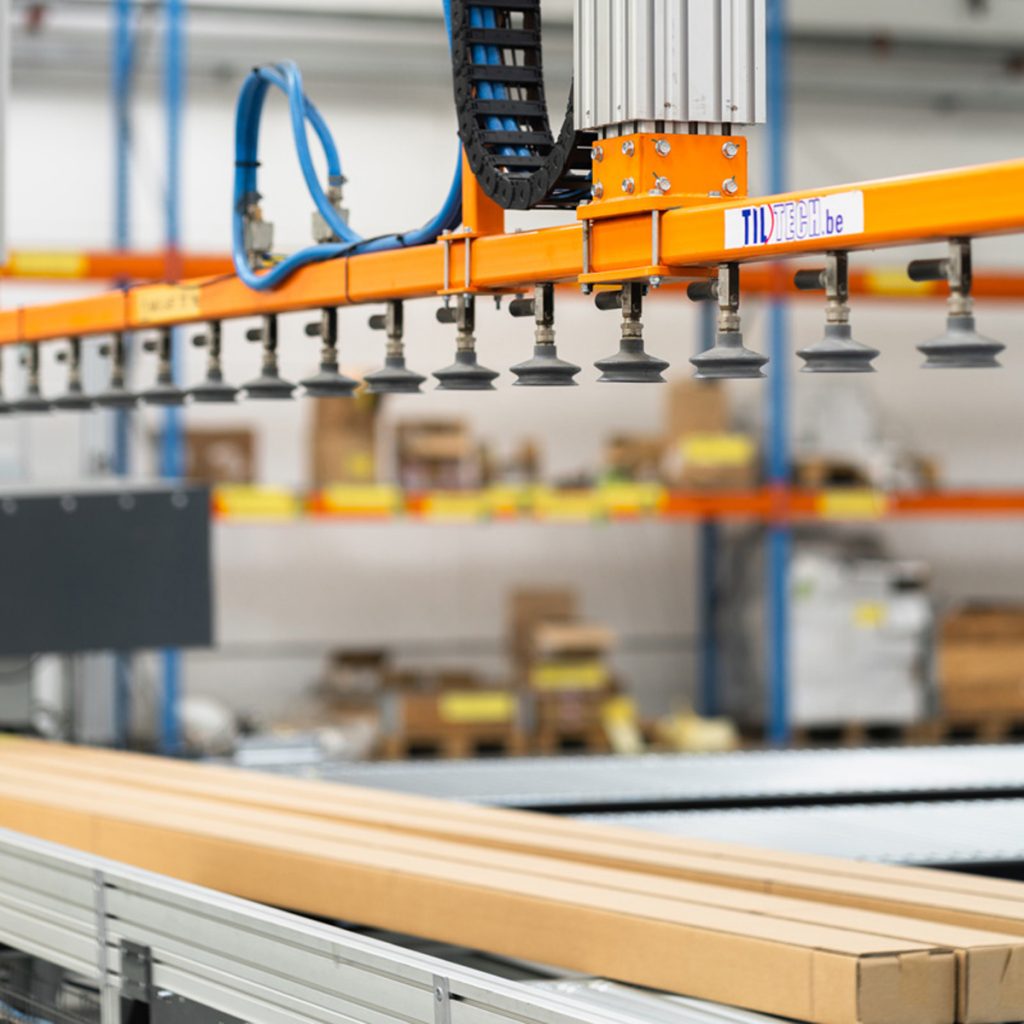
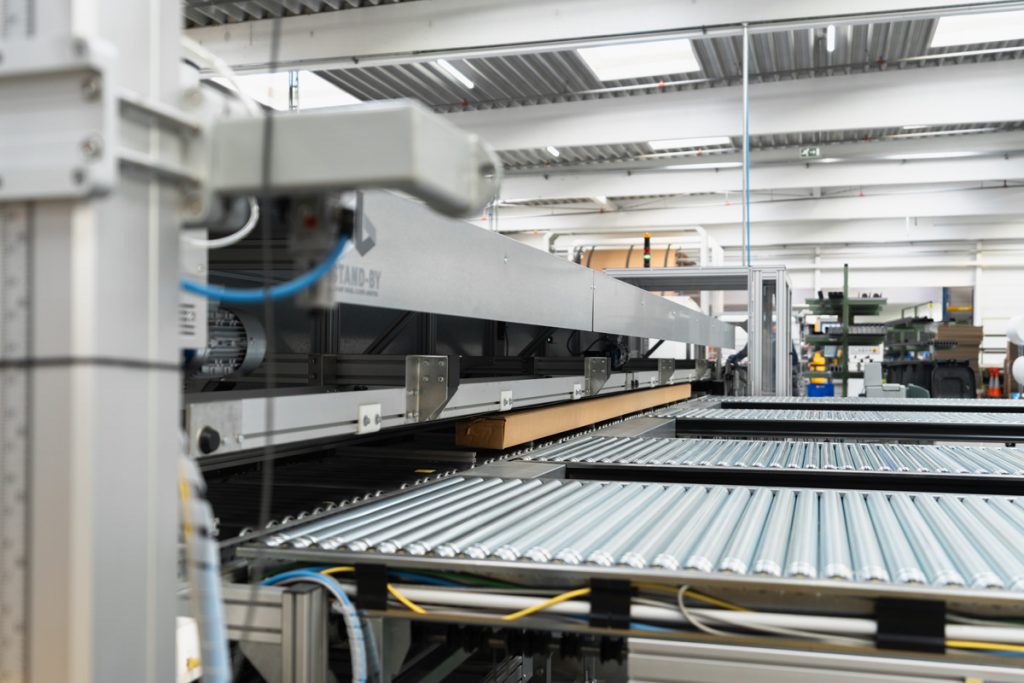
The throughput figures make the labour case directly. “Some Stand-By systems are capable of building and sealing a 3-metre box in under 20 seconds with a single operator,” Meyer says. At that pace, packaging is no longer a constraint on overall factory output, and the labour requirement drops to one person managing the line rather than a team working by hand.
Meyer positions the Stand-By range as a response to a gap that has widened as factory automation has advanced at cutting and welding while packaging has remained largely manual. “The increasing pressure of rising labour costs, freight handling requirements and sustainability expectations has created a growing gap between manual packaging processes and large-scale factory automation,” he says. The Stand-By range is designed to bridge that gap, “providing scalable automation solutions suited to both expanding operations and established manufacturers seeking productivity improvements.”
For businesses not yet ready for full automated packaging, Triple M Trading also supplies Fanfold Cardboard and pre-creased customisable cardboard solutions as an intermediate option. The step-up path means manufacturers can improve manual packaging efficiency now and move to automated systems when volume justifies the investment.